“ Ayam Betutu – Traditional Balinese Chicken Cooked in Banana Leaves”
The Indo Fork
Archives
“ Ayam Betutu – Traditional Balinese Chicken Cooked in Banana Leaves”
SIGN UP FOR OUR NEWSLETTER
Ayam Betutu |
When the earth itself became part of the recipe |

The Indo Fork
Jan 22, 2026
 |
There are dishes that belong to pots and pans, and there are dishes that belong to the ground beneath our feet. Ayam Betutu has always been the latter.
I did not learn this dish from a cookbook. I learned it as a feeling. Heat trapped in leaves. Smoke clinging to spice. Time doing most of the work while people waited. Somewhere along the way, in family kitchens far from Bali, the name softened, shifted, became something else. Isi de boeloe, we called it. Not a place on a map, but a memory on a plate.
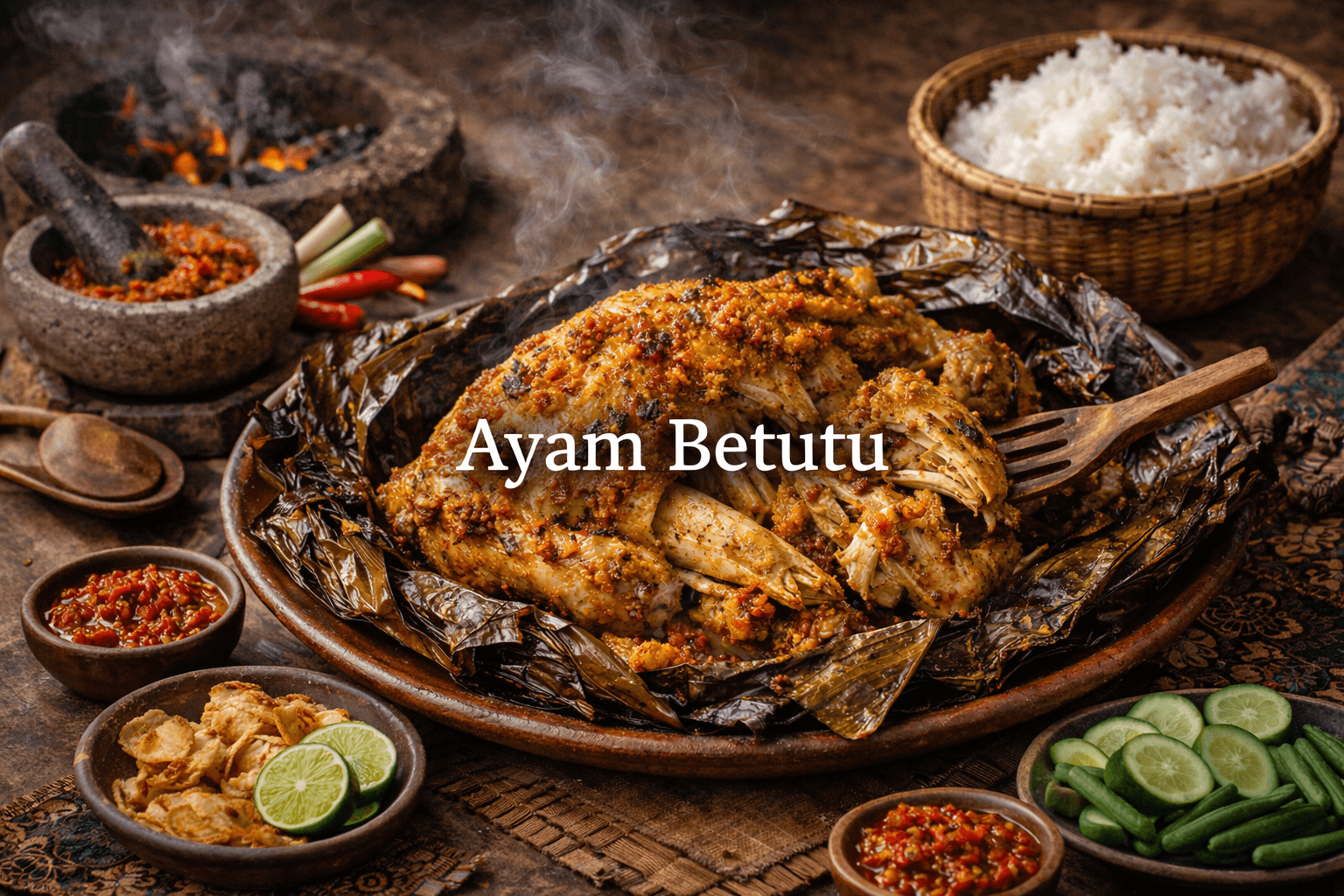
In Bali, the dish has its real name: Ayam Betutu. Traditionally prepared for ceremonies, weddings, temple days, moments when food must carry weight. A whole chicken is rubbed inside and out with bumbu betutu, a fierce and fragrant spice paste. It is wrapped tightly in banana leaves, then slowly cooked for hours in an emburan, a pit in the ground filled with embers. No rushing. No shortcuts. The earth seals in heat, moisture, and meaning.
When the leaves are finally opened, the chicken barely holds its shape. The meat is saturated with spice, tender to the point of collapse. This is not food that shouts. It whispers, deeply and persistently, long after the meal is over.
At home, far from any emburan, we adapt. The ritual remains, even if the ground does not open beneath us.
Ayam Betutu (Home Method)
Ingredients
Serves 4
Chicken
Bumbu Betutu (spice paste)
Wrapping
Method
Blend all ingredients for the bumbu into a thick, aromatic paste. It should smell sharp, warm, and alive.
Pat the chicken dry. Rub the spice paste generously over the entire bird, pushing it under the skin and into the cavity. This is not a surface seasoning. The chicken should be fully claimed by the bumbu. Cover and marinate for at least 2 hours, preferably overnight.
Lay out overlapping sheets of banana leaf. Place the chicken in the center and wrap it tightly, folding and tucking until fully sealed. Tie securely with kitchen string.
Preheat the oven to 150°C / 300°F. Place the wrapped chicken in a heavy oven dish or Dutch oven. Cook slowly for 3½ to 4 hours.
For a more traditional finish, unwrap the chicken for the final 15 minutes and raise the temperature slightly to let the surface dry and darken. The meat inside should be spoon-tender.
Rest briefly before opening fully. Spoon the spice-rich juices back over the chicken before serving.
How It Is Traditionally Served
Ayam Betutu is never alone on the table. Serve it with steamed white rice, sambal for those who want more fire, and crisp accompaniments like emping or krupuk to break the richness. Fresh cucumber or lightly blanched greens bring balance.
This is not everyday food. It is food for gathering, for slowing down, for remembering that some flavors only appear when time is allowed to do its work. |