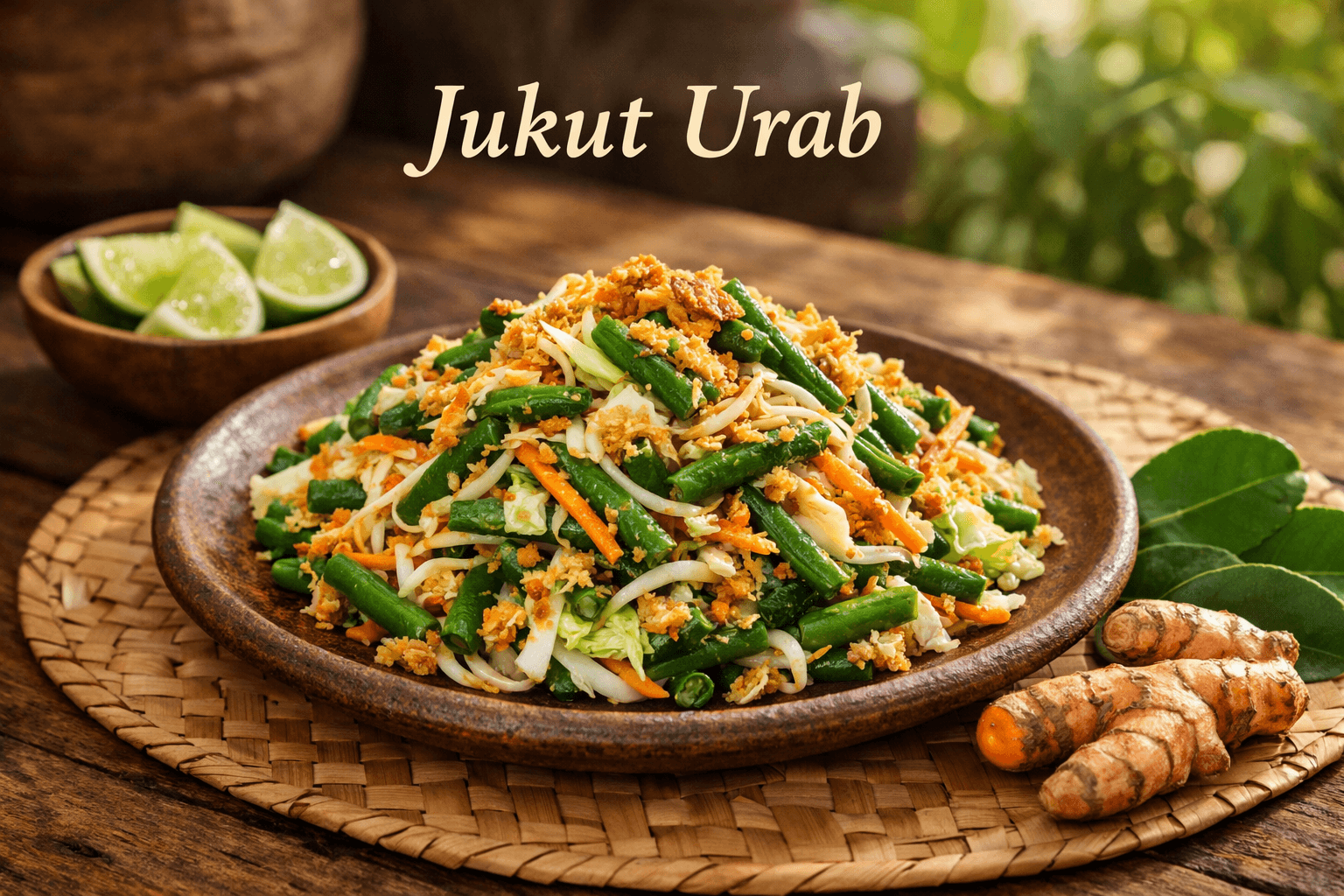
In Bali, vegetables are not an afterthought. They are treated with the same care and intention as meat or fish. Jukut urab is proof: a salad that transforms ordinary greens into something fragrant, textured, and alive with flavor. It is made with whatever is fresh: long beans, cabbage, bean sprouts, sometimes water spinach or fern tips. The vegetables are blanched just long enough to soften but not collapse, then tossed with freshly grated coconut and a paste made from shallots, garlic, chilies, and toasted spices.
My grandmother made this almost every day, adjusting the vegetables with the seasons but always keeping the coconut generous and the spices bright. She toasted the coconut lightly in a dry pan, coaxing out its nutty sweetness, then worked it by hand with the paste until every shred was coated. The result was a salad that was crunchy, aromatic, and rich without being heavy.
This is a dish that works as a side or a light meal on its own with rice. It is vegetarian by default, vegan if you skip the shrimp paste, and endlessly adaptable. The key is not to overcook the vegetables and to use fresh coconut if you can find it.
Serves: 4-6 Prep time: 25 minutes Cook time: 10 minutes
Ingredients
For the vegetables:
- 150 g (5.3 oz) long beans, cut into 3 cm (1.2 in) pieces
- Jukut Urab – Traditional Balinese Vegetable Salad Recipe
- 100 g (3.5 oz) bean sprouts
- 100 g (3.5 oz) water spinach (Authentic Jukut Urab from Bali: blanched vegetables, fresh coconut, and aromatic spice paste. A traditional side dish perfect with rice.) or regular spinach, stems cut into 3 cm pieces
- 1 medium carrot, julienned or thinly sliced
- Water for blanching
- jukut-urab-traditional-balinese-vegetable-salad
For the spice paste (base urab):
- 5 shallots, peeled
- 3 cloves garlic, peeled
- 3 red chilies, stems removed
- 2 bird's eye chilies (optional, for heat)
- 2 cm (0.8 in) fresh ginger, peeled
- 2 cm (0.8 in) galangal, peeled
- 1 cm (0.4 in) fresh turmeric root, peeled (or 1/2 tsp ground turmeric)
- 1 tsp shrimp paste (terasi), toasted (optional, omit for vegan)
- 1 tsp coriander seeds, toasted and ground
- 3 kaffir lime leaves, midrib removed, very finely sliced
- 1 tsp palm sugar (or brown sugar)
- 1 tsp salt
- 2 tbsp (30 ml) coconut oil
For finishing:
- 200 g (7 oz) fresh grated coconut (or frozen, thawed and drained)
- Juice of 1 lime
- 1 tsp salt, or to taste
Instructions
1. Prepare the vegetables
Bring a large pot of water to a rolling boil. Prepare an ice bath in a large bowl. Blanch each vegetable separately in the boiling water: long beans for 2 minutes, cabbage for 1 minute, bean sprouts for 30 seconds, water spinach for 1 minute, carrots for 1 minute. Immediately transfer each batch to the ice bath to stop the cooking. Drain well and pat dry with a clean towel. Set aside in a large mixing bowl.
2. Make the spice paste
Grind shallots, garlic, chilies, ginger, galangal, turmeric, shrimp paste (if using), coriander, and kaffir lime leaves into a smooth paste using a mortar and pestle or food processor. Add coconut oil, palm sugar, and salt, and blend until well combined. The paste should be aromatic and slightly chunky.
3. Toast the coconut (optional but recommended)
In a dry pan over low heat, lightly toast the grated coconut for 3-4 minutes, stirring constantly, until it smells nutty and just begins to turn golden. Do not let it brown too much. Remove from heat and let cool slightly.
4. Combine the coconut and spice paste
In a bowl, mix the toasted coconut with the spice paste, using your hands to work the paste into the coconut until every strand is evenly coated. The mixture should be fragrant, slightly oily, and well distributed.
5. Toss the vegetables
Add the blanched vegetables to the spiced coconut mixture. Add lime juice and salt. Toss everything together thoroughly, using your hands if possible, until the vegetables are evenly coated with the coconut and spices. Taste and adjust seasoning. It should be bright, fragrant, slightly spicy, and well balanced.
6. Serve
Transfer to a serving platter and serve immediately at room temperature, or chill for 15-20 minutes before serving. Jukut urab is best eaten fresh and does not keep well overnight.
Notes
- On coconut: Fresh grated coconut is ideal. Frozen works well if thawed and drained. Desiccated coconut is not recommended, it lacks moisture and texture.
- Vegetable variations: Use whatever is fresh and seasonal. Fern tips (pakis), chayote, green papaya, or even blanched kale work beautifully.
- Vegan version: Omit shrimp paste or replace with a small piece of fermented tempeh or miso for umami depth.
- Texture matters: Do not over-blanch the vegetables. They should be tender but still have snap and crunch.
- Toasting the coconut is optional: But it adds a deeper, nuttier flavor that elevates the dish.
- Serve fresh: This salad is meant to be eaten the same day. The coconut absorbs moisture from the vegetables over time and loses its texture.