The Indo Fork
Archives
Sate Lilit – Traditional Balinese Minced Satay Recipe
SIGN UP FOR OUR NEWSLETTER
Sate Lilit |
Balinese minced satay, wrapped around lemongrass and memory |

The Indo Fork
Jan 23, 2026
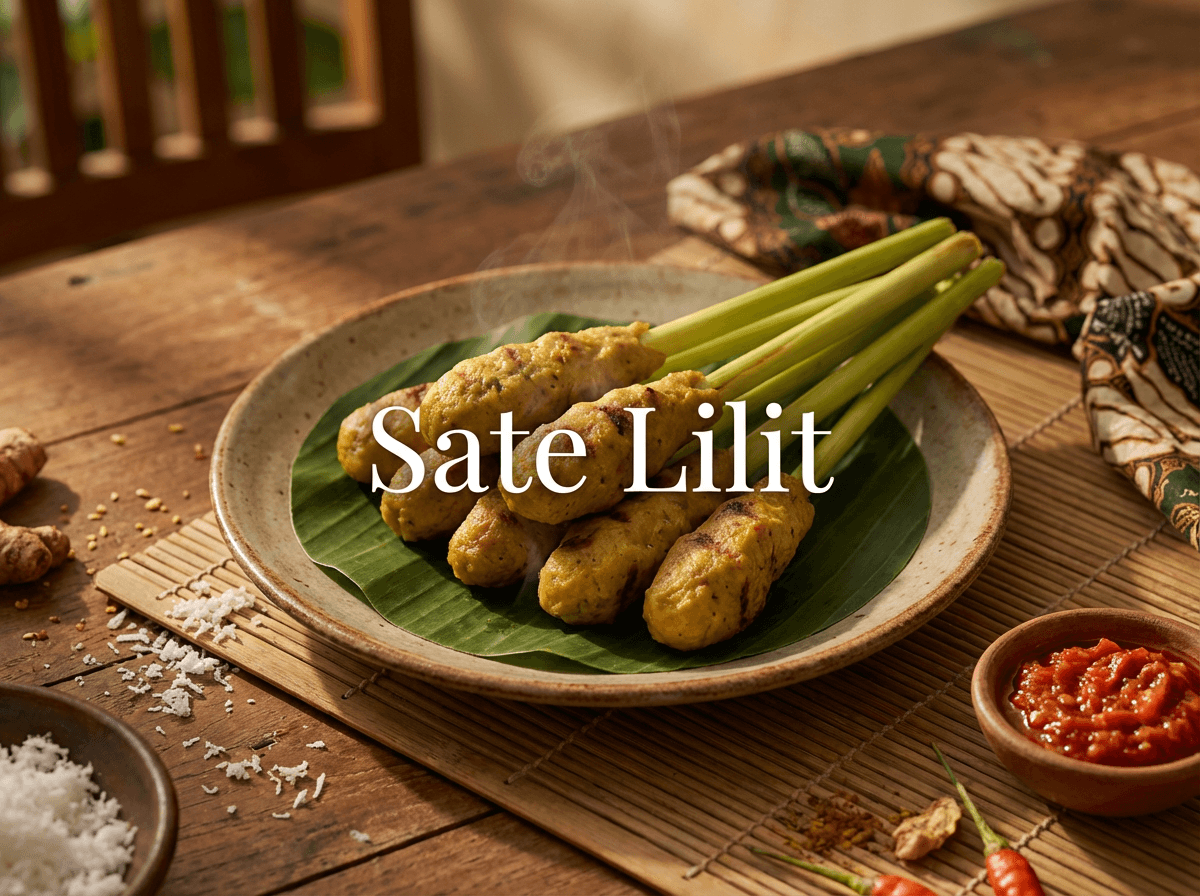 |
Sate Lilit is not a dish that announces itself loudly. It doesn’t arrive with smoke and crackle like skewered goat over charcoal, nor does it demand attention with heavy spice. It sits closer to the hand than to the fire. Closer to preparation than performance.
In Balinese kitchens, this is the kind of food that appears while someone is still talking. While someone else is grinding spices in a stone mortar. While the radio hums in the background and the afternoon drifts toward evening. Sate Lilit is shaped by touch, not by measurement. You feel when the mixture is right. You know when it clings properly to the lemongrass stalk.
I remember watching hands do this work. Not teaching hands, just hands doing. Pressing the seasoned meat gently around the stalk, smoothing it like clay, never squeezing. The lemongrass perfumed the air before it ever touched the fire. That smell alone already felt like cooking.
Traditionally, Sate Lilit is made with fish, often mackerel or tuna, finely chopped rather than ground. In many family kitchens, chicken is used instead. Pork too, depending on household and occasion. What matters is not the protein but the balance. Coconut for softness. Kaffir lime leaf for lift. Galangal for depth. A restrained heat that warms rather than burns.
These satays are grilled gently. They are turned patiently. No rushing. The goal is not char but fragrance. The lemongrass stalks slowly release their oils into the meat as the coconut caramelizes just enough to hold everything together.
Sate Lilit is rarely served alone. It belongs on a table with rice, sambal, maybe lawar or a simple vegetable dish. It belongs among people. It is food that invites another bite without demanding it.
This is how it has always felt to me. Quietly confident. Deeply familiar. Food that carries culture not in spectacle, but in repetition.
Recipe – Sate Lilit (serves 4)
Ingredients (serves 4)
For the satay mixture
For shaping
Preparation
Start by preparing the spice base. In a mortar or food processor, grind the garlic, shallots, minced lemongrass, galangal, coriander, white pepper, turmeric, salt, and palm sugar into a smooth paste. The aroma should already feel warm and citrusy.
In a large bowl, combine the minced fish or chicken with the grated coconut. Add the spice paste, sliced kaffir lime leaves, and the egg. Mix gently but thoroughly. The mixture should be soft, cohesive, and slightly sticky, able to hold onto a skewer without slipping.
Take a lemongrass stalk and scoop a small handful of the mixture. Press it gently around the stalk, forming an elongated oval shape about the length of your palm. Smooth the surface lightly. Repeat until all the mixture is used.
Preheat a grill pan or barbecue to medium heat. Lightly oil the surface. Grill the satays slowly, turning regularly, until cooked through and lightly golden on all sides. This usually takes about 10–12 minutes. Avoid high heat, as the coconut can burn quickly.
Serve warm with steamed rice, sambal, and simple vegetables.
Optional cultural note
In Bali, Sate Lilit often appears during ceremonies and communal cooking days, when many hands prepare food together. Each person shapes a few satays. No one counts. No one rushes. The rhythm matters more than speed.
Selamat Makan |