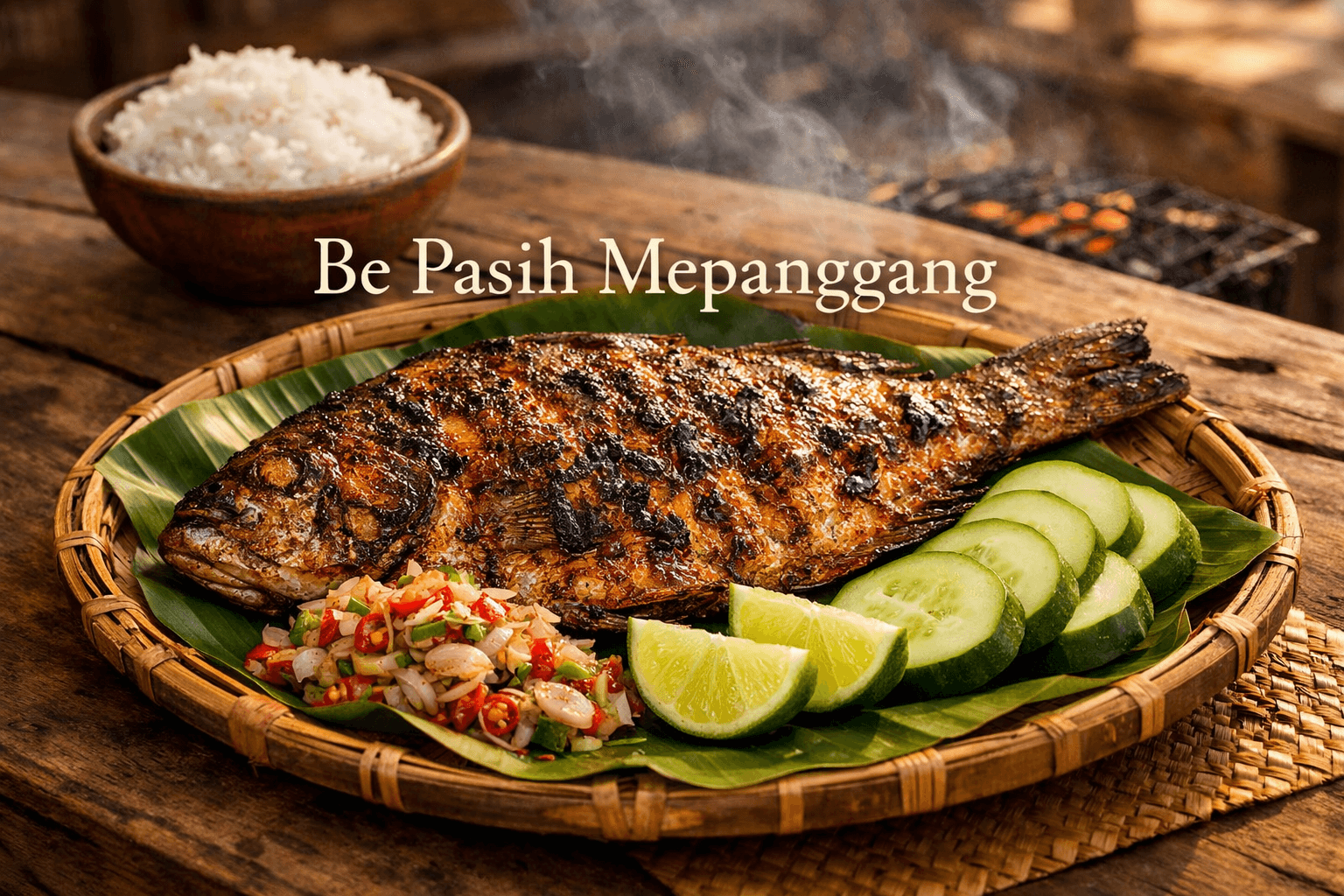
In Bali, grilled fish is not restaurant food. It is made at roadside warungs where the grill is a repurposed oil drum, the fire is coconut husks, and the fish was swimming an hour ago. The smoke is thick and sweet. The fish skin blisters and crisps. The flesh stays tender. This is be pasih mepanggang, and it is one of the purest expressions of Balinese cooking: take something fresh, add fire and spice, and let both do their work.
My uncle taught me that the marinade should be thin enough to penetrate the flesh but thick enough to form a crust. He never used a brush. He used his hands, working the paste into every crevice, under the gills, inside the belly. The turmeric stains never washed out. He wore them like a badge.
This version uses a charcoal grill or broiler and any firm white fish: snapper, sea bass, or even mackerel if you like it oily and strong. The paste is punchy, the sambal is bright and raw, and the rice is mandatory. This is food that makes you want to sit on the floor and eat with your hands.
Serves: 4 Prep time: 30 minutes (plus 30 minutes marinating) Cook time: 15-20 minutes
Ingredients
For the fish:
- 1 whole white fish (800 g / 1.75 lb), such as snapper or sea bass, cleaned and scaled
- 2 tbsp (30 ml) lime juice
- 1 tsp salt
For the spice paste (bumbu kuning):
- 6 shallots, peeled
- 4 cloves garlic, peeled
- 3 cm (1.2 in) fresh turmeric root, peeled (or 1.5 tsp ground turmeric)
- 2 cm (0.8 in) fresh ginger, peeled
- 2 cm (0.8 in) galangal, peeled
- 3 red chilies, stems removed
- 2 bird's eye chilies (optional, for heat)
- 1 stalk lemongrass (white part only), finely sliced
- 2 kaffir lime leaves, midrib removed, finely sliced
- 1 tsp shrimp paste (terasi), toasted
- 1 tsp coriander seeds, toasted and ground
- 1/2 tsp black peppercorns, crushed
- 1 tsp palm sugar (or brown sugar)
- 1 tsp salt
- 3 tbsp (45 ml) coconut oil
For sambal matah (raw shallot sambal):
- 8 shallots, thinly sliced
- 4 bird's eye chilies, thinly sliced
- 2 kaffir lime leaves, midrib removed, very finely sliced
- 1 stalk lemongrass (white part only), very finely sliced
- Juice of 2 limes
- 3 tbsp (45 ml) coconut oil, warmed
- 1 tsp shrimp paste (terasi), toasted and crumbled (optional)
- 1/2 tsp salt
- 1/2 tsp sugar
For serving:
- Steamed white rice
- Lime wedges
- Fresh cucumber slices
Instructions
1. Prepare the fish
Score the fish on both sides with 3-4 deep diagonal cuts, going almost to the bone. This helps the marinade penetrate and allows the fish to cook evenly. Rub the fish inside and out with lime juice and salt. Let it sit for 10 minutes, then pat dry with paper towels.
2. Make the spice paste
Grind shallots, garlic, turmeric, ginger, galangal, chilies, lemongrass, kaffir lime leaves, shrimp paste, coriander, and black pepper into a smooth paste using a mortar and pestle or food processor. Add coconut oil, palm sugar, and salt, and blend until smooth. The paste should be thick but spreadable.
3. Marinate the fish
Rub the spice paste all over the fish, inside the cavity, under the gills, and deep into the scored cuts. Use your hands and work it in. Let the fish marinate at room temperature for 30 minutes, or refrigerate for up to 2 hours. Bring back to room temperature before grilling.
4. Make the sambal matah
In a bowl, combine sliced shallots, chilies, kaffir lime leaves, lemongrass, lime juice, warm coconut oil, shrimp paste (if using), salt, and sugar. Toss well and let it sit for 10 minutes. The oil will soften the shallots slightly while keeping them raw and crunchy. Taste and adjust seasoning.
5. Grill the fish
Preheat a charcoal grill to medium-high heat, or preheat your broiler. Oil the grill grates well to prevent sticking. Place the fish on the grill and cook for 7-10 minutes per side, depending on thickness. The skin should be deeply charred and crispy, and the flesh should flake easily when tested with a fork. Baste occasionally with any remaining marinade during the first half of cooking.
6. Rest and serve
Transfer the fish to a serving platter and let it rest for 2-3 minutes. Serve whole, with sambal matah spooned over the top or on the side, alongside steamed rice, lime wedges, and cucumber slices. Eat with your hands if possible.
Notes
- On fish selection: Any firm white fish works well. Snapper and sea bass are traditional. Mackerel, sardines, or even trout are excellent if you prefer oilier fish. The key is freshness.
- Charcoal is best: The coconut husk smoke is irreplaceable, but regular charcoal works. A broiler is fine too, just watch it closely.
- Sambal matah is raw: That's the point. The shallots stay crunchy and sharp. It's a counterpoint to the rich, charred fish.
- Banana leaves (optional): If you have them, line the grill with banana leaves before placing the fish. They add fragrance and prevent sticking.
- Make extra sambal: It's addictive. You'll want it on your rice, your cucumber, everything.