"Unraveling the Flavorful Secrets of Ikan Arsik: A Culinary Tale to Savor"
The Indo Fork
Archives
"Unraveling the Flavorful Secrets of Ikan Arsik: A Culinary Tale to Savor"
SIGN UP FOR OUR NEWSLETTER
Ikan Arsik |
When turmeric, river fish, and patience define a place |

The Indo Fork
Jan 22, 2026
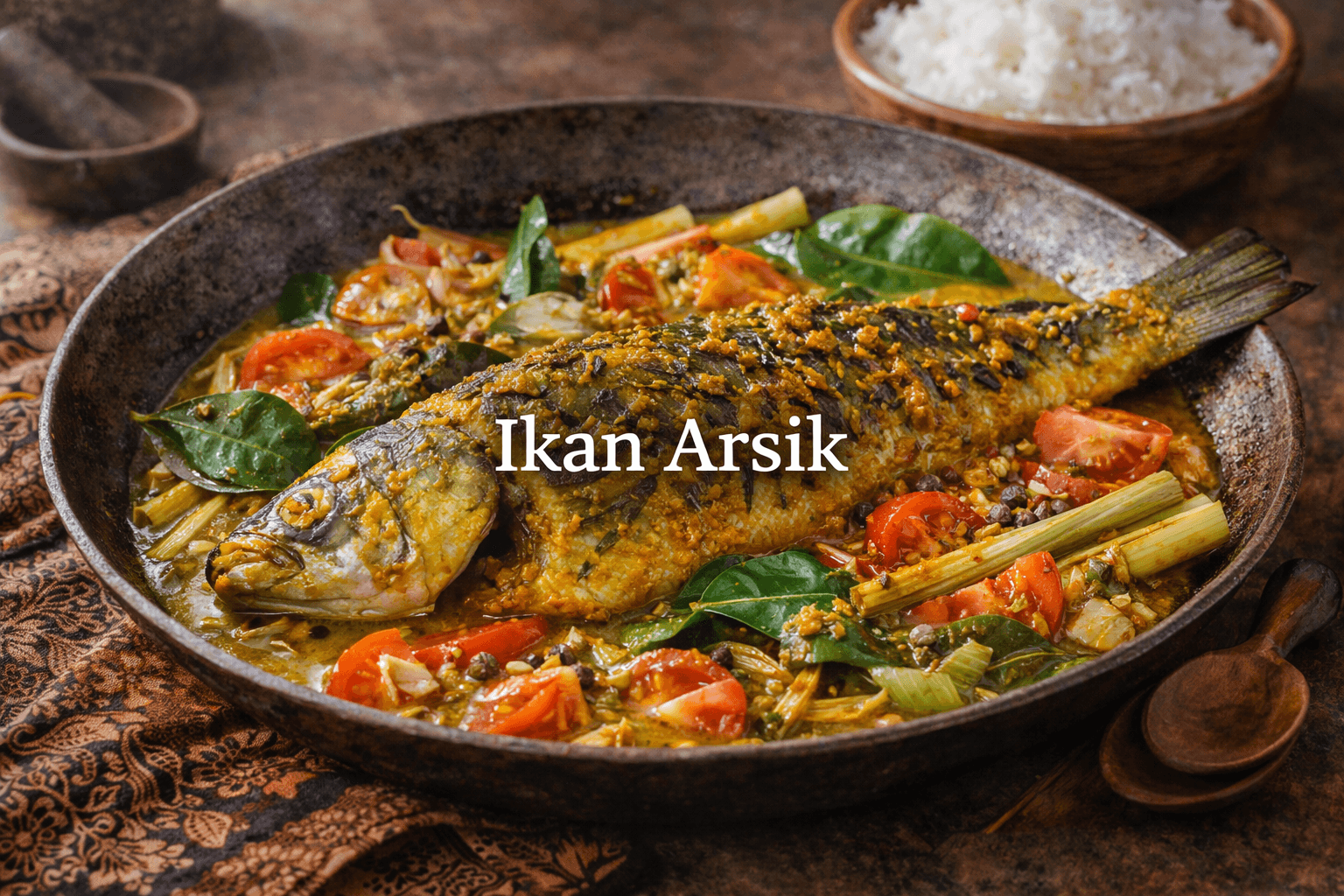 |
Some Indonesian dishes shout spice. Others burn. Ikan Arsik does neither. It holds its ground quietly, confidently, rooted in landscape rather than excess.
This dish comes from the Batak people of North Sumatra, traditionally prepared with freshwater fish from Lake Toba. Carp is classic. Not because it is delicate, but because it is resilient enough to carry strong aromatics without falling apart. Arsik is not a sauce dish. It is a controlled simmer, where every ingredient keeps its shape, its role, its dignity.
What makes Ikan Arsik unmistakable is its use of andaliman, often called Batak pepper. Citrusy, numbing, slightly electric, it has no true substitute. This is not generic Indonesian cooking. This is regional, specific, and unapologetically local.
In Batak households, this dish marks gatherings, family moments, and respect. The fish is often served whole. Breaking it carelessly is frowned upon. Arsik teaches attention.
Ikan Arsik (Batak Turmeric Fish)
Ingredients
Serves 4
Fish
Bumbu (spice paste)
Aromatics & structure
Method
Clean the fish thoroughly, keeping it whole. Rub lightly with salt and lime juice. Set aside for 10 minutes, then rinse and pat dry.
Blend all bumbu ingredients into a thick, smooth paste.
Lay half of the aromatics in a wide, heavy pan: lemongrass, kaffir lime leaves, tomatoes, green onion, and torch ginger. Place the fish on top.
Spread the spice paste evenly over the fish, then scatter the remaining aromatics on top. Sprinkle with crushed andaliman.
Add water gently along the side of the pan. Do not pour over the fish.
Cover and simmer on very low heat for 35–45 minutes. Do not stir. Do not flip. Occasionally tilt the pan to redistribute liquid.
The fish is done when the liquid has reduced, the spices cling to the surface, and the flesh is tender but intact.
How It Is Served
Ikan Arsik is served whole, with steamed white rice. Sambal is optional and often omitted. The dish already carries complexity. Bitter greens or simple blanched vegetables are enough.
This is not a casual dish. It asks for attention. You eat around the bones slowly, deliberately, respecting the form.
A note on andaliman
Andaliman is essential. Without it, the dish loses its identity. If unavailable, the result may still be good, but it will no longer be Arsik. This dish does not adapt easily, and that is precisely its strength.
Ayo, Makan-Makan! |