"Gado-Gado Jawa – Authentic Javanese Vegetable Salad with Peanut Sauce"
The Indo Fork
Archives
"Gado-Gado Jawa – Authentic Javanese Vegetable Salad with Peanut Sauce"
SIGN UP FOR OUR NEWSLETTER
|
A warm Javanese salad where vegetables meet peanut sauce and memory |

The Indo Fork
Jan 14, 2026
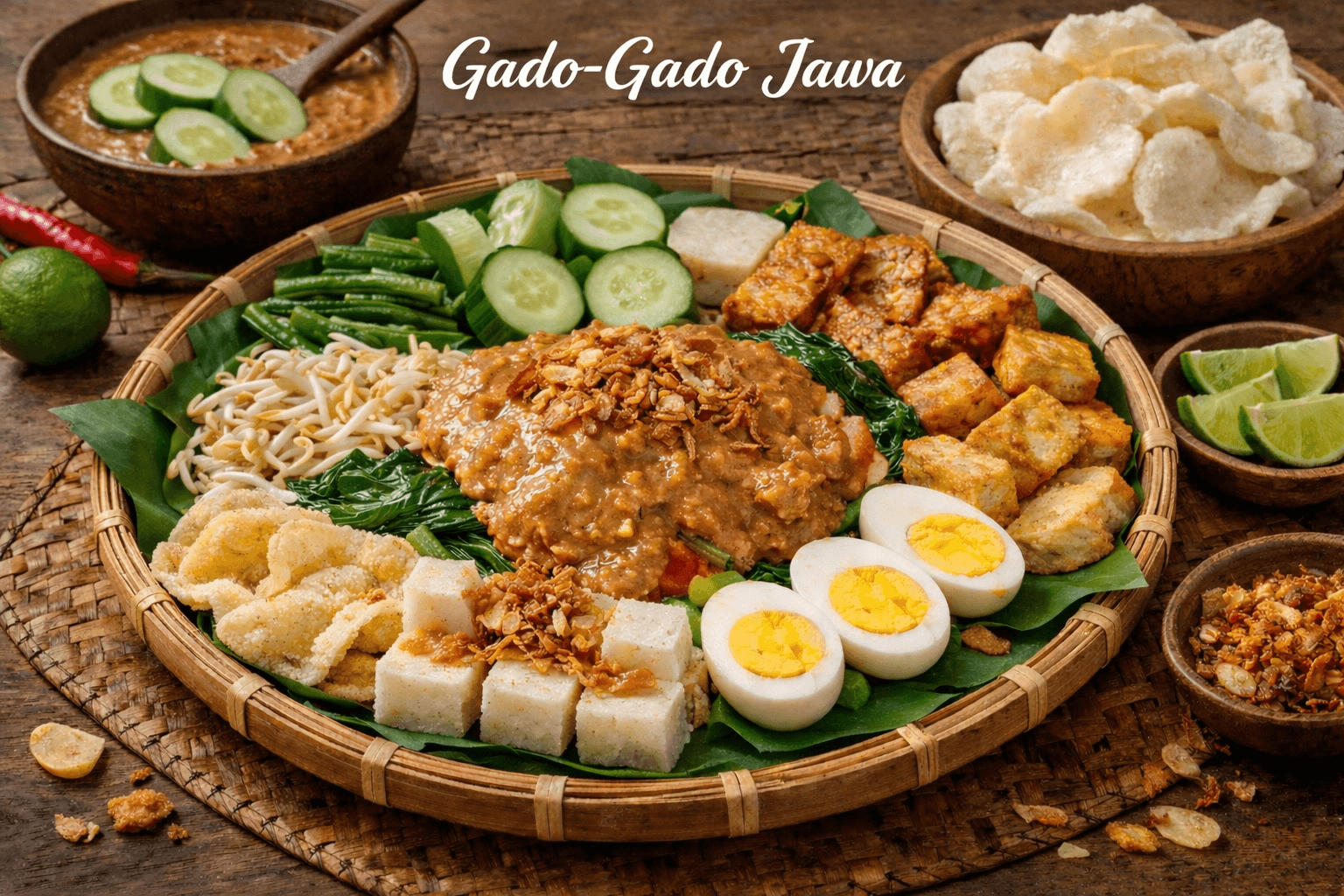 |
In many Javanese homes, gado-gado is not announced. It simply appears. A pot of water is already simmering. Vegetables are washed, trimmed, blanched just long enough to soften but never to lose their color. Somewhere in the background, a mortar rests on the counter, stained with turmeric and peanut oil from years of use.
Gado-gado is often described as a salad, but that word never quite fits. It is warm. It is grounding. It carries the weight of a full meal, even when served on a modest plate. In Java, this dish lives between everyday practicality and quiet celebration. It is cooked when there is little meat, when vegetables are plentiful, when time allows for a bit of care.
The heart of gado-gado is not the vegetables. It is the saus kacang, the peanut sauce. Thick, dark, slightly sweet, gently spicy. Made by hand, it demands attention. Peanuts are ground slowly, garlic and chili folded in, palm sugar shaved and added in stages. Tamarind brings a sour note that lifts everything, while kecap manis gives the sauce its unmistakable Javanese depth.
Each family balances this sauce differently. Some prefer it sweeter, almost glossy. Others keep it sharper, with more tamarind and chili. What never changes is the rhythm of making it. Grinding, tasting, adjusting. The sauce tells you when it is ready.
The vegetables are simple and seasonal. Long beans cut into short lengths. White cabbage, softened but still crisp. Bean sprouts barely cooked. Spinach or kangkung when available. Tofu and tempeh, fried until golden, add warmth and substance. Slices of boiled egg bring softness and calm.
In Java, gado-gado is often assembled individually. Vegetables arranged, sauce spooned generously on top, never mixed in advance. A scattering of fried shallots. Crackers for crunch. Sometimes a squeeze of lime at the table.
It is a dish meant to be eaten slowly. The heat of the sauce against the vegetables. The balance of sweet, salt, and spice settling in. It fills the stomach, but more importantly, it steadies the day.
Gado-gado is not festive food. It is family food. The kind that feeds many without fuss, that carries the memory of hands that have made it hundreds of times before. Warm. Familiar. Always enough.
Gado-Gado Jawa – Authentic Family Recipe
Ingredients (serves 4)
Vegetables
Protein
Peanut sauce (saus kacang)
To finish
Method
Bring a large pot of lightly salted water to a boil. Blanch the vegetables one by one, starting with the long beans, then cabbage, bean sprouts, and finally spinach. Each should be cooked briefly, just until tender but still bright. Drain well and set aside.
Prepare the peanut sauce using a mortar and pestle or food processor. Grind the peanuts until coarse, then add garlic and chilies. Continue grinding until a thick paste forms. Add salt, palm sugar, tamarind water, and kecap manis. Mix thoroughly.
Slowly add warm water, a little at a time, until the sauce becomes thick but pourable. Taste and adjust sweetness, salt, or acidity as needed. The sauce should be bold and balanced.
Arrange the vegetables on a serving platter or individual plates. Add tofu, tempeh, and halved boiled eggs. Spoon the warm peanut sauce generously over everything.
Finish with fried shallots and serve with crackers and lime wedges on the side.
Emping & Kroepoek – The Essential Crunch
No plate of gado-gado in Java feels complete without something crisp on the side. Emping, made from melinjo nuts, brings a slightly bitter, nutty crunch that cuts through the richness of the peanut sauce. Kroepoek adds lightness and air, shattering softly with each bite.
They are not mixed in. They are broken by hand, dipped, eaten between spoonfuls. A rhythm learned at the table, not written down.
To serve
Serve both in a separate bowl or basket. Let everyone add them as they eat, keeping the crunch alive until the last bite.
Lontong – Javanese Rice Cakes for Gado-Gado
In many Javanese households, gado-gado is often served with lontong. Not as an extra, but as a quiet foundation. The compact rice absorbs the peanut sauce slowly, turning every bite richer and more grounding. With lontong, gado-gado becomes a complete meal, the kind meant to carry you through the afternoon.
Cultural note
In Java, gado-gado is often made fresh per order at street stalls. The vendor grinds the sauce in front of you, adjusting it to your preference. At home, that same care remains, even without an audience.
Selamat Makan |