The Indo Fork
Archives
"Sayur Lodeh – Traditional Javanese Coconut Vegetable Stew"
SIGN UP FOR OUR NEWSLETTER
|
A Javanese coconut stew for ordinary days |

The Indo Fork
Jan 14, 2026
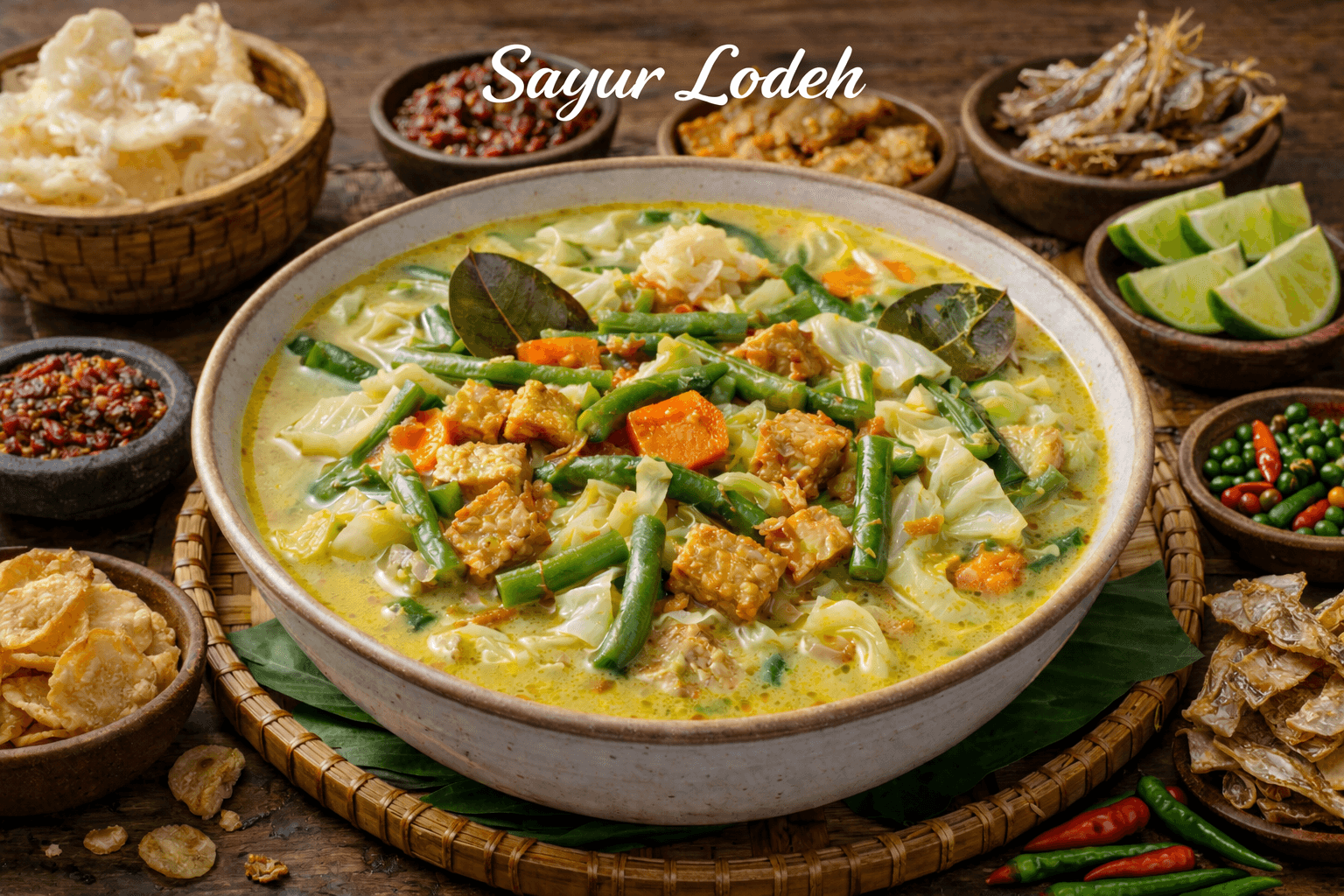 |
Sayur lodeh is the sound of a weekday kitchen. A knife on a wooden board. A pot that does not hurry. Someone opening a window because coconut milk should never boil too loudly.
This is not a dish for showing off. It belongs to routine. To lunches eaten late, dinners stretched by conversation, rice scooped again because the sauce asks for it. In many Javanese households, sayur lodeh appears when vegetables need using, when meat is scarce, or when balance is required after richer food.
The broth is coconut milk, but it is never heavy. Lemongrass and galangal keep it upright. Garlic and shallot give depth. A little chili, never too much. The vegetables vary by season and by hand. Young jackfruit when available, cabbage when not. Long beans almost always. Tempeh often, because it belongs here.
Everything cooks gently together. No sharp edges. No dominating flavor. Sayur lodeh teaches patience. Coconut milk separates if pushed. Vegetables lose their dignity if rushed. This dish rewards calm attention.
At the table, sayur lodeh rarely stands alone. There is rice, always. Sambal for those who want heat. Emping or kroepoek for contrast. Sometimes ikan asin, sometimes fried tofu. The stew connects everything without insisting.
It is comfort food, but not nostalgic food. It is present. Practical. Still alive in daily cooking because it works.
Sayur Lodeh – Authentic Javanese Family Recipe
Ingredients (serves 4)
Vegetables
Spice paste
Aromatics
Method
Grind all spice paste ingredients into a smooth paste. Heat a little oil in a pot and gently fry the paste until fragrant. Add lemongrass, galangal, and bay leaves. Stir briefly.
Add water and bring to a gentle simmer. Add the harder vegetables first, carrot or chayote and long beans. Cook for 5 minutes.
Pour in the coconut milk and stir carefully. Add cabbage and tempeh. Simmer gently for another 10–15 minutes. Do not let the stew boil hard.
Season with salt and a small pinch of sugar. Taste for balance. The broth should be savory, softly sweet, and rounded.
Serve hot with steamed rice.
Cultural note
Sayur lodeh is often eaten the day it is made, but many cooks insist it tastes even better after resting. Like many coconut dishes, it deepens when allowed to sit quietly.
To serve with
Selamat Makan |