The Indo Fork
Archives
“A Bowl, a Grill, a Quiet Sweet Ending”

Subscribe
The Indo Fork
Archives
“A Bowl, a Grill, a Quiet Sweet Ending”
The Indo Fork
Jan 24, 2026
Selamat datang at The Indo Fork |
The Indo Fork is a story-driven publication about Indo family cooking, memory, and tradition. |
Rooted in inherited recipes and kitchen rituals, it explores Indonesian and Indo food through personal stories, cultural context, and authentic dishes passed down through generations. |
Trivia Question❓What is the name of the popular Indonesian dish made of rice cakes served with peanut sauce, eggs, and vegetables? Answer at the bottom of the newsletter |
A Table That Smells Like Evening Rain |
 |
Some meals arrive loudly.
Others take their time.
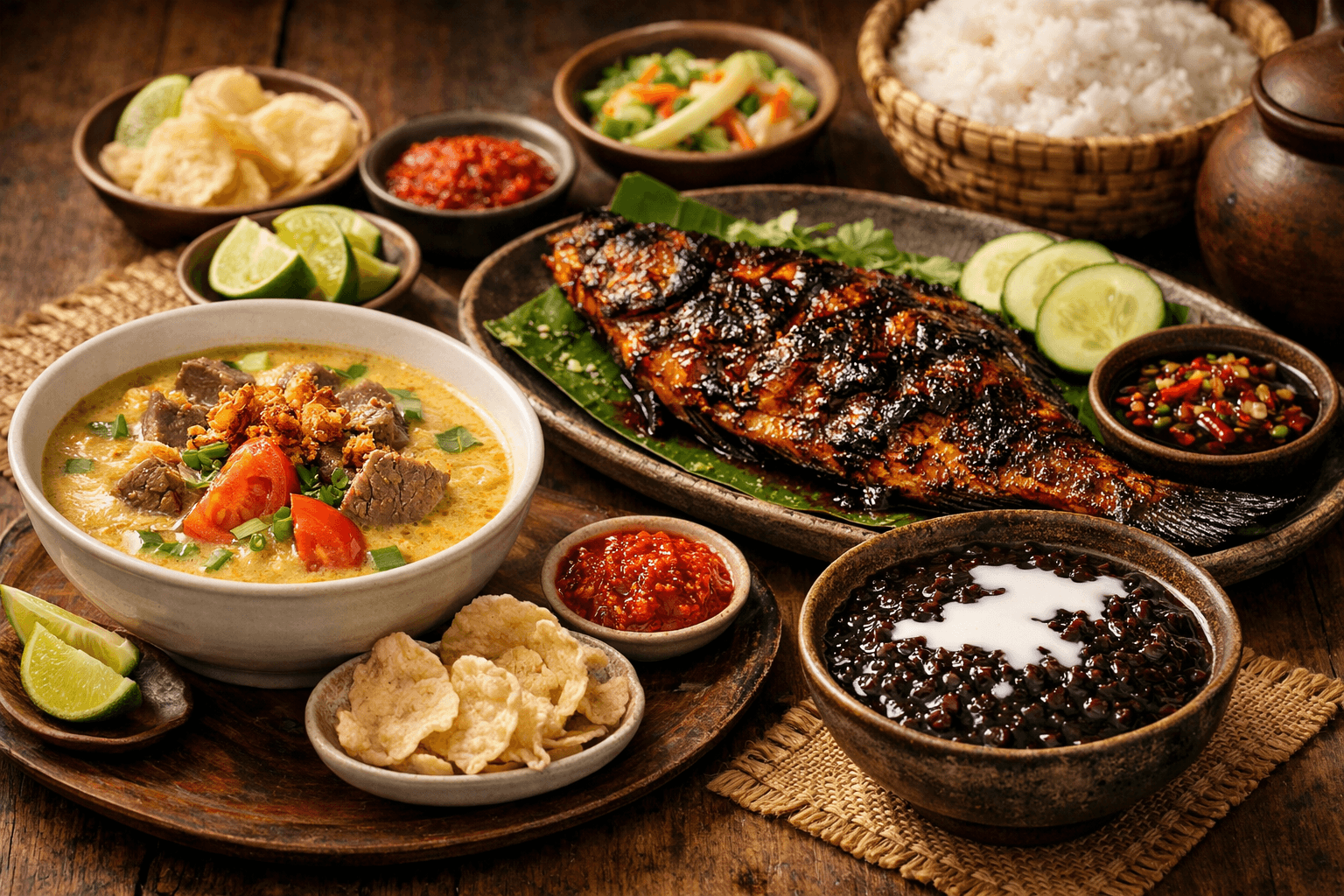
This one begins softly, with steam rising from a bowl, fogging the windows a little. Outside, the day cools down. Inside, the kitchen wakes up.
In many Indo families, dinner was never rushed. The soup came first, because someone was always still arriving. Then something from the grill, because fire means togetherness. And finally, something sweet, not to impress, but to slow things down before the night really begins.
Tonight’s table follows that rhythm. A Jakarta soup that smells of coconut and lime. A fish grilled over open heat, brushed with sweet soy until it shines. And a bowl of black rice, dark and comforting, meant to be eaten quietly.
This is not festive food. This is everyday heritage. And that is exactly why it matters.
Soto Betawi is a city soup, born in Jakarta kitchens where influences layered naturally, the way families did. Coconut milk and beef broth meet here, not fighting for attention, but settling into something round and gentle.
In many homes, the pot would already be on when you arrived. You could smell it before you stepped inside. Lemongrass, galangal, kaffir lime leaf. The kind of smell that makes you take your shoes off faster.
This soup is generous without being heavy. Beef simmered until it gives up easily. A broth that coats the spoon, not the mouth. Always served with small side plates, because everyone finishes it their own way. A squeeze of lime. A little sambal. Crunchy emping on the side.
It is a beginning that invites conversation, not silence. |
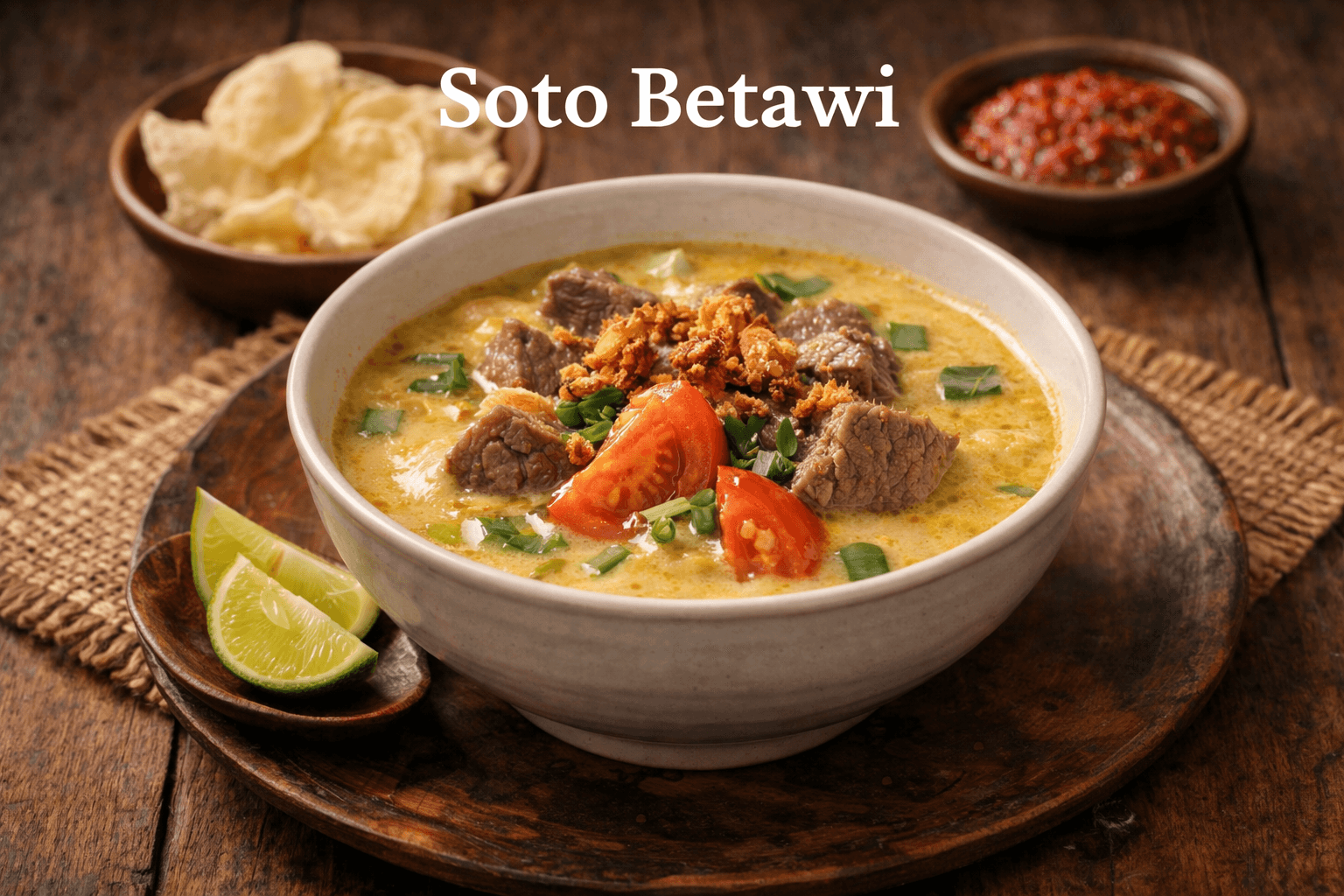 |
First course – Soto Betawi
Soto Betawi is a city soup, born in Jakarta kitchens where influences layered naturally, the way families did. Coconut milk and beef broth meet here, not fighting for attention, but settling into something round and gentle.
In many homes, the pot would already be on when you arrived. You could smell it before you stepped inside. Lemongrass, galangal, kaffir lime leaf. The kind of smell that makes you take your shoes off faster.
This soup is generous without being heavy. Beef simmered until it gives up easily. A broth that coats the spoon, not the mouth. Always served with small side plates, because everyone finishes it their own way. A squeeze of lime. A little sambal. Crunchy emping on the side.
It is a beginning that invites conversation, not silence.
Recipe – Soto Betawi
Ingredients (serves 4) Beef chuck 600 g | 1.3 lb Water 1.5 liter | 6 cups Coconut milk 400 ml | 1⅔ cups Lemongrass 2 stalks, bruised Galangal 4 cm | 1½ inch, sliced Kaffir lime leaves 3 Bay leaves 2 Garlic 5 cloves Shallots 6 Coriander seeds 1 tsp White pepper ½ tsp Nutmeg ¼ tsp Salt to taste Oil for frying
To serve
Lime wedges Sambal oelek Emping or krupuk
Preparation
Cut the beef into large chunks. Bring the water to a gentle boil and simmer the beef for about 90 minutes until tender, skimming when needed.
Grind garlic, shallots, coriander, white pepper and nutmeg into a paste and fry gently in oil until fragrant. Add the spice paste, lemongrass, galangal, kaffir lime leaves and bay leaves to the broth and simmer for 20 minutes.
Pour in the coconut milk and heat gently without boiling. Season with salt and serve hot, with lime, sambal and emping on the side. |
 |
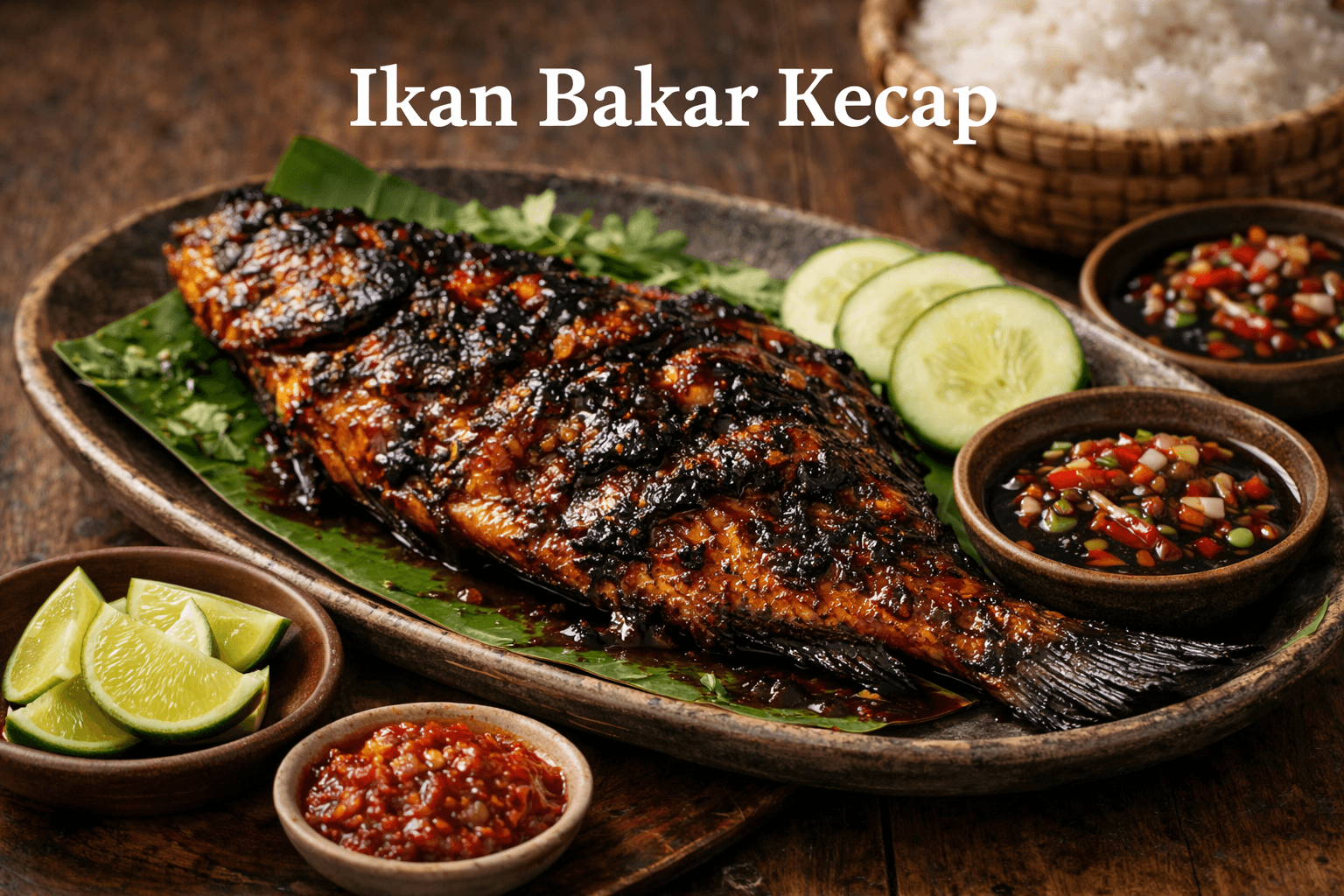 |
Second course – Ikan Bakar Kecap
Grilling fish is never just about the fish.
It is about standing outside. About smoke in your clothes. About someone fanning the coals with a piece of cardboard because the fire refuses to behave.
Ikan bakar kecap is simple food that demands attention. Sweet soy, garlic, a little spice. The grill does the rest. The fish chars slightly, caramelises, sticks, releases. You brush, turn, brush again.
This dish belongs to evenings. Served with rice, sambal kecap, maybe a bit of acar. No garnish needed. The flavour is already complete.
Recipe – Ikan Bakar Kecap
Ingredients (serves 4) Whole fish such as mackerel or snapper, cleaned 2 × 600 g | 2 × 1.3 lb
Marinade
Sweet soy sauce (ketjap manis) 6 tbsp Garlic 4 cloves, finely chopped Coriander powder 1 tsp Lime juice 2 tbsp Oil 2 tbsp
Preperation
Score the fish on both sides. Mix all marinade ingredients. Brush the fish generously and marinate for at least 30 minutes. Grill over charcoal or a hot grill pan, brushing repeatedly and turning carefully, until cooked through and lightly charred. Serve immediately with rice, sambal kecap and acar. |
 |
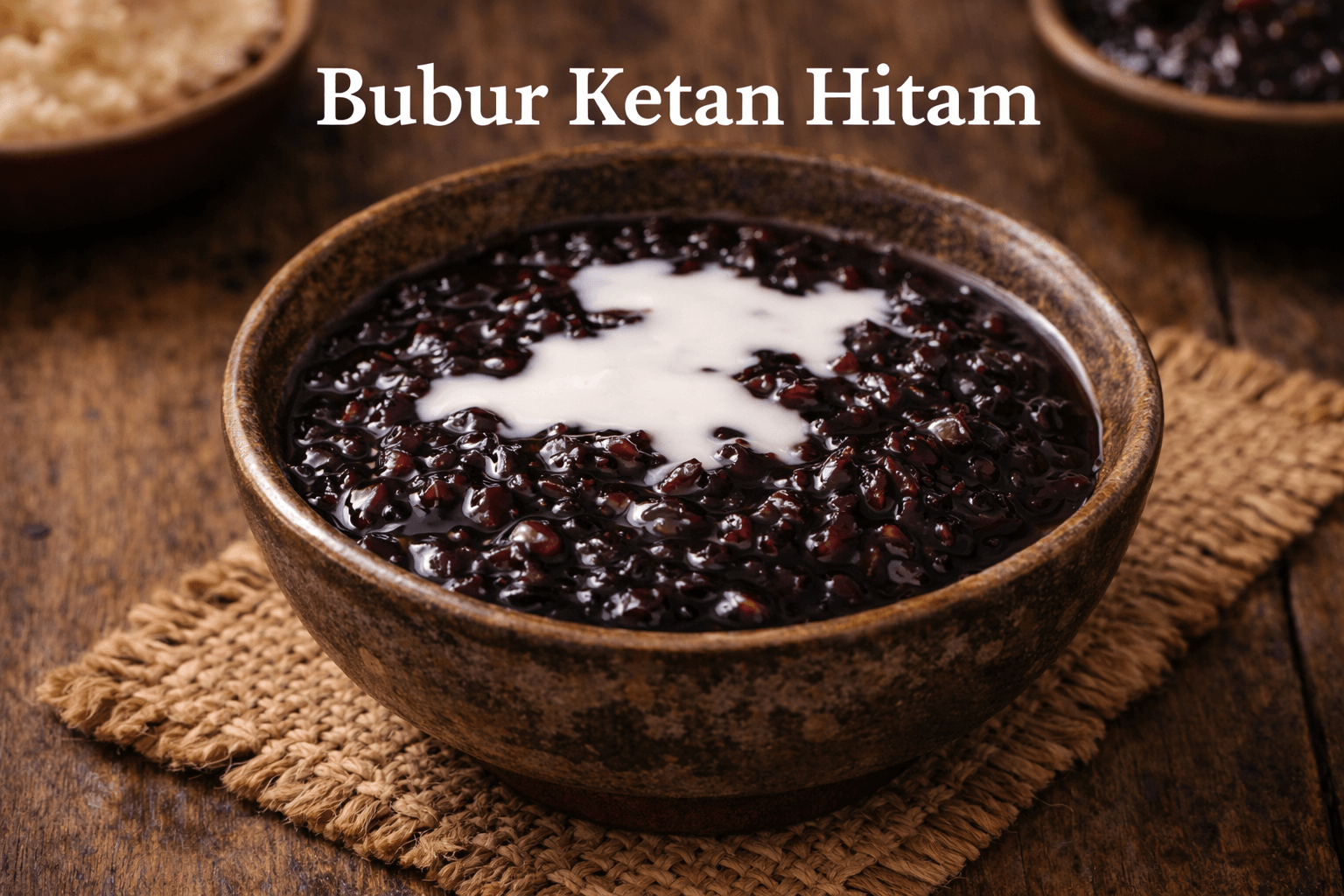 |
Third course – Bubur Ketan Hitam
Some desserts are meant to impress. This one is meant to comfort.
Black sticky rice cooks slowly. It needs patience, water, time. In many kitchens it simmered while the rest of the meal happened around it.
The colour is deep, almost purple. The taste is earthy and sweet from palm sugar. Coconut milk poured on top, never stirred in.
You eat this with a spoon, but also with memory. Late evenings. Quiet kitchens. The feeling that no one is in a hurry to leave.
Recipe – Bubur Ketan Hitam
Ingredients (serves 4) Black glutinous rice 250 g | 1¼ cups Water 1.2 liter | 5 cups Palm sugar 150 g | 5 oz, chopped Pandan leaf 1, knotted Salt a pinch
Coconut sauce Coconut milk 200 ml | ¾ cup Salt a pinch
Soak the rice overnight and drain. Cook the rice with water and pandan leaf over low heat for about 90 minutes, stirring occasionally, until thick and tender.
Add palm sugar and salt and cook for another 10 minutes. Heat the coconut milk gently with salt, without boiling. Serve warm, with the coconut sauce poured on top. |
 |
This week's article recipes |
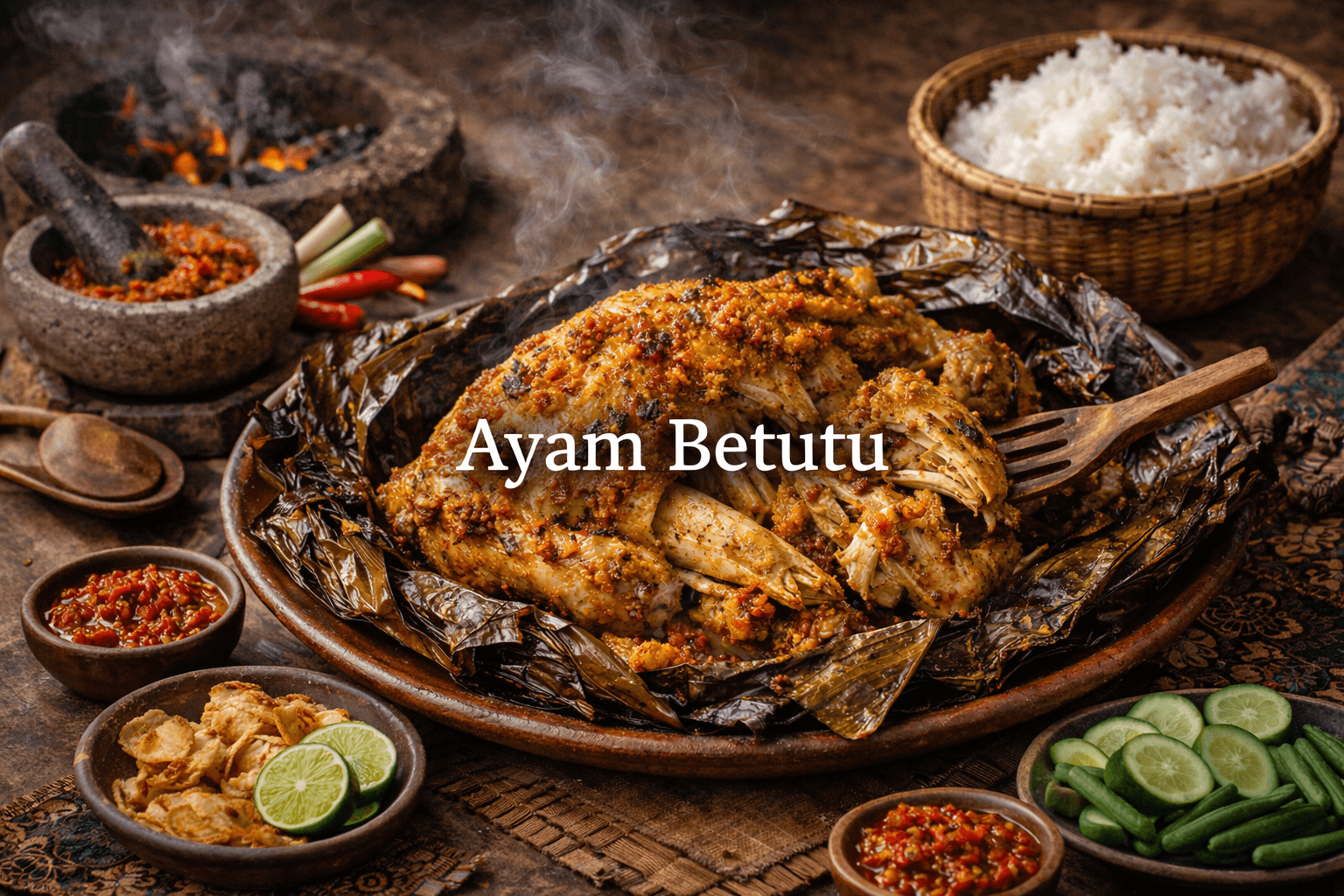 |
Ayam Betutu is a dish rooted in the earth—more ceremony than recipe.
Its preparation is an act of memory, where heat, spice, and time mingle.
Originating from Bali and traditionally prepared for weddings and temple gatherings, a whole chicken is massaged with bumbu betutu, a powerful aromatic paste, then wrapped in banana leaves and slow-cooked in a ground pit called an emburan.
This slow, sealed cooking creates meat fall-apart tender and saturated with flavor—whispering complexity rather than shouting.
Families far from Bali adapt with ovens and ingenuity, but keep the ritual intact.
At the table, Ayam Betutu is served never alone, always with rice, sambal, and crisp accents like krupuk or cucumber for balance.
This is gathering food: patience, flavor, and memory on a plate. Read More... |
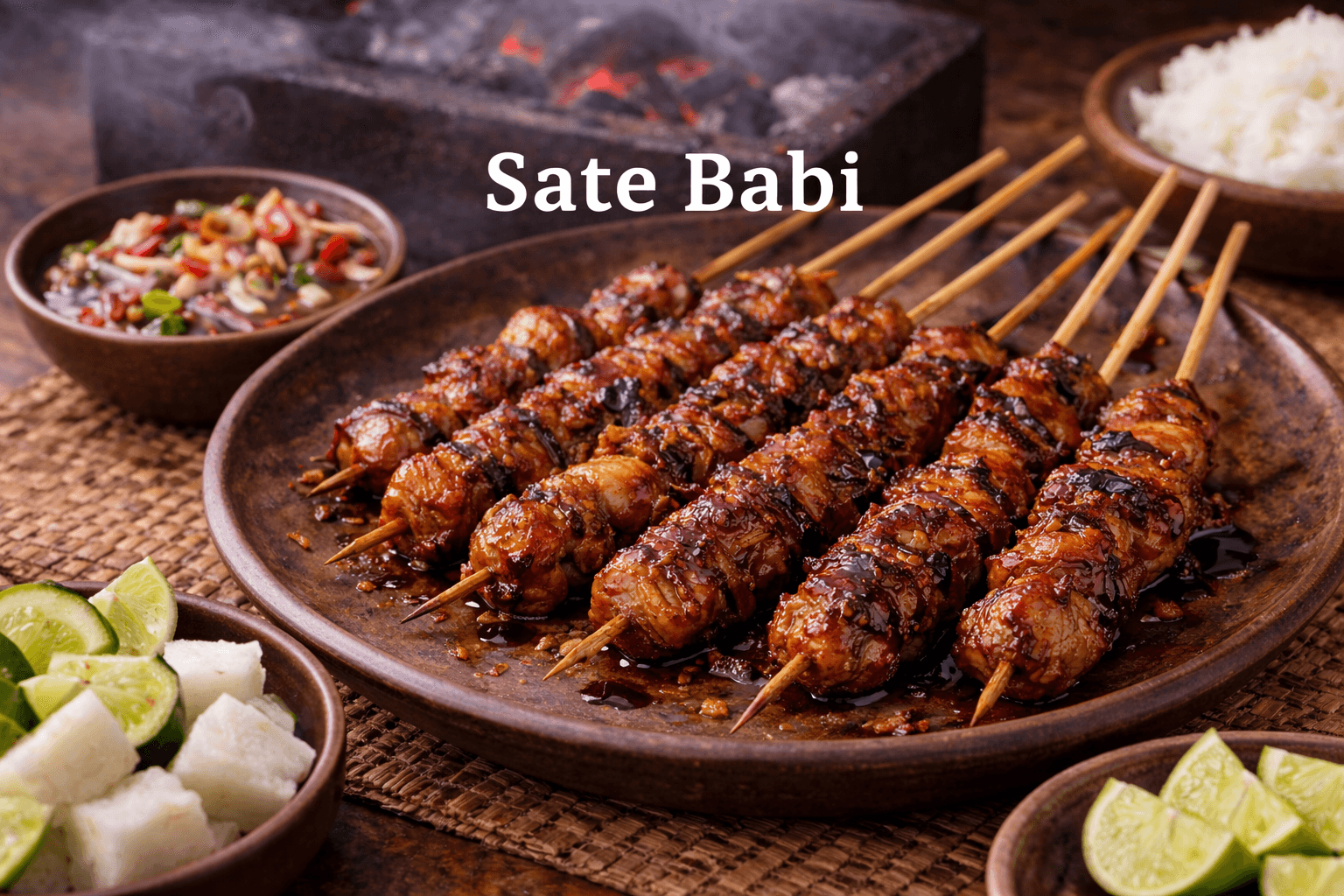 |
Sate Babi is Bali’s signature pork satay, a dish known for its bold smoke, layered spices, and unapologetic richness.
Unlike lighter meats, pork in Bali is purposefully cut with fat for added flavor, melting over charcoal to baste each skewer from within and bind spices deep into every bite.
This satay isn’t just street food—it's culturally woven into temple festivals, family gatherings, and ceremonies, delivering an unmistakable taste of Bali’s culinary spirit.
The dish features pork shoulder marinated with sweet soy sauce, garlic, shallot, and traditional Balinese spices, then grilled over charcoal for a glossy finish.
Sate Babi is most often served without peanut sauce. Instead, sambal matah—a punchy Balinese salsa—cuts through the richness, with steamed rice on the side.
This is satay with confidence—a local favorite that asks for just the right balance of heat and patience. Selamat makan. Read More... |
 |
Selamat makan,
This menu does not try to be modern. It does not ask for shortcuts.
It asks for time. For presence. For letting a meal unfold the way it always did.
If you cook one dish from this table, cook it slowly.
If you cook all three, invite someone over. These dishes were never meant to be eaten alone. Ayo Makan-Makan! |
Follow us on Facebook: https://www.facebook.com/theindofork
Entrepeneur? Do our business quiz: |
|
💡 Answer to Trivia Question: Gado-gado |
THIS PUBLICATION SPONSORED BY