The Indo Fork
Archives
Crispy tofu, slow braised beef and pandan pancakes

Subscribe
The Indo Fork
Archives
Crispy tofu, slow braised beef and pandan pancakes
The Indo Fork
Mar 7, 2026
Selamat datang at The Indo Fork |
The Indo Fork is a story-driven publication about Indo family cooking, memory, and tradition. |
Rooted in inherited recipes and kitchen rituals, it explores Indonesian and Indo food through personal stories, cultural context, and authentic dishes passed down through generations. |
Trivia Question❓In the Molukken cuisine, what is the signature dish that consists of various ingredients such as palm sugar, coconut milk, and spices like galangal, lemongrass, and turmeric, all cooked together with chicken or fish? Answer at the bottom of the newsletter |
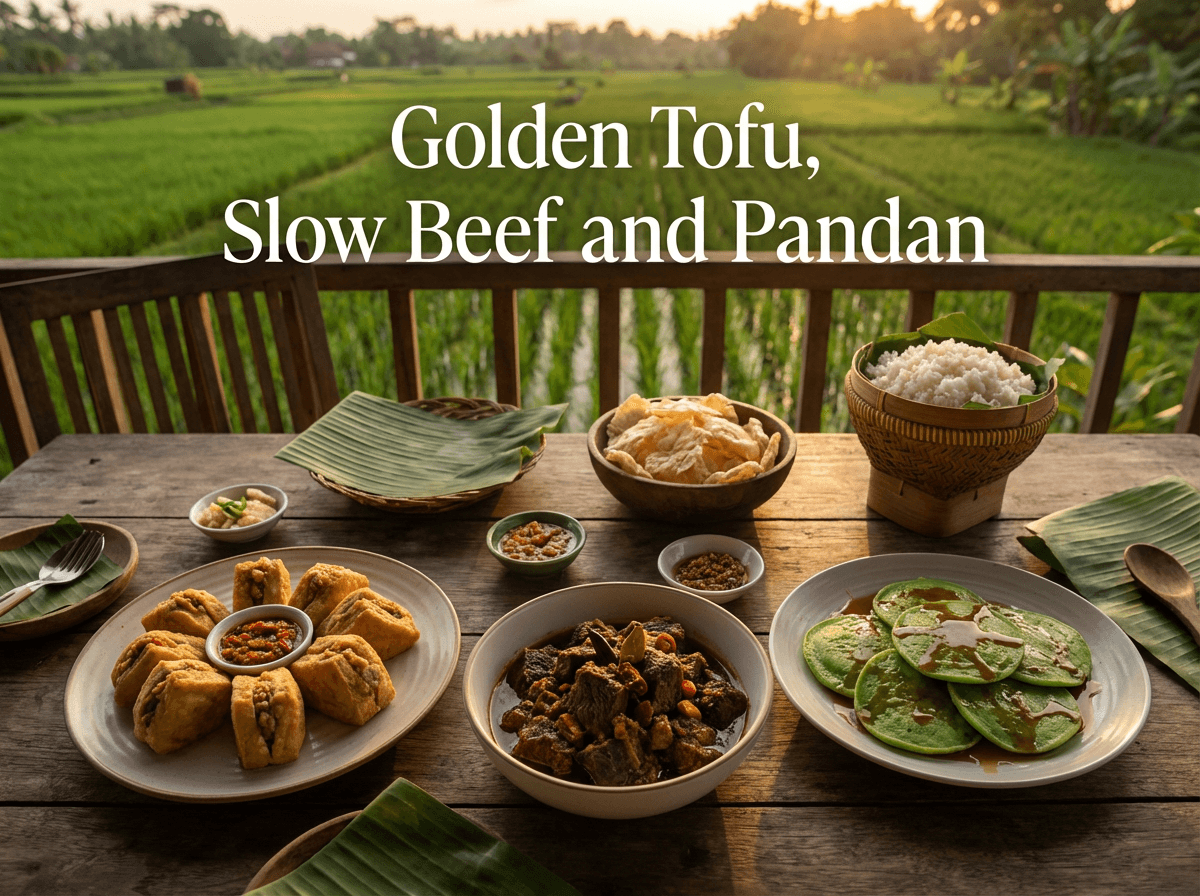
Golden Tofu, Slow Simmered Beef and the Scent of Pandan
Three dishes from the patient side of the Indonesian kitchen |
 |
Some Indonesian dishes are built around fire.
Others are built around time.
The kind of time that allows spices to slowly soften in oil, that lets a sauce deepen into something dark and glossy, that fills the kitchen with aromas long before anyone sits down to eat.
This menu begins with a familiar sound. Oil quietly bubbling as tofu turns golden in the pan. Inside the crisp shell hides a vegetable filling scented with garlic and white pepper.
Then comes the dish that defines patience. Beef simmered slowly in sweet soy sauce, nutmeg and cloves until the sauce becomes dark and rich. It is a dish that belongs to long afternoons and generous plates of rice.
And finally something light and fragrant. Small pandan pancakes cooked in shallow pans, soft in the middle with caramelized edges and the scent of coconut drifting upward.
Three dishes that remind us that the Indonesian kitchen often rewards the cook who is willing to slow down. |
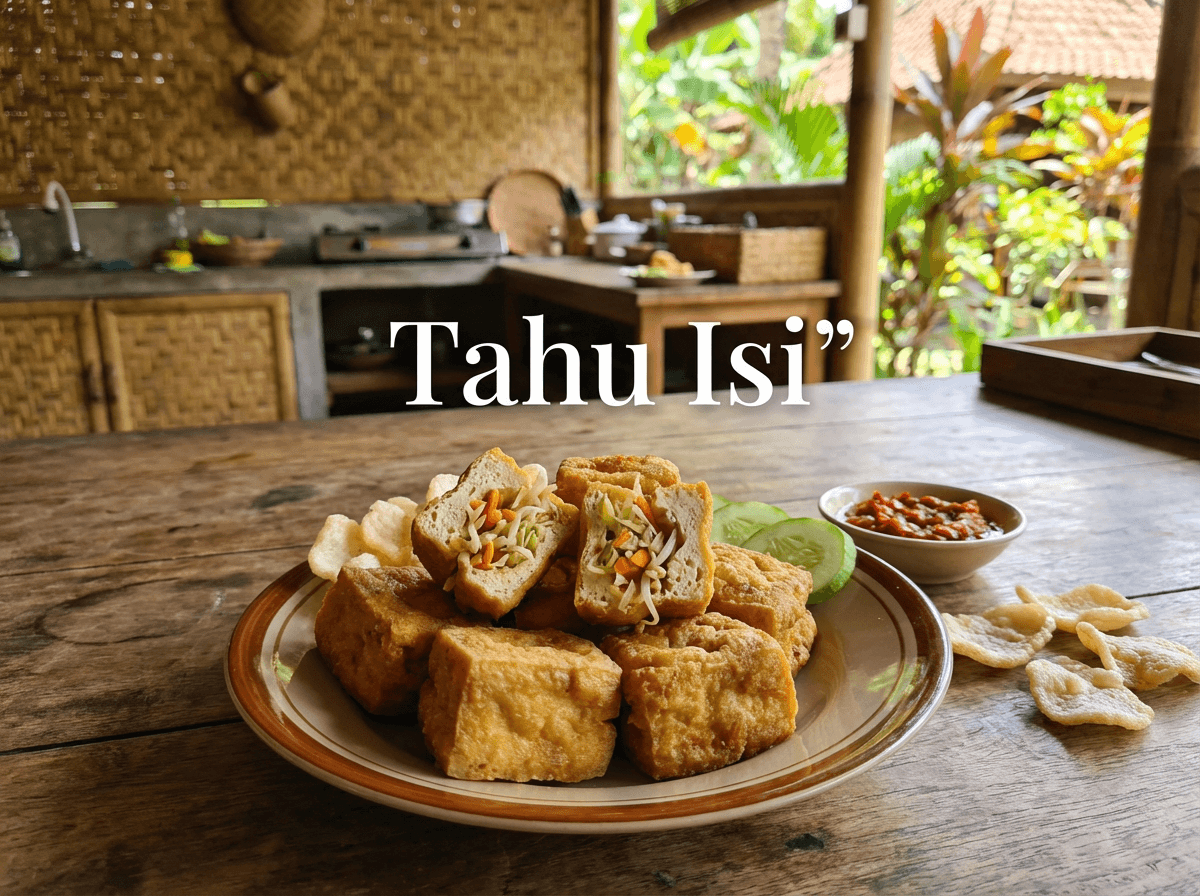 |
Tahu Isi
Across Indonesia, tofu is rarely treated as something plain. It becomes crispy snacks, sambal companions, or quick evening dishes eaten with rice and fresh chilies.
Tahu isi is one of those small pleasures that appear in street stalls and home kitchens alike. Tofu is hollowed out slightly, filled with vegetables and then dipped in batter before frying.
The result is crisp outside, soft inside, and impossible to eat only one.
Recipe – Tahu Isi (serves 4)
Ingredients (metric & imperial)
8 firm tofu squares (about 400 g / 14 oz) 100 g shredded cabbage (3.5 oz) 1 carrot, julienned 50 g bean sprouts (1.7 oz) 2 cloves garlic, minced 2 spring onions, sliced ½ tsp white pepper 1 tsp salt
For batter 100 g flour (3.5 oz) 150 ml water (⅔ cup) ½ tsp turmeric powder ½ tsp salt
Oil for frying
Preparation
Lightly hollow the center of each tofu piece with a spoon.
Sauté garlic briefly in a little oil. Add cabbage, carrot and bean sprouts and cook for 2 minutes. Season with salt and white pepper.
Stuff the tofu pieces with the vegetable mixture.
Mix batter ingredients until smooth.
Dip tofu into batter and fry in hot oil until golden and crisp, about 4 minutes.
Serve with fresh chili and cucumber slices. |
 |
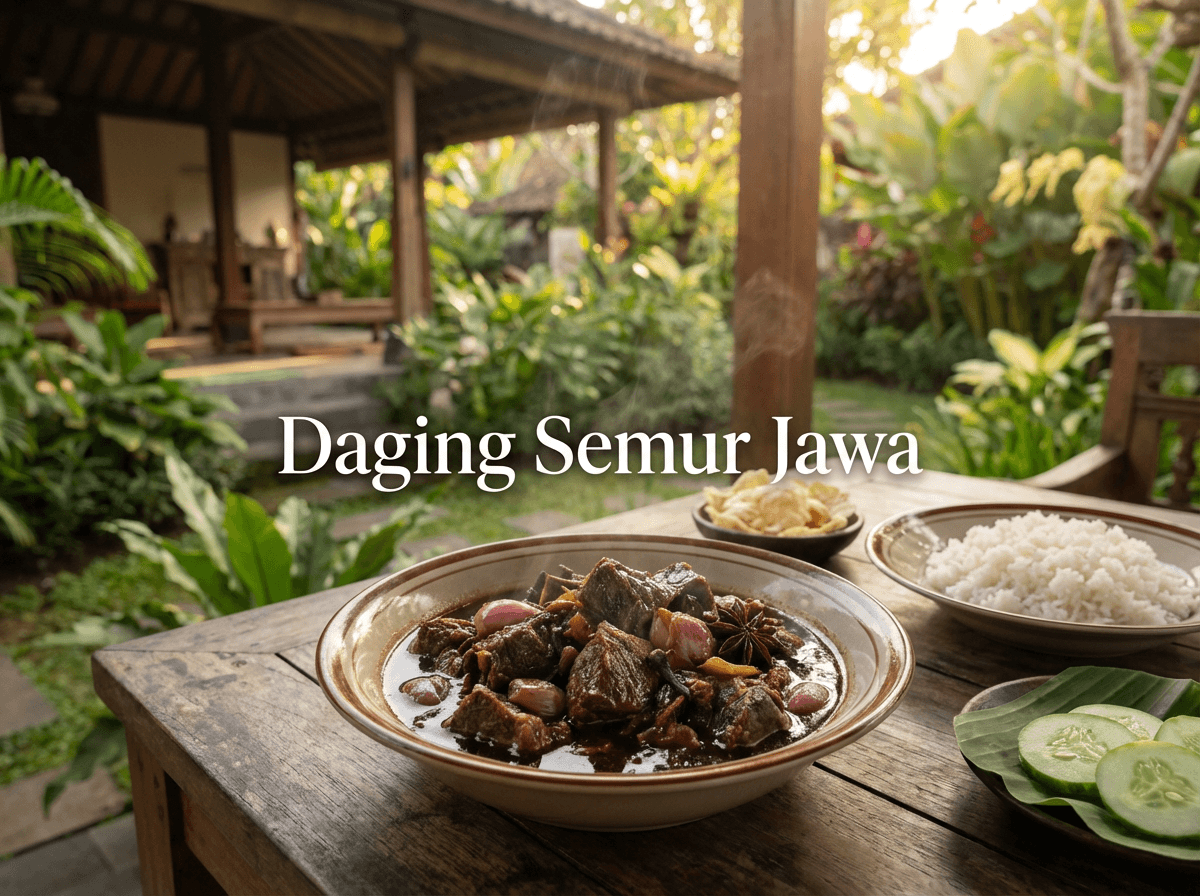 |
Daging Semur Jawa
Semur is one of the dishes where Dutch colonial influence and Indonesian flavors quietly meet. The technique resembles a slow braise, but the seasoning belongs entirely to the Indonesian pantry.
Sweet soy sauce, cloves, nutmeg and garlic slowly coat the meat as it cooks. The sauce thickens into something dark and comforting.
Served with rice and crisp crackers, it becomes the centerpiece of a home table.
Recipe – Daging Semur Jawa (serves 4)
Ingredients (metric & imperial)
600 g beef stew meat (1.3 lb) 3 tbsp vegetable oil 4 shallots, sliced 3 cloves garlic, minced 3 tbsp kecap manis 500 ml water (2 cups)
Spices 1 cinnamon stick 2 cloves ¼ tsp nutmeg 1 tsp ground coriander 1 tsp salt ½ tsp white pepper
Optional sides Emping crackers Steamed rice Cucumber slices
Preparation
Heat oil in a heavy pot. Sauté shallots and garlic until fragrant.
Add beef and brown lightly.
Add spices, kecap manis and water.
Simmer gently for 60–75 minutes until beef becomes tender and sauce thickens.
Taste and adjust seasoning.
Serve with rice and emping. |
 |
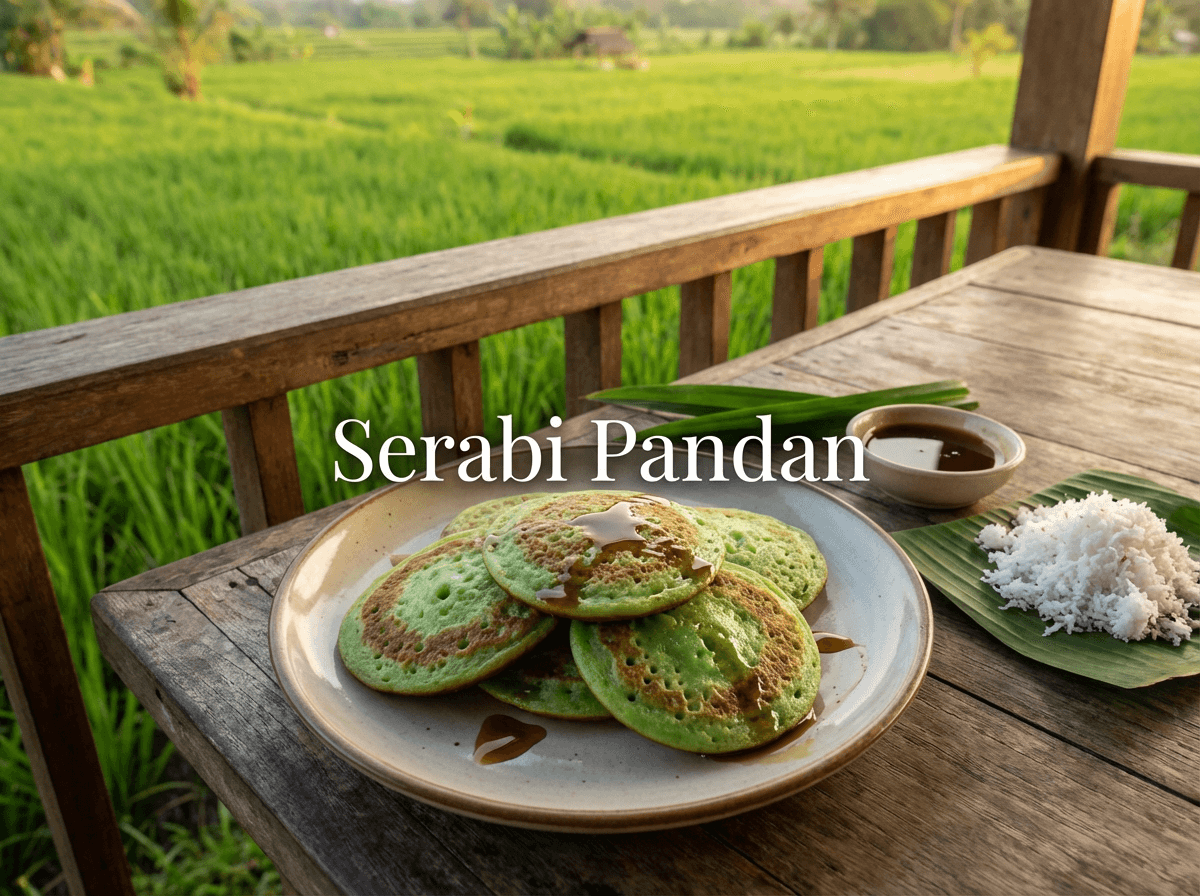 |
Serabi Pandan
Serabi are small coconut pancakes that appear in markets across Java, often cooked in small clay pans over charcoal.
Some are plain, others are flavored with pandan, giving them their beautiful green color and gentle aroma.
The edges become lightly crisp while the center remains soft and almost custard-like.
Recipe – Serabi Pandan (serves 4)
Ingredients (metric & imperial)
150 g rice flour (5 oz) 50 g wheat flour (1.7 oz) 400 ml coconut milk (1⅔ cups) 2 tbsp sugar ¼ tsp salt 1 tsp pandan extract
Palm sugar syrup 100 g palm sugar (3.5 oz) 100 ml water (⅓ cup)
Preparation
Mix rice flour, wheat flour, sugar and salt.
Slowly add coconut milk while whisking.
Add pandan extract and mix into a smooth batter.
Heat a small pan lightly greased with oil.
Pour a small ladle of batter and cook on low heat until the edges set and the center remains soft.
For syrup, simmer palm sugar with water until dissolved.
Serve serabi warm with palm sugar syrup. |
 |
This week's article recipes |
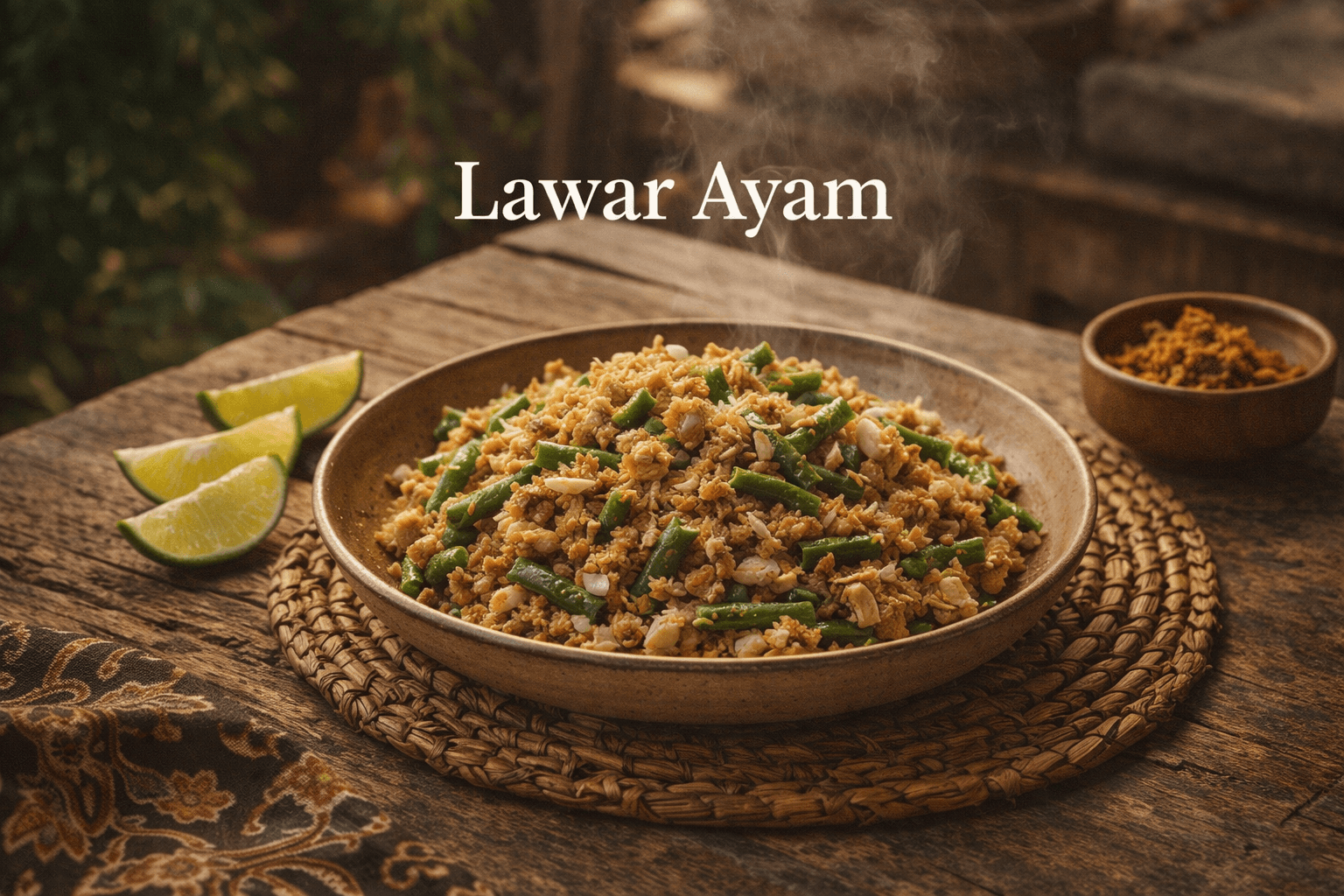 |
Lawar Ayam is a Balinese spiced chicken salad deeply connected to local ceremonies like births, weddings, and temple anniversaries.
This vibrant dish gathers friends and family in bustling outdoor kitchens, where each finely chopped piece and every spice blend is a testament to Balinese tradition.
At its heart is the base genep spice paste, infusing chicken, long beans, tender cabbage, and coconut with bold heat and fragrance.
While lawar is traditionally made with fresh animal blood, this version keeps it optional and more approachable for home cooks, but still insists on precision chopping and generous seasoning.
Each bite is a balance of texture, spice, and zest, meant to be served fresh and savored with rice alongside grilled meats.
Vegetarian alternatives like jackfruit or tofu let everyone experience the unique flavors and communal spirit of this Balinese classic. Read More... |
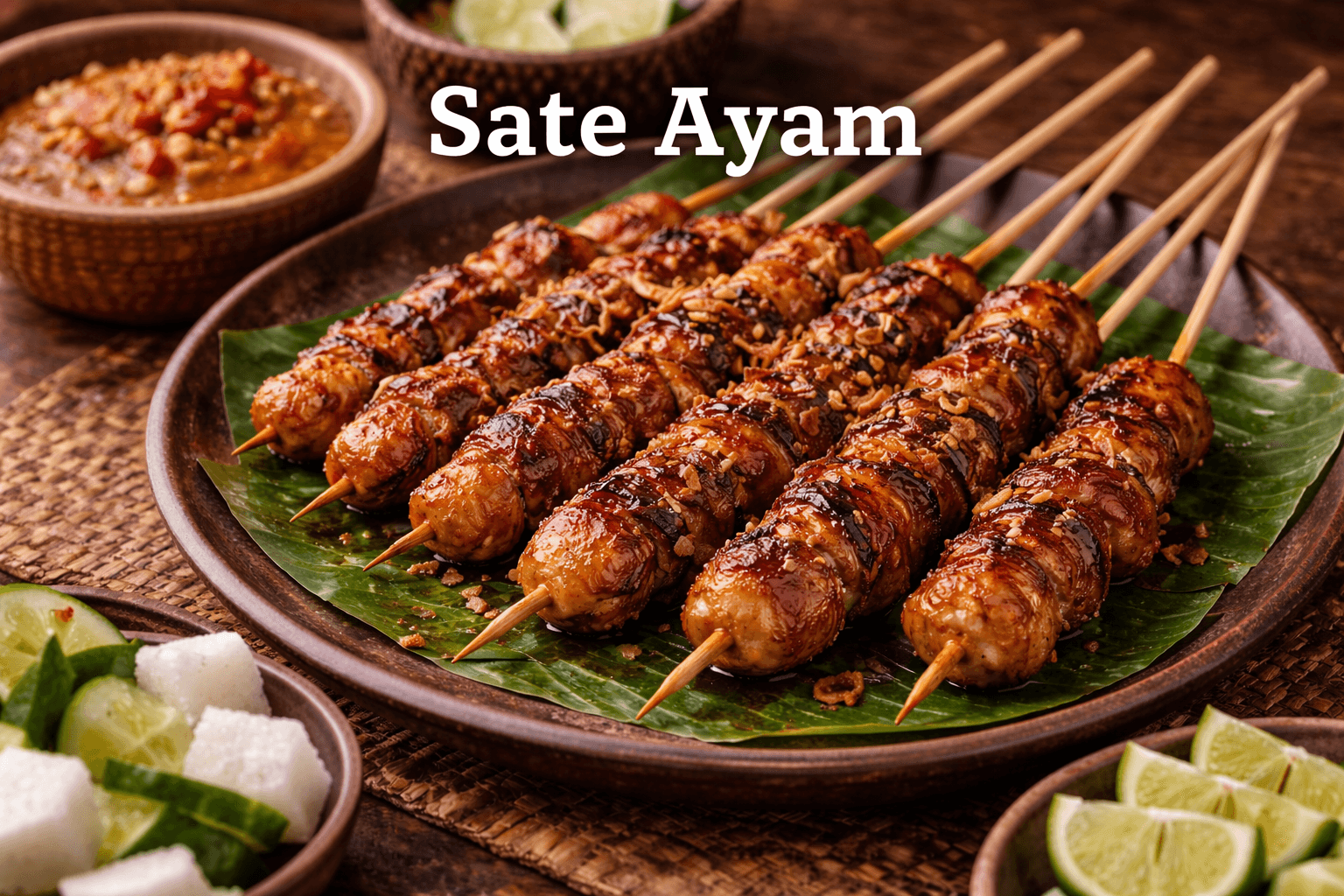 |
Sate Ayam — Indonesia’s beloved chicken satay — is a defining street food, signaling its presence with the crackle of charcoal, the scent of caramelized soy, and the rich aroma of warming peanuts.
This dish varies by vendor and region, with unique touches on ingredients and methods, but always follows the same rhythm: cut, skewer, grill, sauce, repeat.
Chicken thigh, marinated in sweet soy and spice, is grilled over hot coals until charred but juicy, then topped with a balanced peanut sauce that accentuates, never overwhelms.
Sate Ayam isn’t just street food — it’s celebration fare, enjoyed at local gatherings, family birthdays, and spontaneous feasts.
Traditionally served with rice cakes, crisp cucumber, and fried shallots, it invites sharing and conversation, making every meal a communal event.
Balance of flavors — smoky, savory, slightly sweet — is key, ensuring every bite brings comfort and connection. Read More... |
 |
Cultural Note
Serabi are traditionally cooked in clay pans over charcoal, which gives them a subtle smoky aroma that modern stovetops rarely reproduce.
Selamat Makan |
Follow us on Facebook: https://www.facebook.com/theindofork
Entrepeneur? Do our business quiz: |
|
💡 Answer to Trivia Question: Rendang |
THIS PUBLICATION SPONSORED BY