The Indo Fork
Archives
Steam and Coconut Milk

Subscribe
The Indo Fork
Archives
Steam and Coconut Milk
The Indo Fork
Feb 28, 2026
Selamat datang at The Indo Fork |
The Indo Fork is a story-driven publication about Indo family cooking, memory, and tradition. |
Rooted in inherited recipes and kitchen rituals, it explores Indonesian and Indo food through personal stories, cultural context, and authentic dishes passed down through generations. |
Trivia Question❓In the Molukken cuisine, what is the signature dish that consists of various ingredients such as palm sugar, coconut milk, and spices like galangal, lemongrass, and turmeric, all cooked together with chicken or fish? Answer at the bottom of the newsletter |
Steam, Corn and Coconut Milk
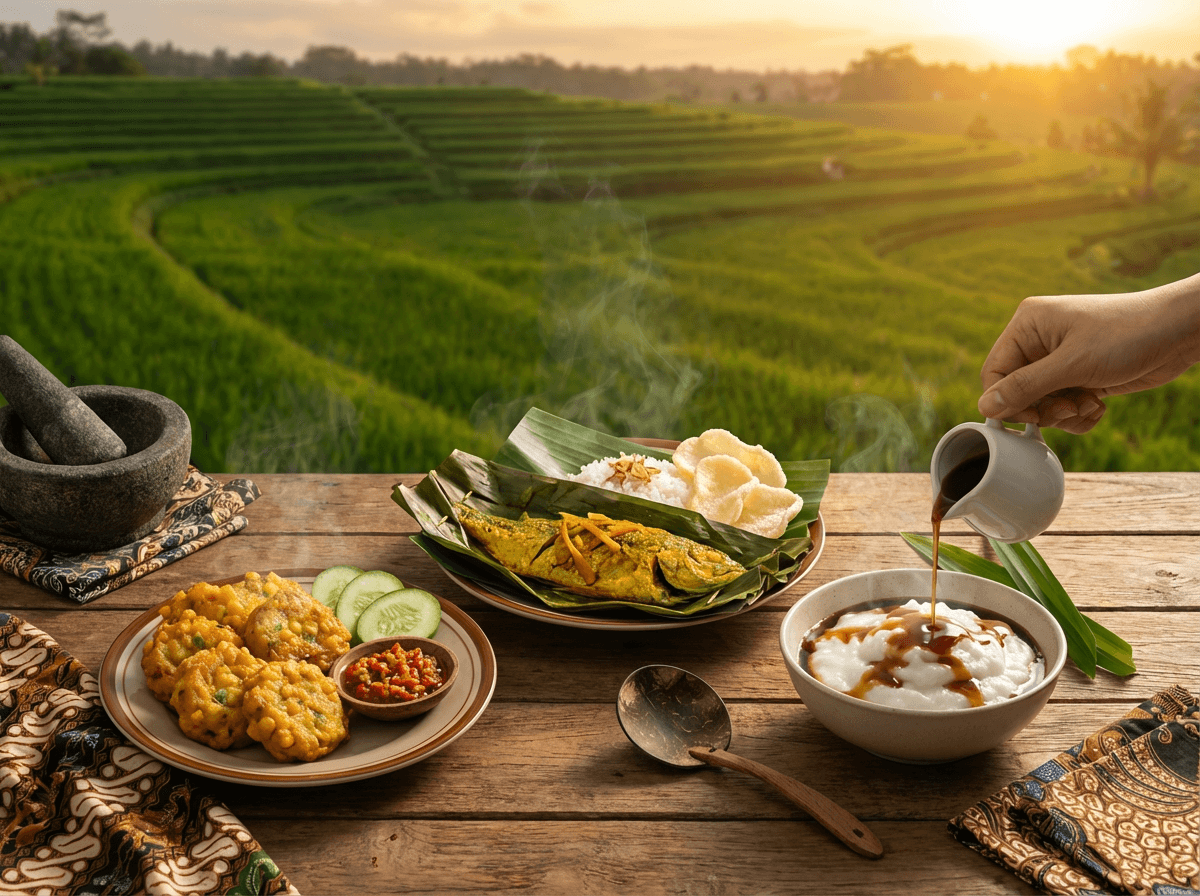
A village table built on patience and fire. |
 |
There are dishes that speak loudly.
And there are dishes that whisper.
This menu belongs to the second kind.
The kind that belongs to late afternoons, when the air is heavy and the kitchen windows are open. When oil hums quietly in a shallow pan and banana leaves soften over flame until they become pliable in your hands.
We begin with corn fritters. Golden, irregular, never perfectly round. Sweet kernels caught in batter, crisp at the edges. They are eaten standing up in the kitchen, fingers slightly oily, the first bite always too hot.
Then comes fish, wrapped tightly in banana leaves with herbs and chilies. Steamed gently until the aromas escape in quiet bursts when you open the parcel. This is the scent of lemongrass and turmeric meeting the sea.
And finally, something soft. White as rice itself. Coconut milk thickened into a silky porridge, served with palm sugar syrup that flows like dark honey.
Nothing extravagant.
Only memory and balance. |
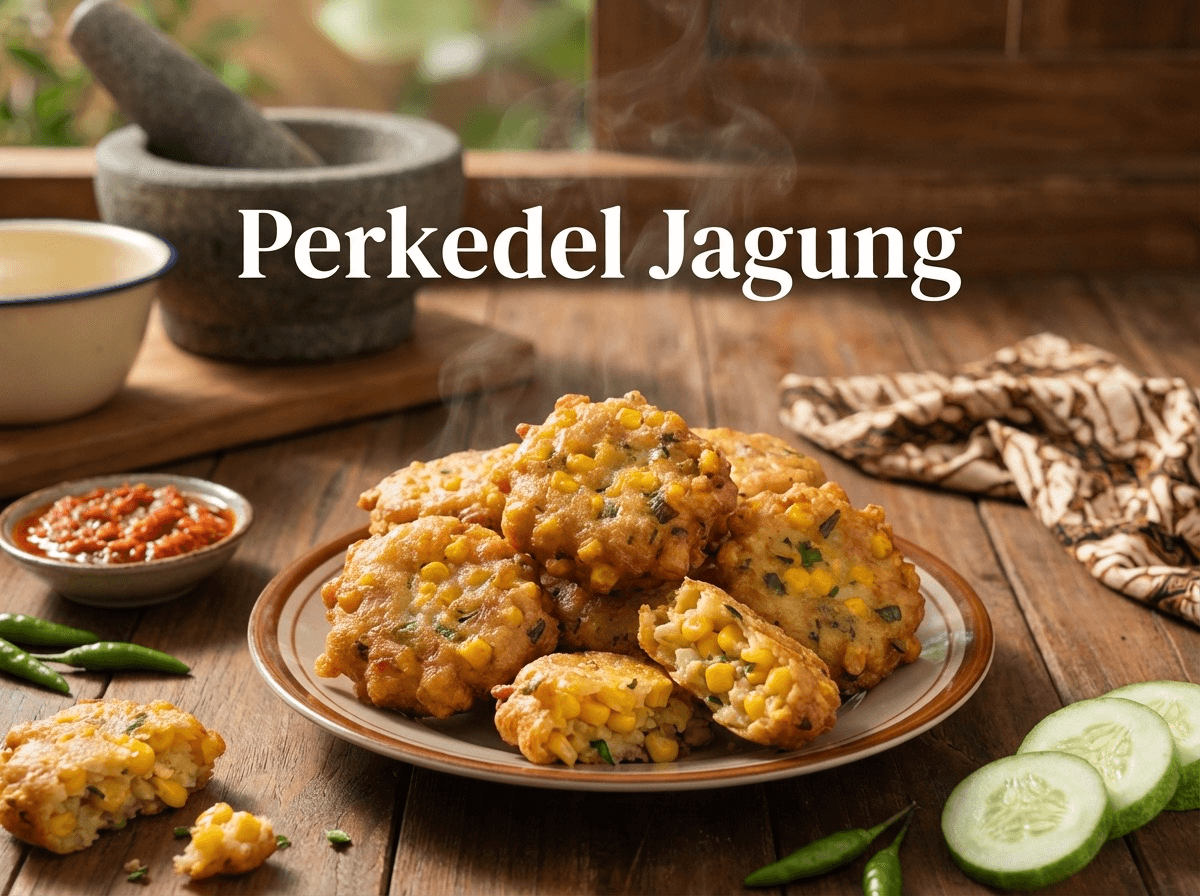 |
Perkedel Jagung Corn fritters appear on tables across Indonesia, sometimes as street snacks, sometimes beside rice and sambal. In Indo kitchens they often arrive without announcement. Someone mixes the batter while someone else chops scallions. The oil is already heating.
They are best slightly irregular. Too perfect and they feel distant.
Recipe – Perkedel Jagung (serves 4)
Ingredients (metric & imperial) 3 ears fresh corn (about 400 g kernels / 14 oz) 2 eggs 3 tbsp flour (45 g / 1.5 oz) 2 spring onions, finely sliced 2 cloves garlic, minced 1 tsp ground coriander ½ tsp white pepper 1 tsp salt Oil for shallow frying
Preparation
Slice kernels from the cob. Lightly crush half of them with a pestle so some sweetness releases.
Mix corn with eggs, flour, garlic, spring onions and spices. The batter should be thick but spoonable.
Heat 1 cm oil in a pan over medium heat.
Drop spoonfuls into oil and flatten gently. Fry until golden brown on both sides, about 3 minutes per side.
Drain on paper. Serve warm, preferably with fresh sambal and cucumber slices. |
 |
 |
Ikan Pepes
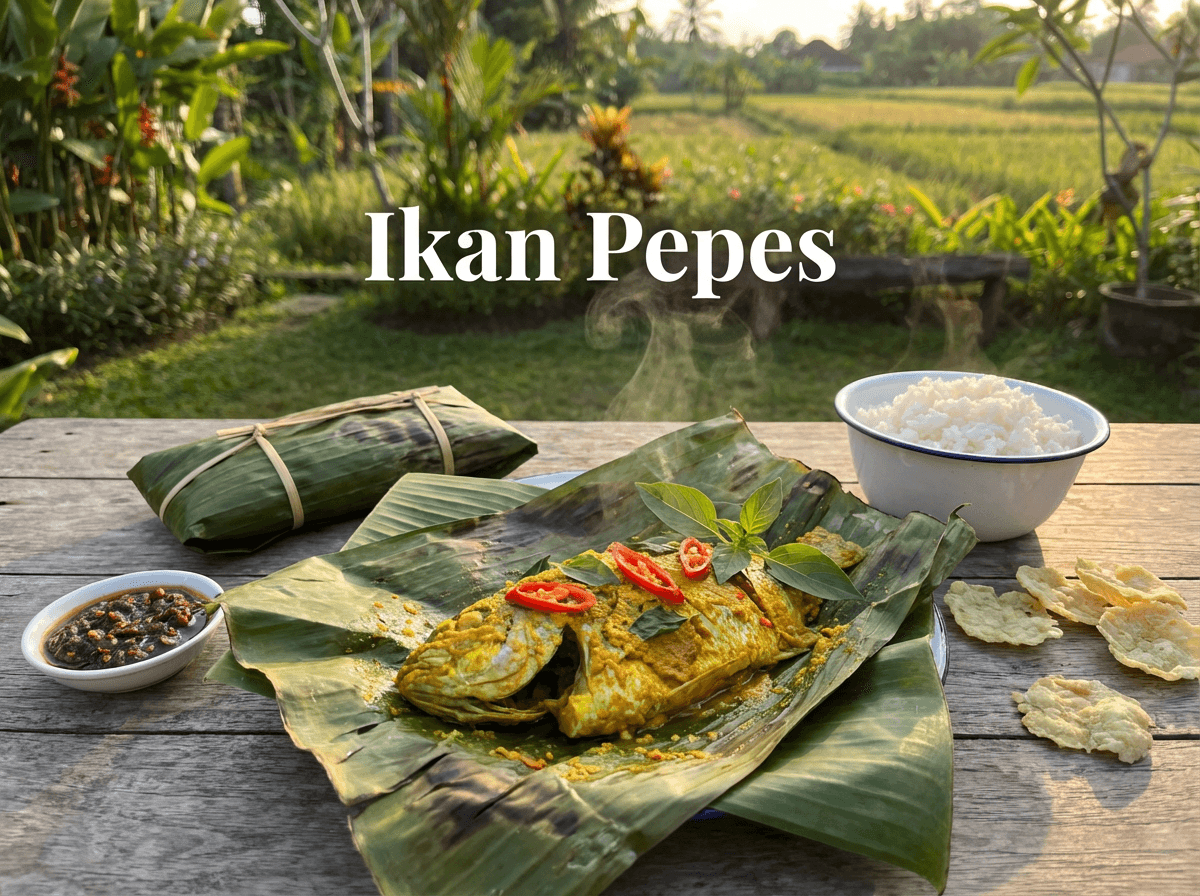
Pepes is an old technique. Fish coated in spice paste, wrapped in banana leaf, then steamed. In some regions it is briefly grilled after steaming to give the leaves a smoky touch.
The moment you untie the string is always special. Steam escapes, carrying turmeric, basil and chili into the air.
Recipe – Ikan Pepes (serves 4)
Ingredients (metric & imperial) 4 white fish fillets (about 800 g / 1.7 lb total)
Spice paste 4 shallots 3 cloves garlic 2 red chilies 1 thumb fresh turmeric (or 1 tsp ground) 1 thumb galangal 2 candlenuts (or 2 macadamias) 1 tsp salt 1 tsp sugar
Other 2 stalks lemongrass, bruised 4 kaffir lime leaves Handful Thai basil Banana leaves for wrapping
Preparation
Blend spice paste ingredients into a smooth mixture.
Rub fish generously with paste.
Place each fillet on banana leaf. Top with lemongrass, lime leaves and basil.
Wrap tightly into parcels and secure with toothpicks or string.
Steam for 25–30 minutes.
Optional: grill parcels briefly over medium heat for 5 minutes to add light smokiness.
Serve with steamed rice, sambal terasi, fresh cucumber and emping. |
 |
 |
Bubur Sumsum
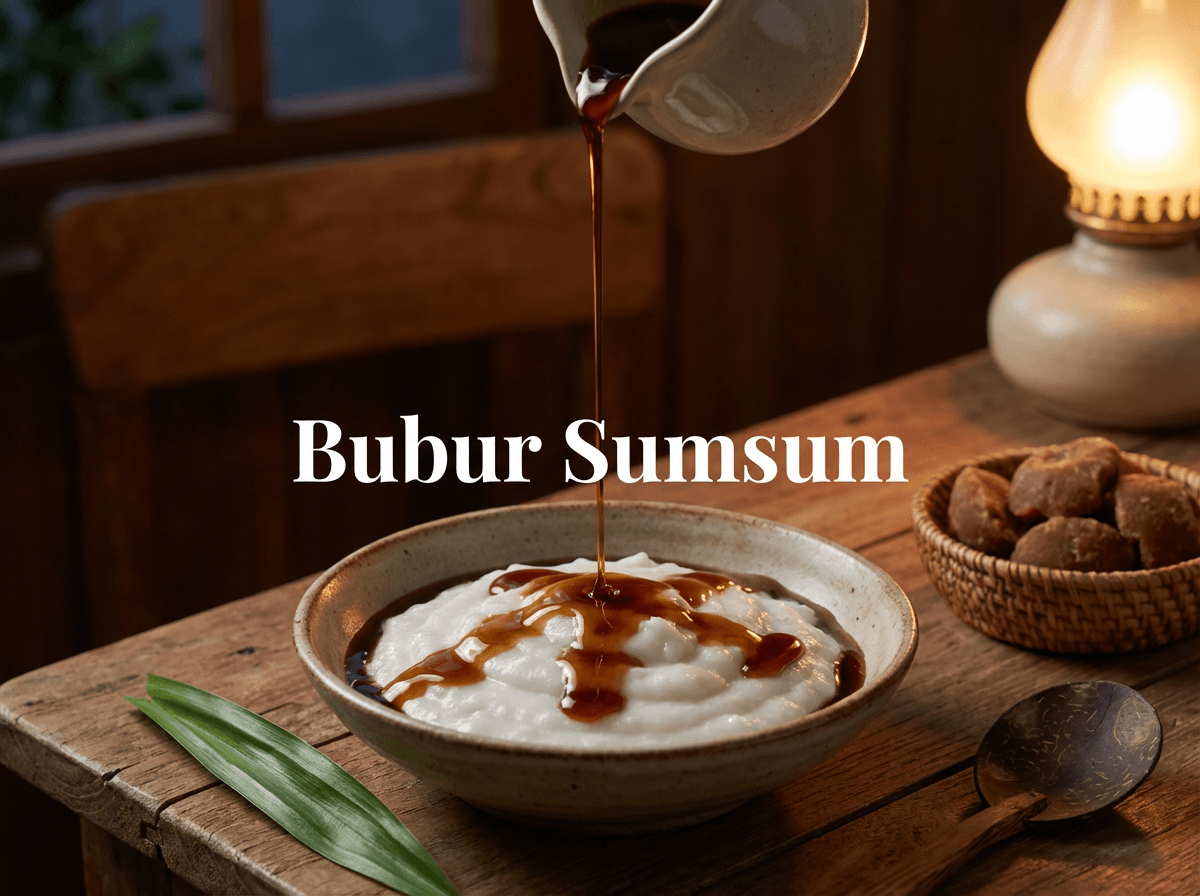
This dessert is quiet comfort.
White rice flour and coconut milk cooked slowly until thick and smooth. It is served warm or at room temperature, always with gula jawa syrup poured generously on top.
In many families, this was food for recovery days. Gentle on the stomach. Kind.
Recipe – Bubur Sumsum (serves 4)
Ingredients (metric & imperial) 100 g rice flour (3.5 oz) 500 ml coconut milk (2 cups) ¼ tsp salt
Palm sugar syrup 150 g palm sugar (5 oz) 100 ml water (⅓ cup) 1 pandan leaf
Preparation
Mix rice flour with a little coconut milk to make a smooth paste.
Heat remaining coconut milk with salt until warm.
Slowly whisk flour mixture into coconut milk. Cook on low heat, stirring constantly, until thick and silky, about 10 minutes.
For syrup: simmer palm sugar, water and pandan leaf until dissolved and slightly thickened. Strain.
Serve porridge in bowls and pour syrup over just before serving. |
 |
This week's article recipes |
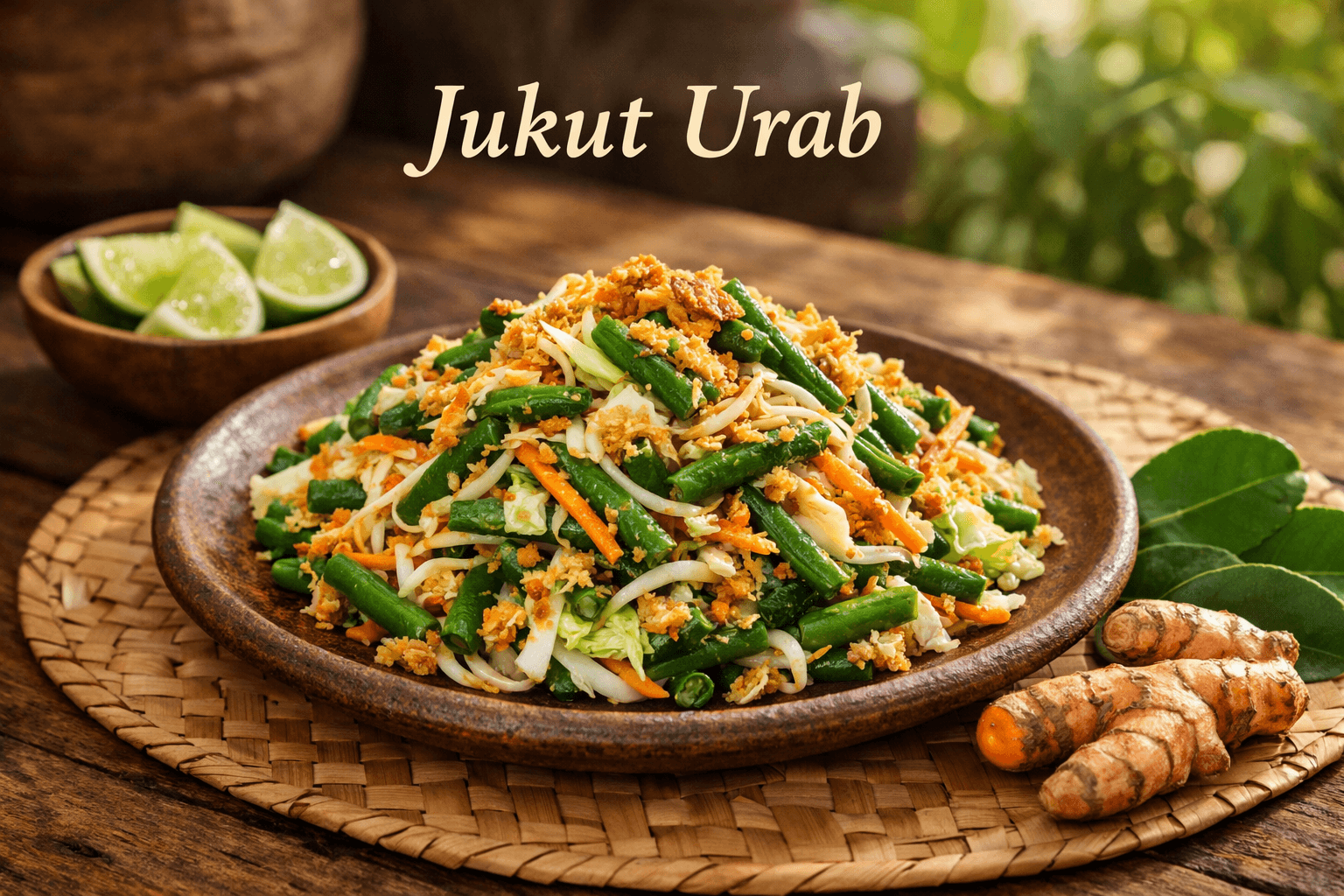 |
In Bali, vegetables take center stage, treated with the same care as meat or fish.
One iconic dish, jukut urab, transforms fresh local greens—like long beans, bean sprouts, cabbage, or water spinach—into a vibrant salad tossed with grated coconut and a lively spice paste made from shallots, garlic, chilies, and toasted spices.
Each ingredient is barely blanched, preserving texture and crunch, then blended with the aromatic coconut mixture for a result that’s fragrant, bold, and never heavy.
This salad was a staple at family tables, highlighted by toasty, sweet coconut and the gentle heat of chilies.
Enjoy it as a side or a light main dish with rice—naturally vegetarian and easy to adapt for vegans.
The secret lies in fresh coconut and not overcooking the vegetables, making jukut urab a standout of Bali’s home cooking. Read More... |
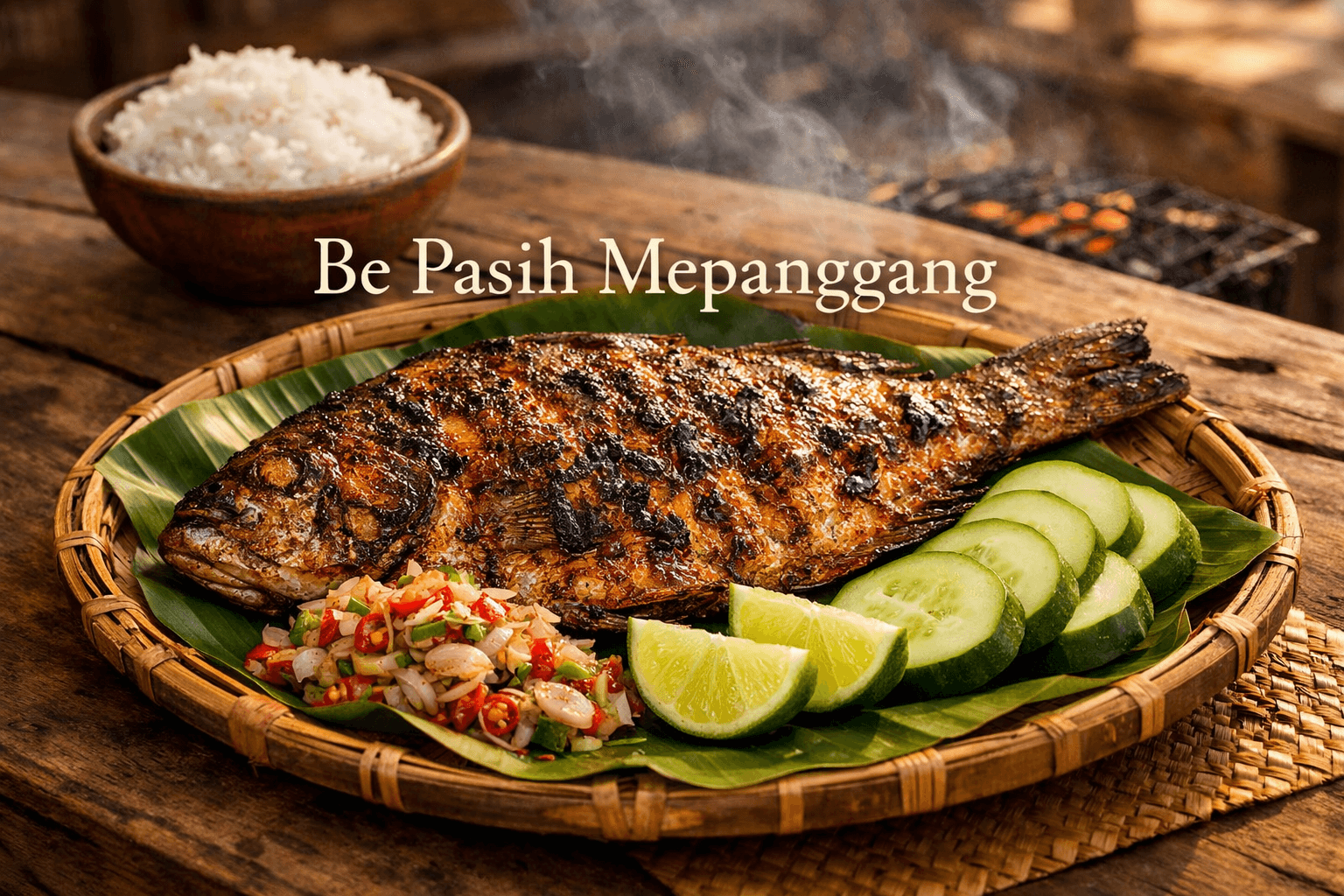 |
Grilled fish in Bali is more than a meal—it’s a vibrant street tradition.
At roadside warungs, fish is cooked on oil drum grills over coconut husk flames, its skin blistering while the flesh stays tender.
This dish, called be pasih mepanggang, is a testament to the Balinese approach: fresh catch, aromatic spice paste, and the magic of open fire.
The marinade seeps into every crevice, forming a golden crust, while the cook’s hands are stained gold with turmeric—a mark of pride.
This home-friendly version uses snapper, sea bass, or mackerel, paired with a punchy spice paste and a bright, raw sambal matah.
Served with steamed rice, lime, and cucumber, it’s food best enjoyed with your hands, evoking the island’s communal, rustic spirit.
Bring the smoky, celebratory flavor of Bali right to your table. Read More... |
 |
Cultural Note
Pepes cooking reflects the Indonesian relationship with banana leaves. They are not only packaging. They perfume the dish. The leaf protects the fish while gently infusing it with a green, earthy aroma that cannot be replicated with foil.
When we cook like this, we are not rushing toward the plate.
We are allowing steam, oil, and coconut milk to do their quiet work.
We are unwrapping small parcels of memory.
Ayo Makan-Makan |
Follow us on Facebook: https://www.facebook.com/theindofork
Entrepeneur? Do our business quiz: |
|
💡 Answer to Trivia Question: Rendang |
THIS PUBLICATION SPONSORED BY