The Indo Fork
Archives
The Minahasa Table – Heat, Herbs, and a Family Way of Eating

Subscribe
The Indo Fork
Archives
The Minahasa Table – Heat, Herbs, and a Family Way of Eating
The Indo Fork
Feb 7, 2026
Selamat datang at The Indo Fork |
The Indo Fork is a story-driven publication about Indo family cooking, memory, and tradition. |
Rooted in inherited recipes and kitchen rituals, it explores Indonesian and Indo food through personal stories, cultural context, and authentic dishes passed down through generations. |
Trivia Question❓What popular Indonesian dish is made from minced meat, onions, garlic, and a variety of spices, wrapped in banana leaves and then steamed? Answer at the bottom of the newsletter |
A Minahasa Table
A family table from North Sulawesi, bright with heat, herbs, and morning light. |
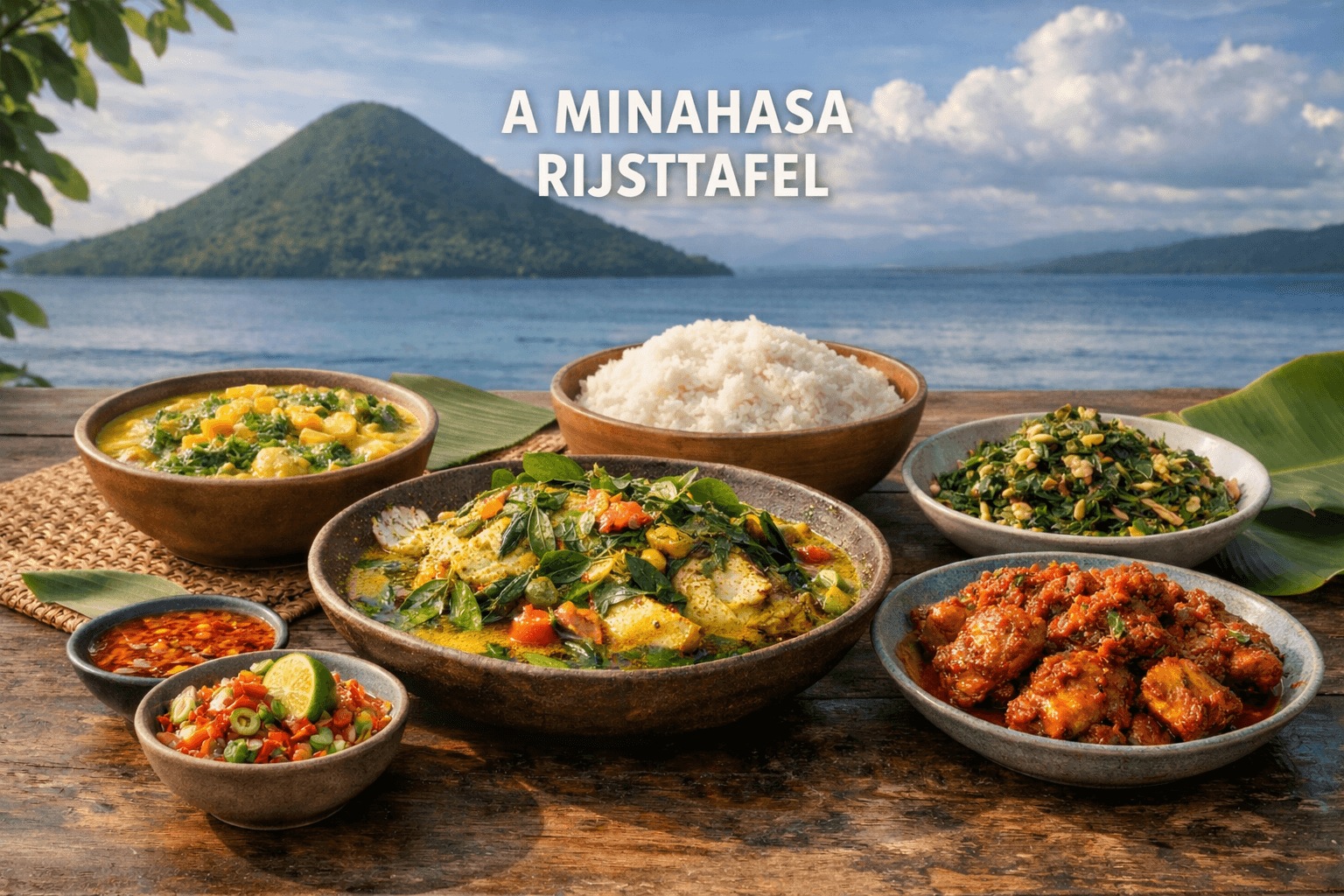 |
There are tables that whisper. And there are tables that speak up.
In Minahasa, food does not wait politely. It arrives warm, fragrant, alive with lime leaf and chili, carried in bowls that are meant to be shared at once. No courses. No pauses. Just rice, fish, chicken, vegetables, sambal and conversation unfolding together.
This is not a ceremonial rijsttafel built to impress.
Today, we set this table fully.
The Table, As It Comes
A spoonful of something soft to begin. Rice waits patiently underneath everything. |
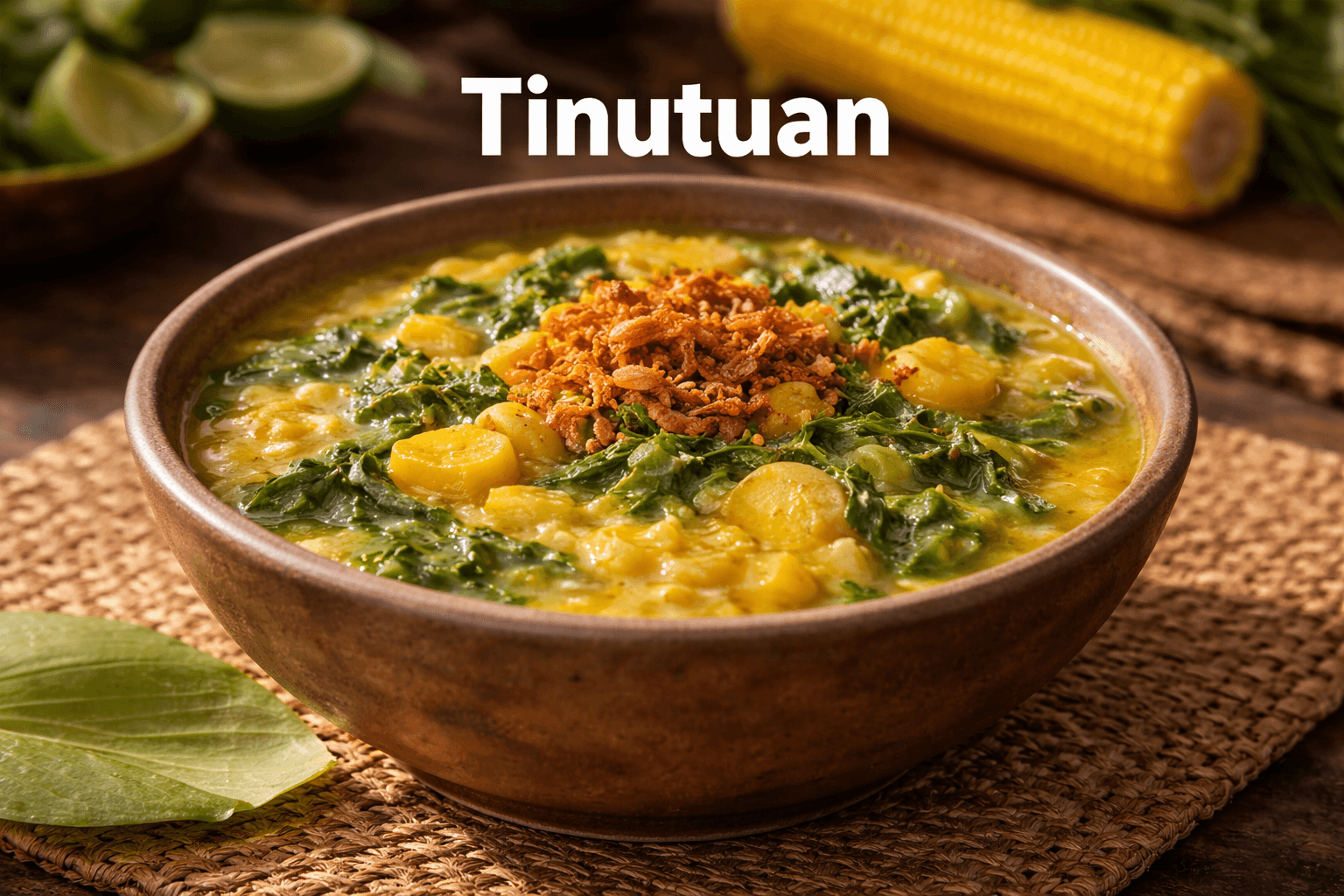 |
Tinutuan – Bubur Manado
This is how the table opens.
Not as a starter, but as a welcome.
Tinutuan is rice porridge thick with vegetables. Pumpkin, corn, greens. It smells gentle, almost sweet, and asks nothing from you except a few slow bites.
Ingredients (serves 4)
• 150 g rice | ¾ cup
• 1.2 L water | 5 cups
• 150 g pumpkin, diced | 1 cup
• 1 ear corn, sliced
• 1 bunch spinach or kangkung
• 2 spring onions, sliced
• Salt to taste
Preparation
Rinse the rice and cook it in water until it breaks down into a thick porridge. Add pumpkin and corn halfway through and let them soften completely. Stir often. Add greens and spring onion at the end, season with salt, and serve warm. |
 |
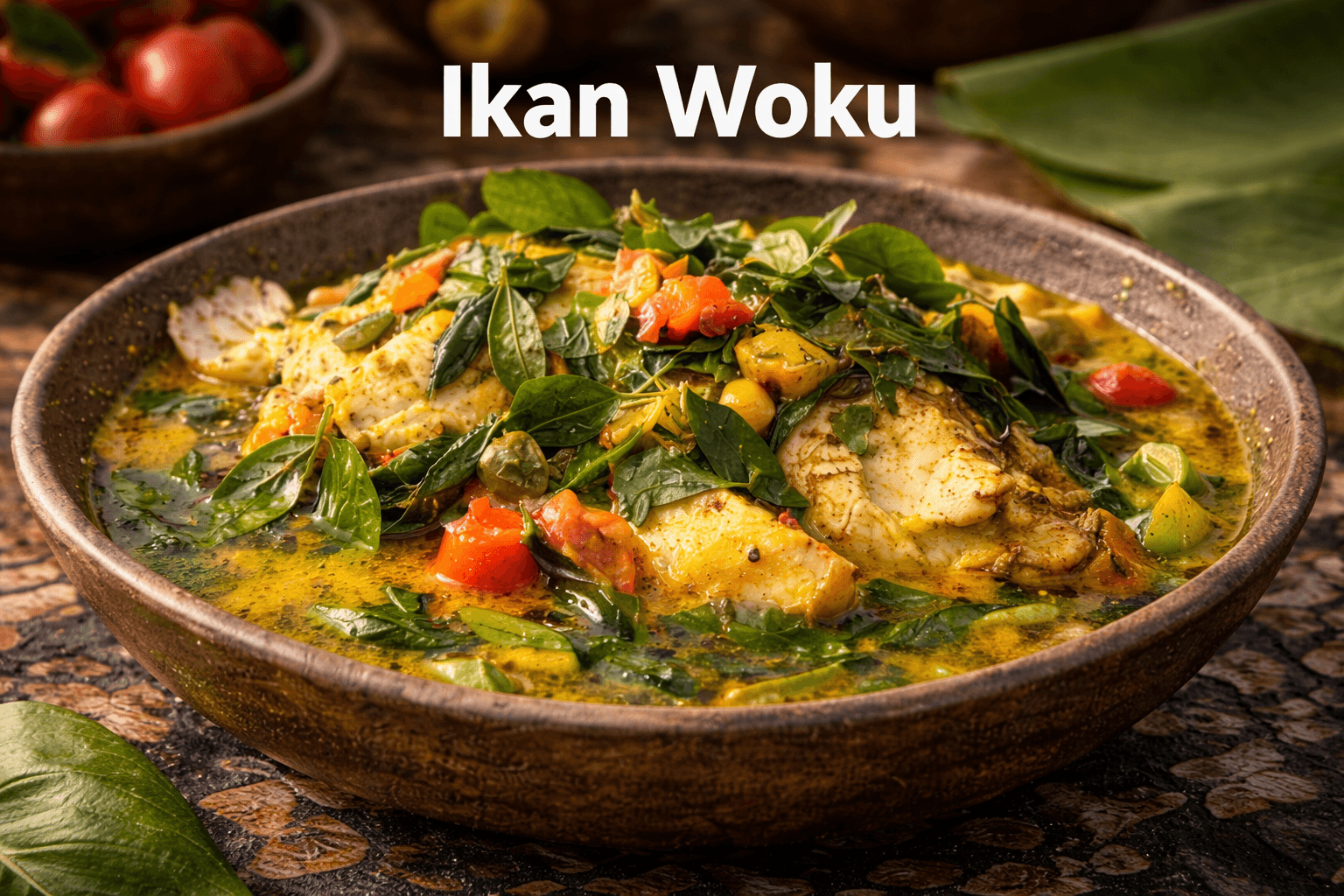 |
Ikan Woku
This is the heart of the table.
Woku is not a sauce. It is a forest of herbs. Lemongrass, turmeric, ginger, lime leaf, basil. Everything chopped rough, everything alive. The fish absorbs it, but never disappears into it.
Ingredients (serves 4)
• 1 kg whole fish or fillets | 2.2 lb
• 3 shallots
• 4 cloves garlic
• 5 red chilies
• 3 cm ginger | 1 inch
• 3 cm turmeric | 1 inch
• 2 lemongrass stalks, bruised
• 5 kaffir lime leaves
• 1 tomato, chopped
• 1 bunch kemangi or Thai basil
• 300 ml water | 1¼ cups
• Salt
Preparation
Blend shallots, garlic, chilies, ginger and turmeric into a coarse paste. Sauté gently until fragrant. Add lemongrass, lime leaves and tomato. Lay in the fish, add water and simmer until just cooked. Finish with basil. Taste for salt. Serve immediately. |
 |
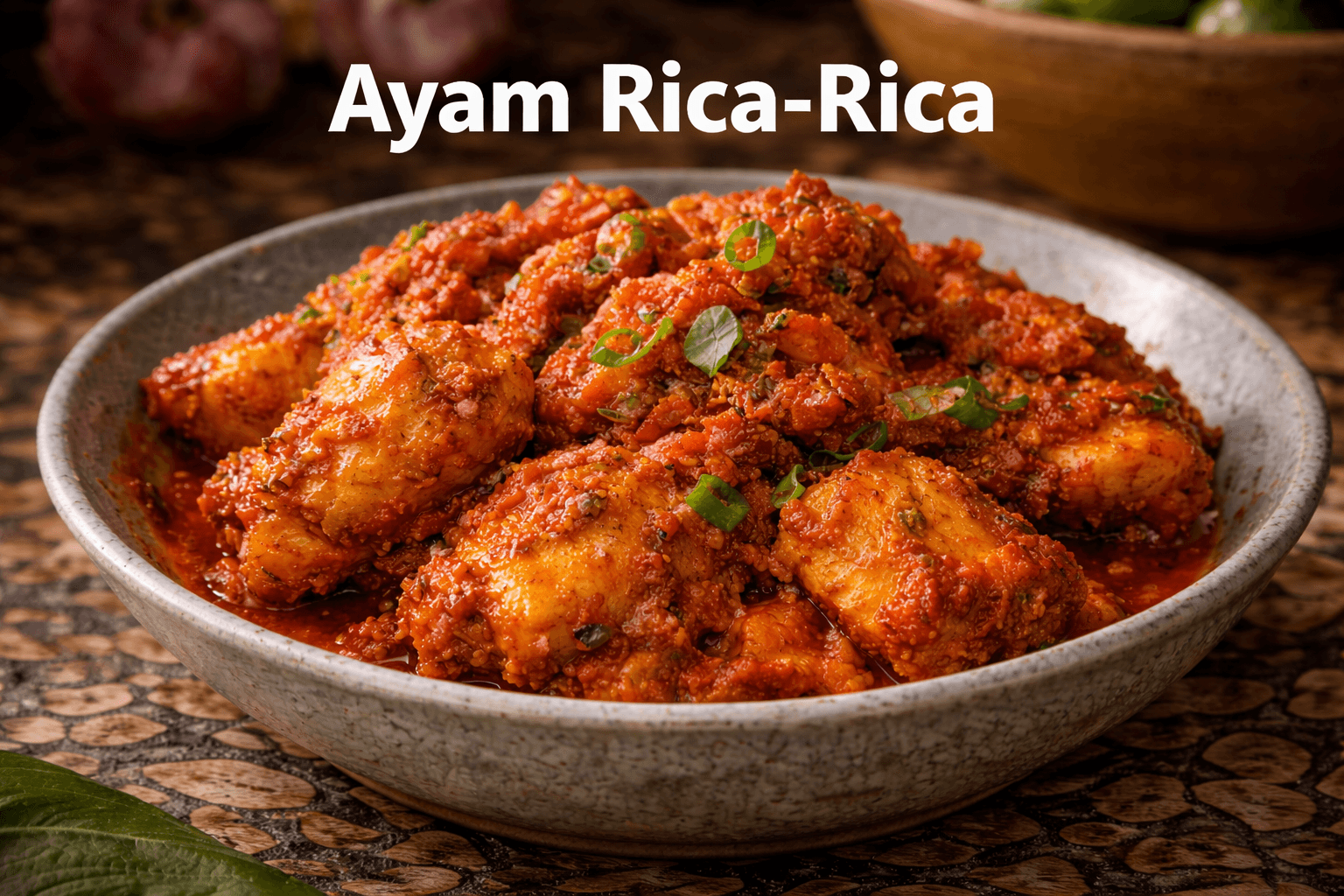 |
Ayam Rica-Rica
If ikan woku sings, rica-rica dances.
This chicken is direct. Chili-forward. Glossy with oil and garlic. It clings to the bone and leaves warmth behind.
Ingredients (serves 4)
• 1 whole chicken, cut | 1.5 kg | 3.3 lb
• 6 red chilies
• 6 bird’s eye chilies
• 4 cloves garlic
• 3 shallots
• 2 tomatoes
• Oil, salt
Preparation
Blend chilies, garlic and shallots. Fry until fragrant. Add chicken and brown well. Add chopped tomatoes and simmer until the sauce clings thickly to the meat. Season generously. |
 |
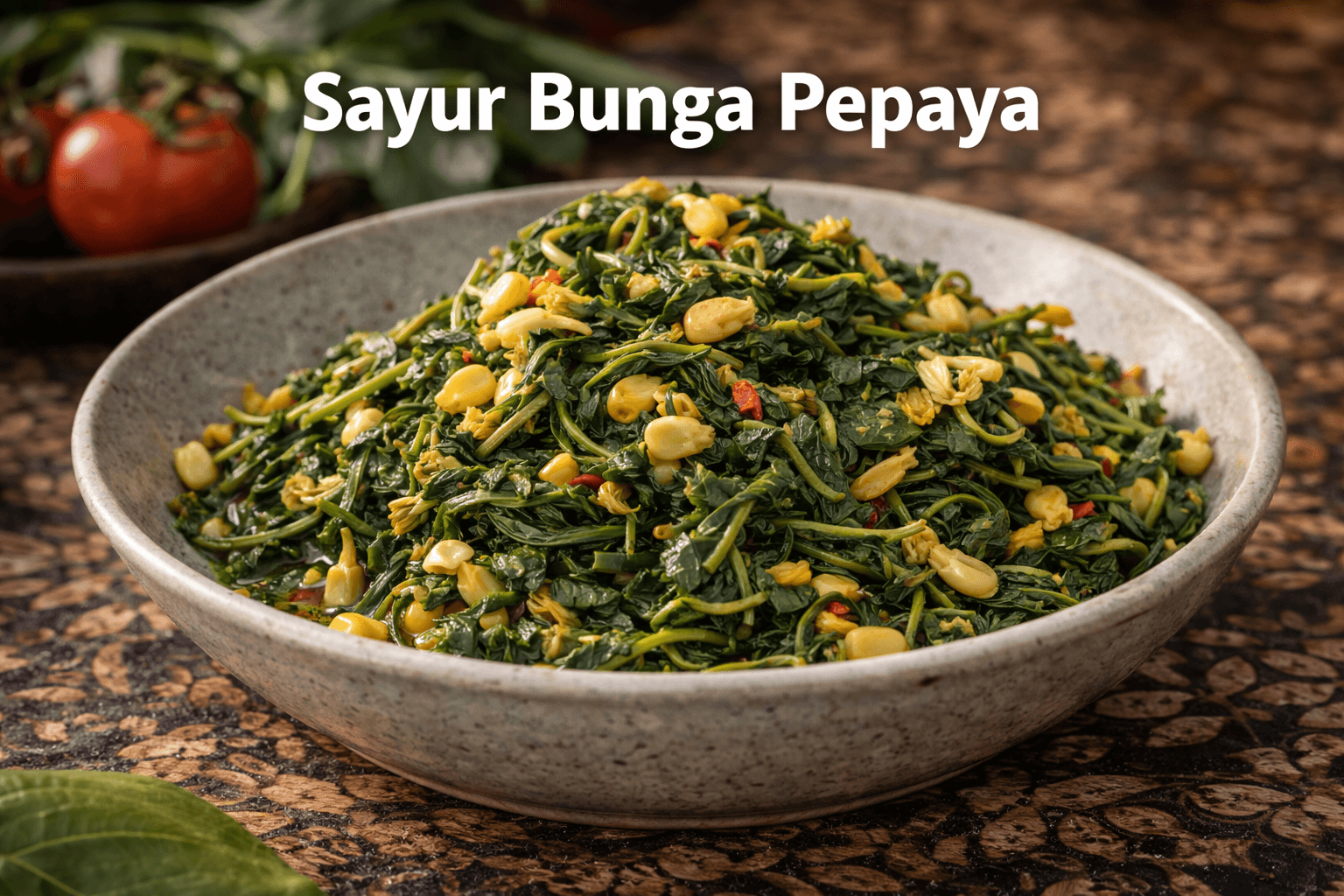 |
Sayur Bunga Pepaya
Every Minahasa table needs bitterness.
Papaya flowers are boiled, squeezed, then cooked again. This dish steadies the heat of everything else.
Ingredients (serves 4)
• 200 g papaya flowers | 7 oz
• 2 shallots
• 2 cloves garlic
• Oil, salt
Preparation
Boil flowers in salted water, drain, squeeze, repeat once. Sauté shallots and garlic, add flowers, cook briefly and season. |
 |
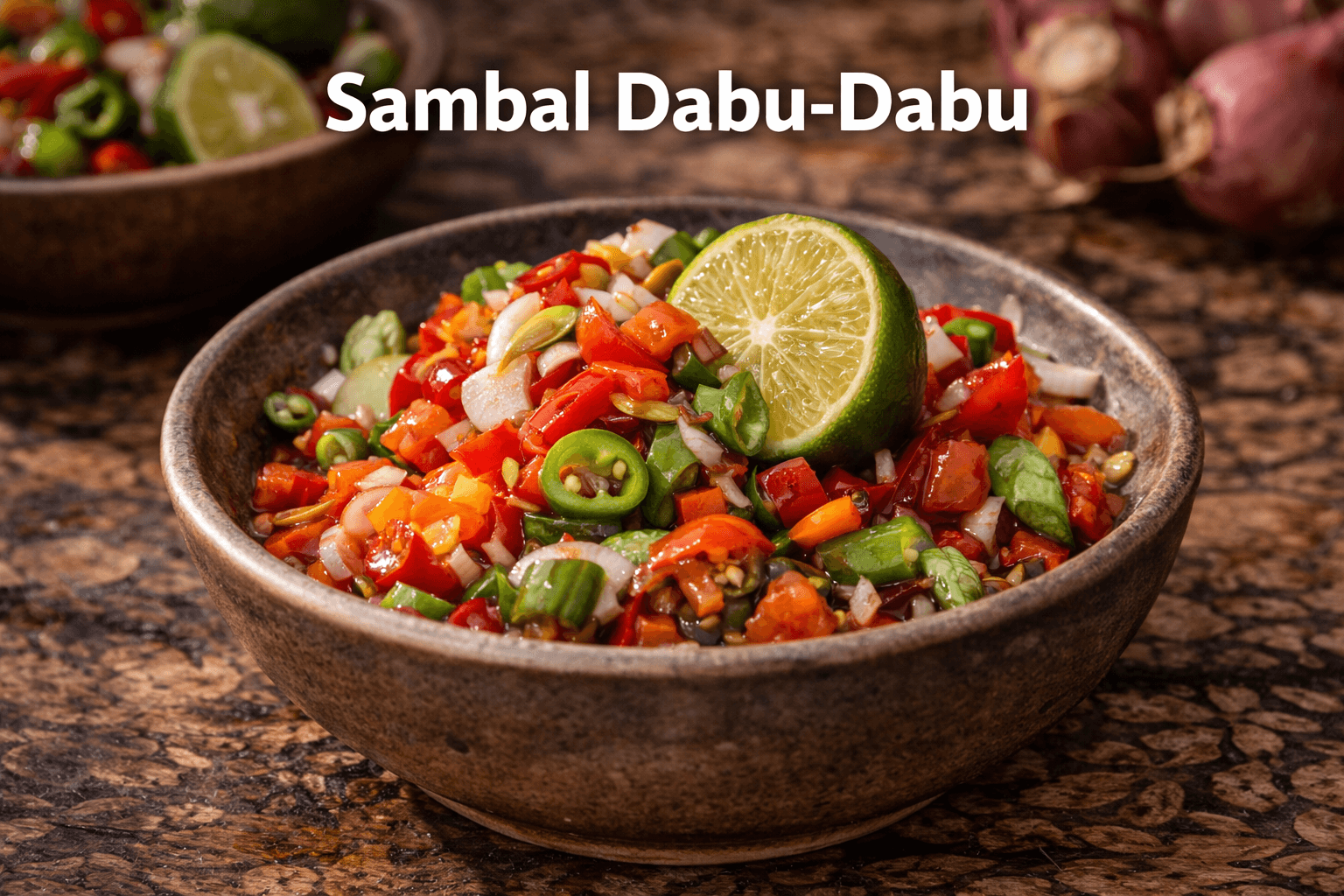 |
Sambal Dabu-Dabu
This is not cooked. It is assembled.
Raw shallot. Raw chili. Tomato. Lime. Oil. Salt.
Stir. Taste. Adjust. Spoon over everything.
Ingredients
• Shallots, finely sliced
• Red chilies, sliced
• Tomato, diced
• Lime juice
• Oil, salt |
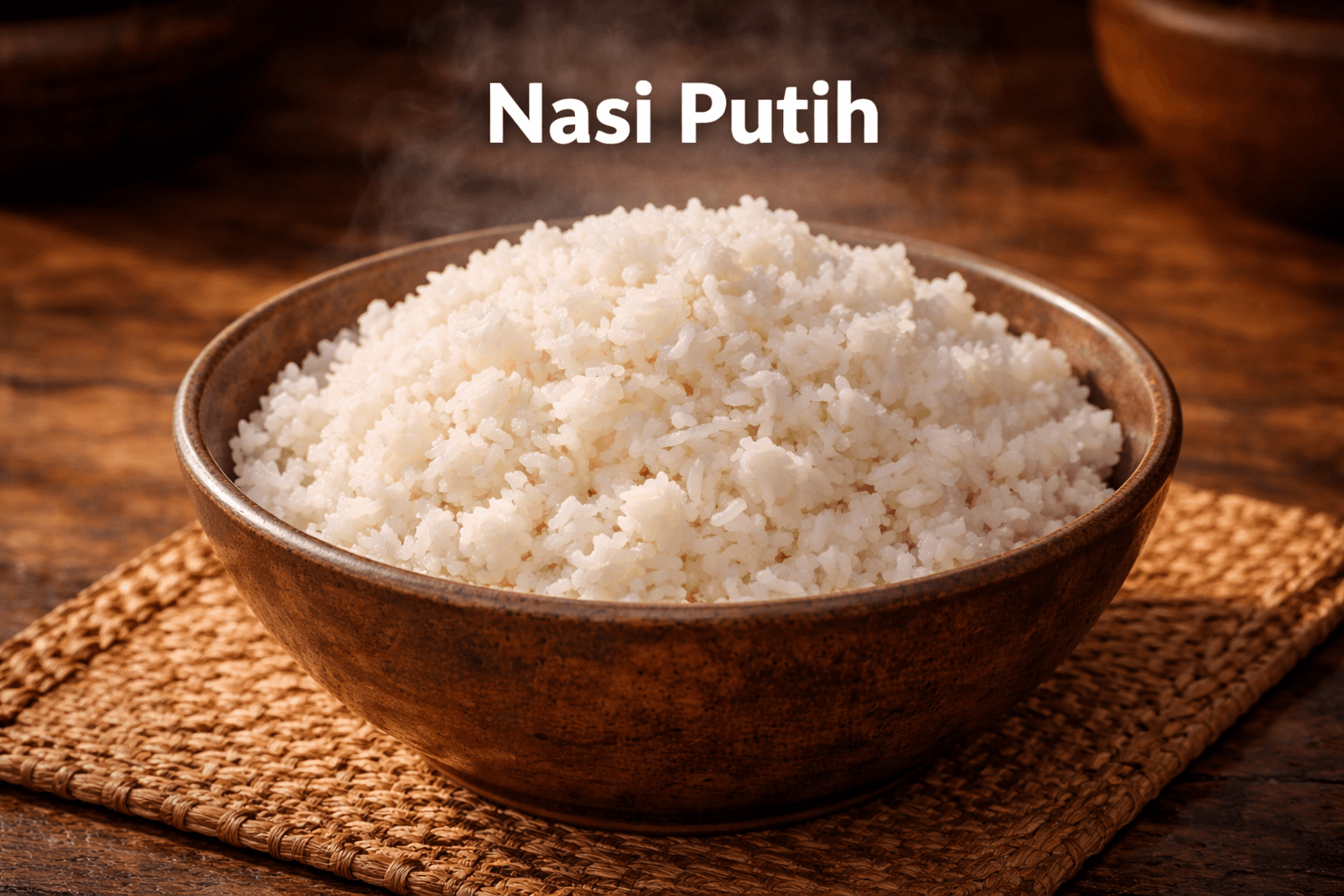 |
Nasi Putih
Always present. Never explained.
Ingredients
• Rice
• Water
Cook as you always do.
|
This week's article recipes |
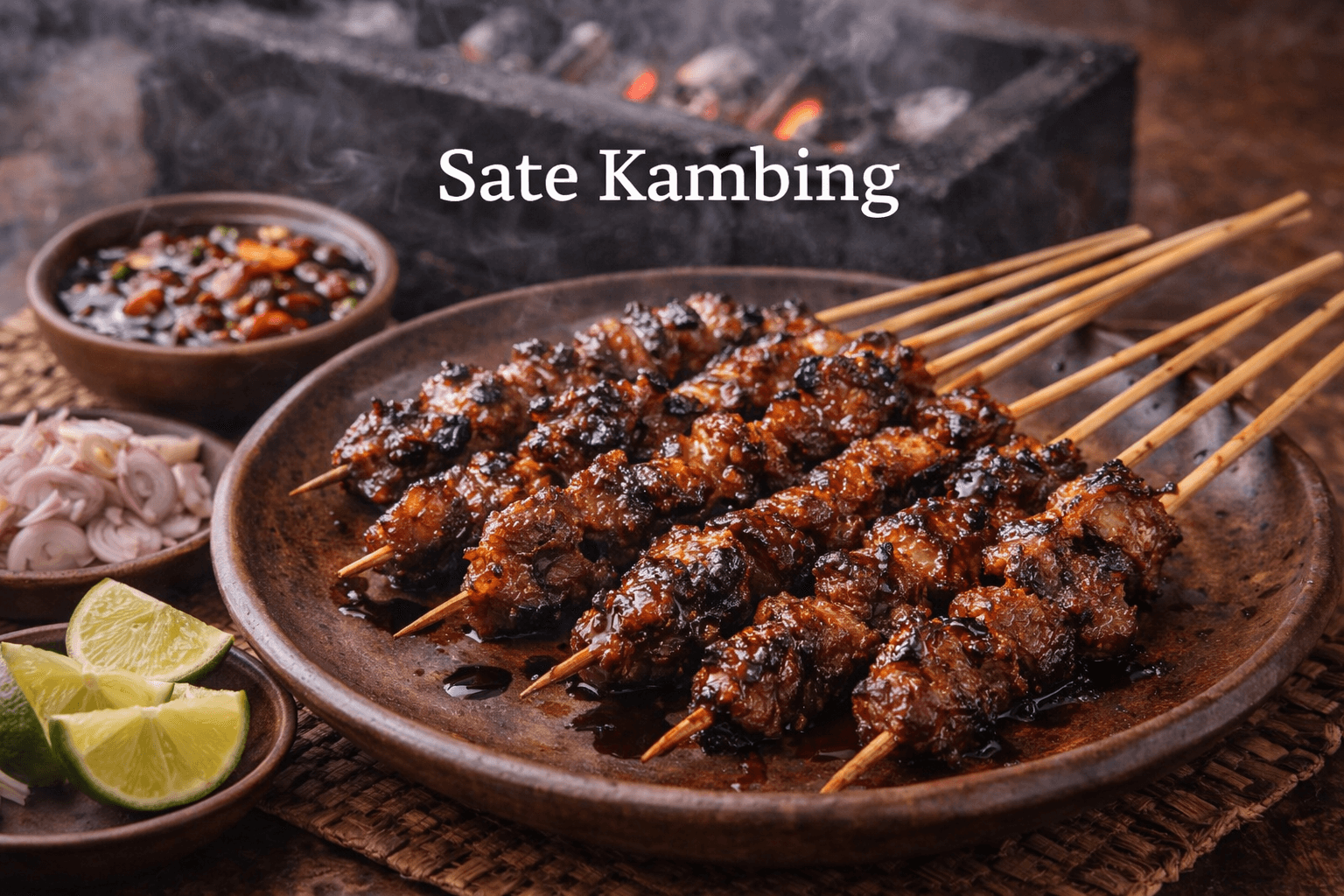 |
As dusk falls across Indonesian streets, the air fills with the inviting aroma of sate kambing—grilled goat satay rich with the scent of charcoal and sweet soy sauce.
This Javanese favorite stands apart from simpler satays, requiring skill and patience.
The meat, robust and slightly bold, demands care: careful cutting, a brief marinade of kecap manis and spices, and quick grilling over fierce coals.
Central and East Java claim this dish, where families gather on weekends to fan flames, turn skewers, and chase perfection.
Served simply—just skewers with a bowl of kecap manis mixed with shallots and sambal—it’s food meant to be savored, not rushed.
Quality young goat is essential; lamb is an acceptable but milder substitute.
Sate kambing is more than a meal—it’s tradition, patience, and gathering on a plate. Read More... |
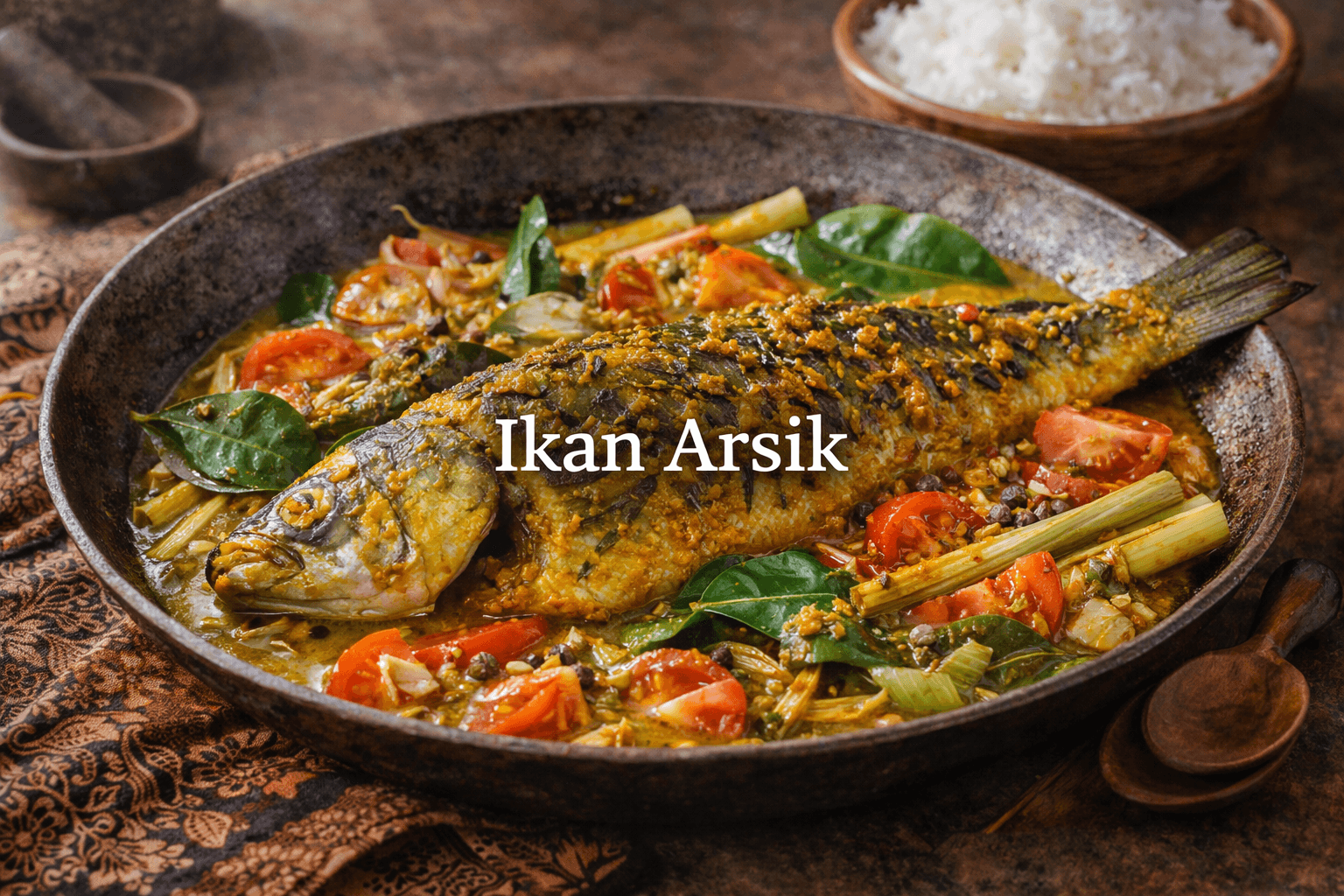 |
Ikan Arsik is a celebrated Batak dish from North Sumatra, distinct for its quiet complexity and deep roots in local traditions.
Prepared with whole freshwater fish—typically carp from Lake Toba—this recipe uses a gentle simmer with bold aromatics, avoiding overwhelming spice.
The dish’s signature is andaliman, known as Batak pepper, which adds a citrusy, tingling punch that defines its unmistakable flavor.
Other aromatics such as turmeric, lemongrass, kaffir lime leaves, and torch ginger layer the fish in fragrance, while each ingredient maintains both form and flavor.
Served whole at family gatherings, Ikan Arsik is a symbol of care and respect; tradition insists the fish remains intact at the table.
This regional favorite is best enjoyed with simple rice and vegetables, as complexity comes from the ingredients themselves, not excess.
Without andaliman, Ikan Arsik loses its essence, making authenticity key to this Batak culinary treasure. Read More... |
At the Table
Nothing is plated.
Someone spoons rice.
This is Minahasa.
Selamat Makan |
Follow us on Facebook: https://www.facebook.com/theindofork
Entrepeneur? Do our business quiz: |
|
💡 Answer to Trivia Question: Tumis Ayam Betutu |
THIS PUBLICATION SPONSORED BY