The Indo Fork
Archives
"A First Table Together – Welcome to The Indo Fork"
Subscribe
The Indo Fork
Archives
"A First Table Together – Welcome to The Indo Fork"
The Indo Fork
Jan 17, 2026
Selamat datang at The Indo Fork |
The Indo Fork is a story-driven publication about Indo family cooking, memory, and tradition. |
Rooted in inherited recipes and kitchen rituals, it explores Indonesian and Indo food through personal stories, cultural context, and authentic dishes passed down through generations. |
Trivia Question❓What is the traditional Indonesian dish made of fried rice, egg, and a mix of vegetables and meat, usually served with a side of pickles and sambal? Answer at the bottom of the newsletter |
Where family memory becomes flavor |
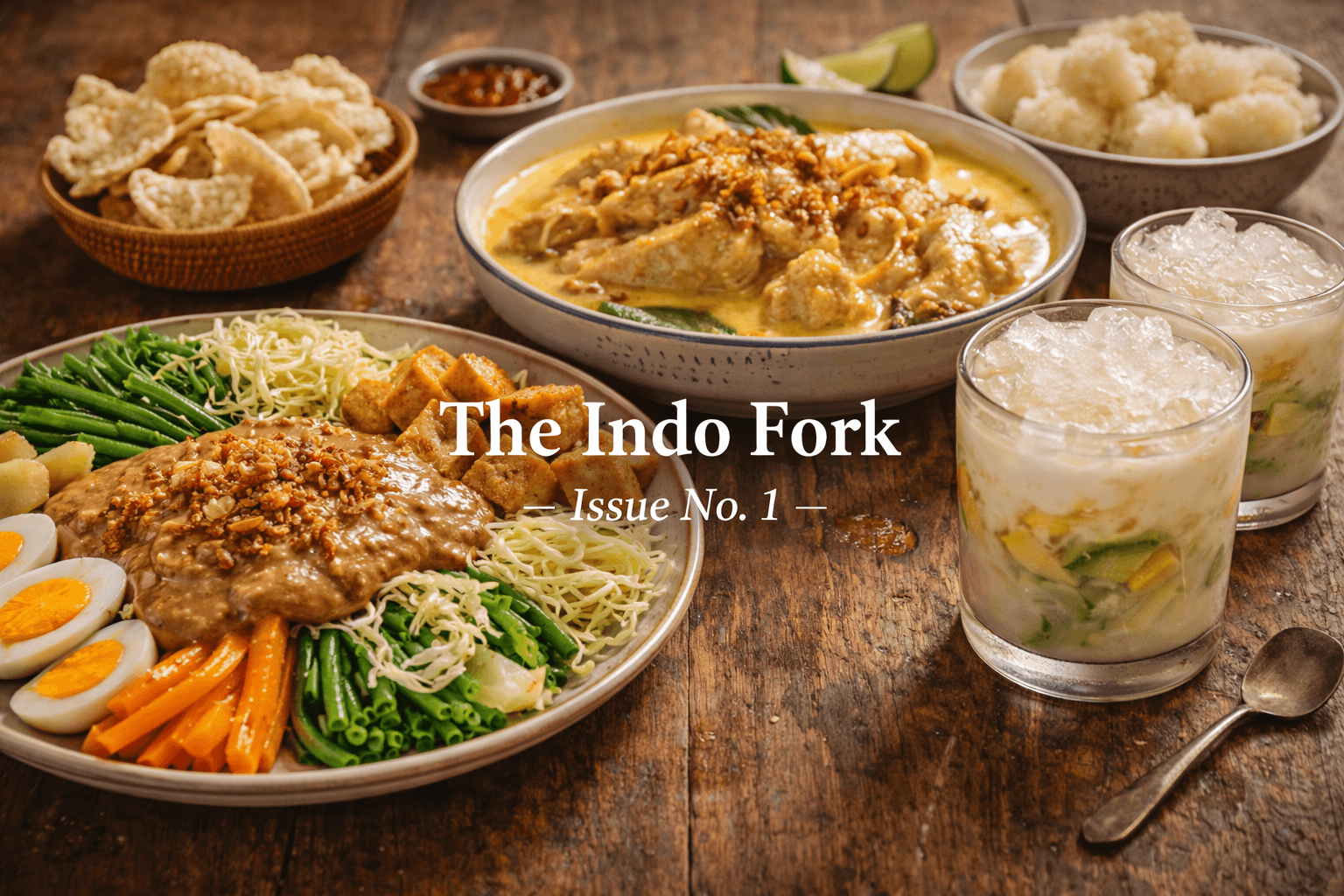 |
There is a particular moment in an Indonesian kitchen just before food is served.
The pans are still warm. The air smells of coconut milk and toasted peanuts. Someone wipes their hands on a cloth that has seen better days. Nobody announces anything. The table simply fills.
This newsletter begins exactly there.
The Indo Fork is not about discovery. It is about recognition. About dishes you already know, even if you have never cooked them yourself. Food that was passed on quietly, learned by watching, tasting, repeating.
This first letter is a simple three-course table. Vegetables dressed with warmth. A pot that needs patience. Something sweet and cold to slow the evening down.
Nothing clever. Nothing rushed. Just food that has lived with families for generations. |
 |
First Course
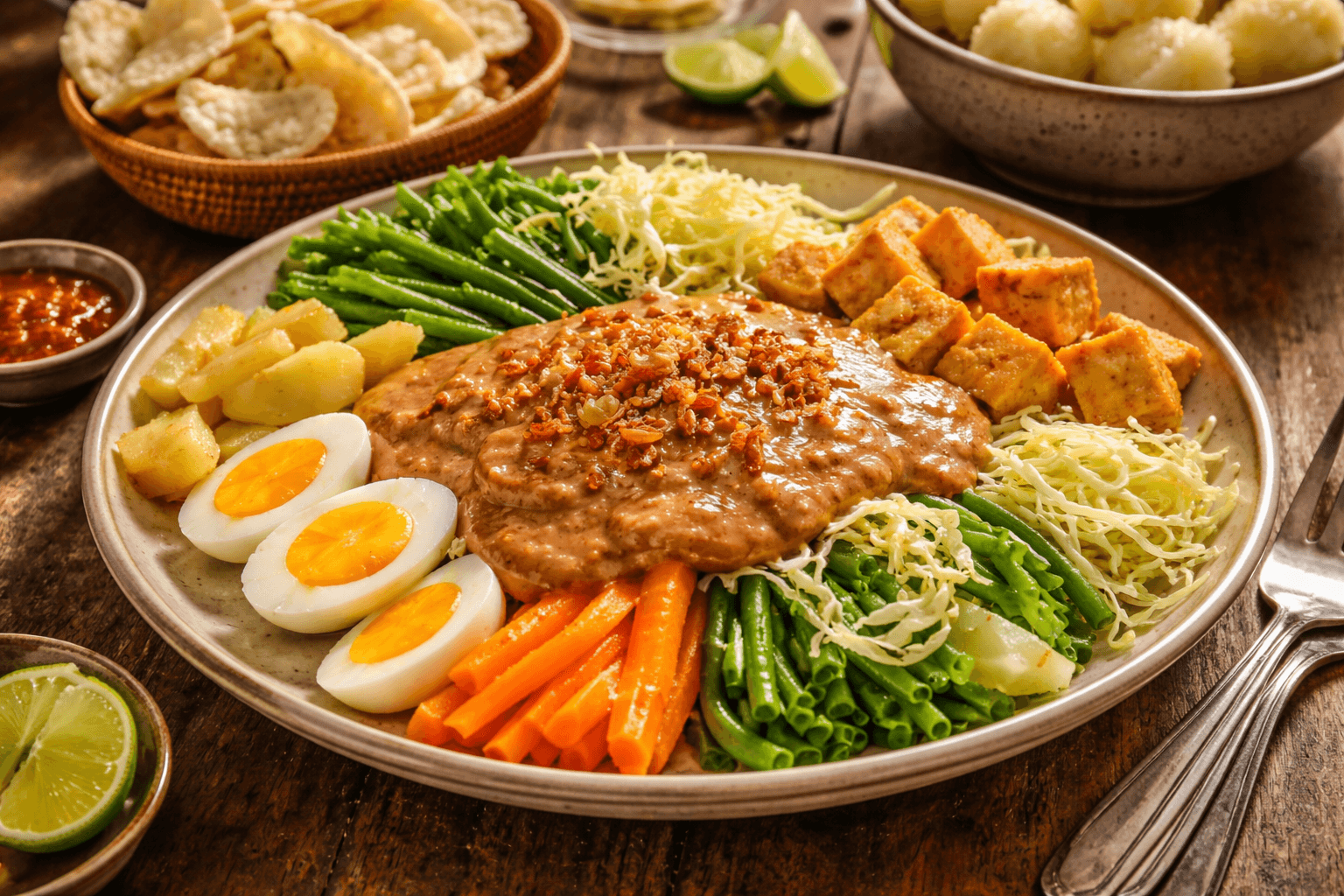
Gado-Gado – Vegetables with Warm Peanut Sauce
Gado-gado was never a recipe written down. It was a habit. Whatever vegetables were available, arranged with care, brought together by a sauce that mattered more than anything else.
The peanut sauce is the heart. It should smell roasted, slightly sweet, with a soft heat that lingers but never overwhelms. When made well, it forgives almost any vegetable you put underneath it.
Ingredients (serves 4)
Vegetables & sides
Peanut sauce
Preparation
Grind peanuts, garlic, chilies, shrimp paste, palm sugar, and salt into a smooth paste. Add warm water slowly until the sauce becomes thick but pourable. Finish with lime juice.
Arrange vegetables on a large platter. Add tofu and eggs. Spoon the warm sauce generously over the top. Serve with rice or lontong and something crisp on the side. |
 |
 |
Second Course
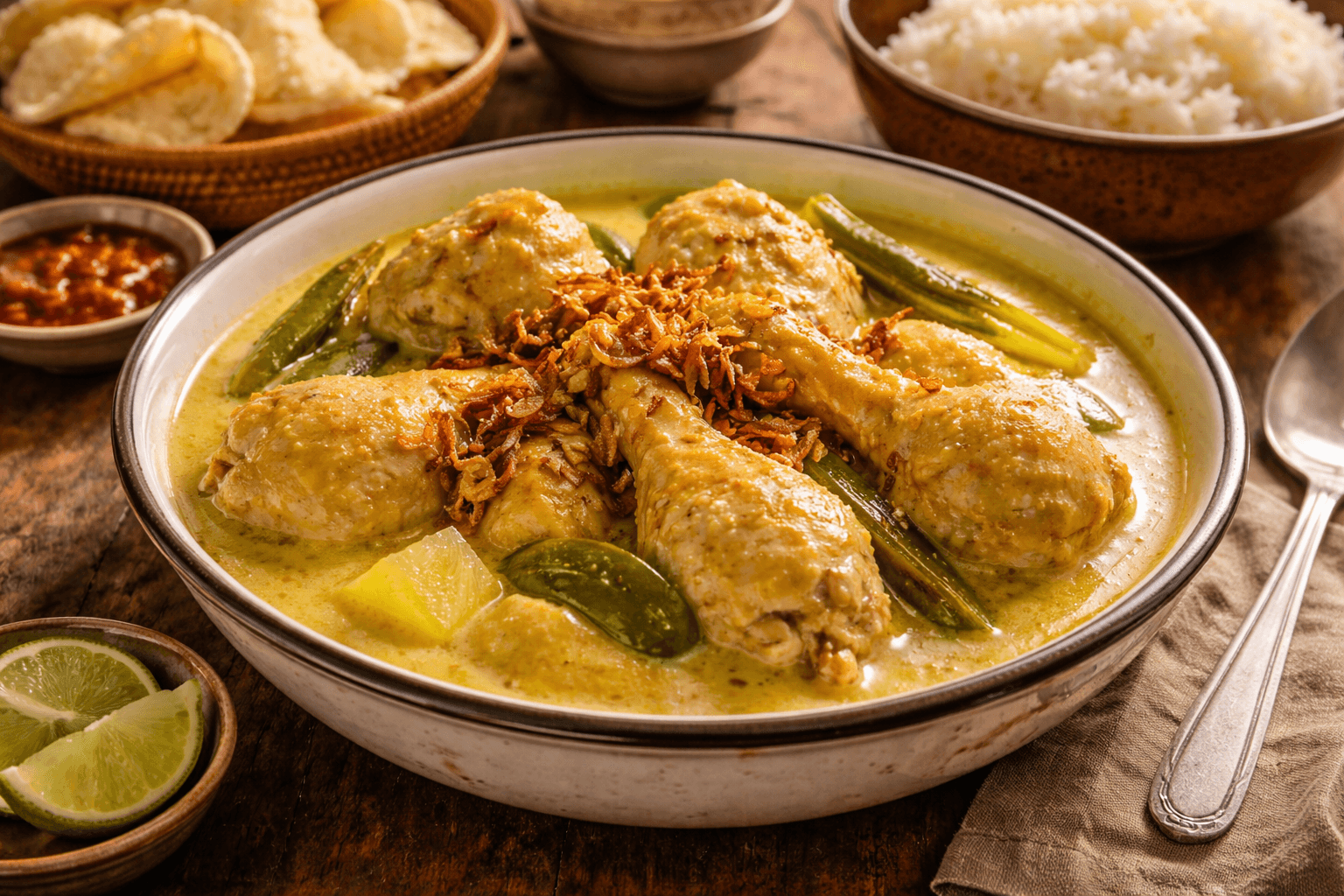
Ayam Opor – Chicken Braised in Coconut Milk
Ayam opor is food for long conversations. It simmers gently while the kitchen fills with familiar smells. Coconut milk, spices, chicken slowly becoming tender enough to fall apart with a spoon.
This dish teaches patience. The heat must stay low. The sauce must never rush.
Ingredients (serves 4)
Spice paste
Preparation
Grind all spice paste ingredients into a smooth paste. Gently sauté in oil until fragrant and glossy.
Add chicken and turn until coated. Pour in coconut milk, add bay leaves and lemongrass. Simmer over low heat until the chicken is tender and the sauce thickens. Stir regularly to keep the coconut milk smooth.
Serve with white rice, sambal on the side, and fried shallots if you like. |
 |
 |
Third Course
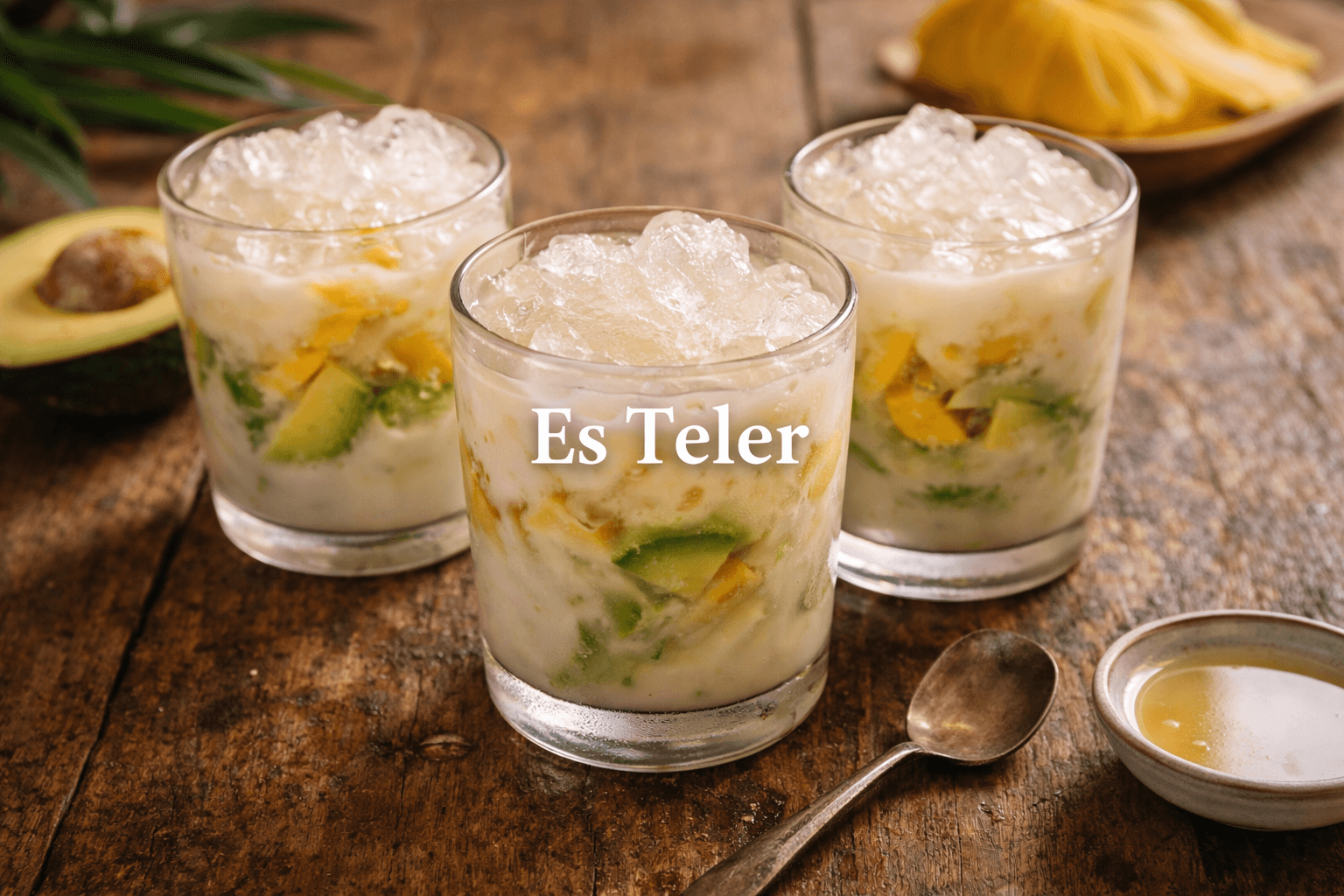
Es Teler – Coconut Milk, Fruit, and Ice
Dessert does not always mean baking. Often it meant relief from the heat. A glass filled with fruit, ice, and sweet coconut milk, eaten slowly as the evening softened.
Es teler is not measured precisely. It is adjusted by taste, by weather, by mood.
Ingredients (serves 4)
Preparation
Mix coconut milk with sugar syrup until lightly sweet. Divide fruit and coconut into glasses. Add crushed ice and pour coconut milk over the top. Serve immediately. |
 |
This week's article recipes |
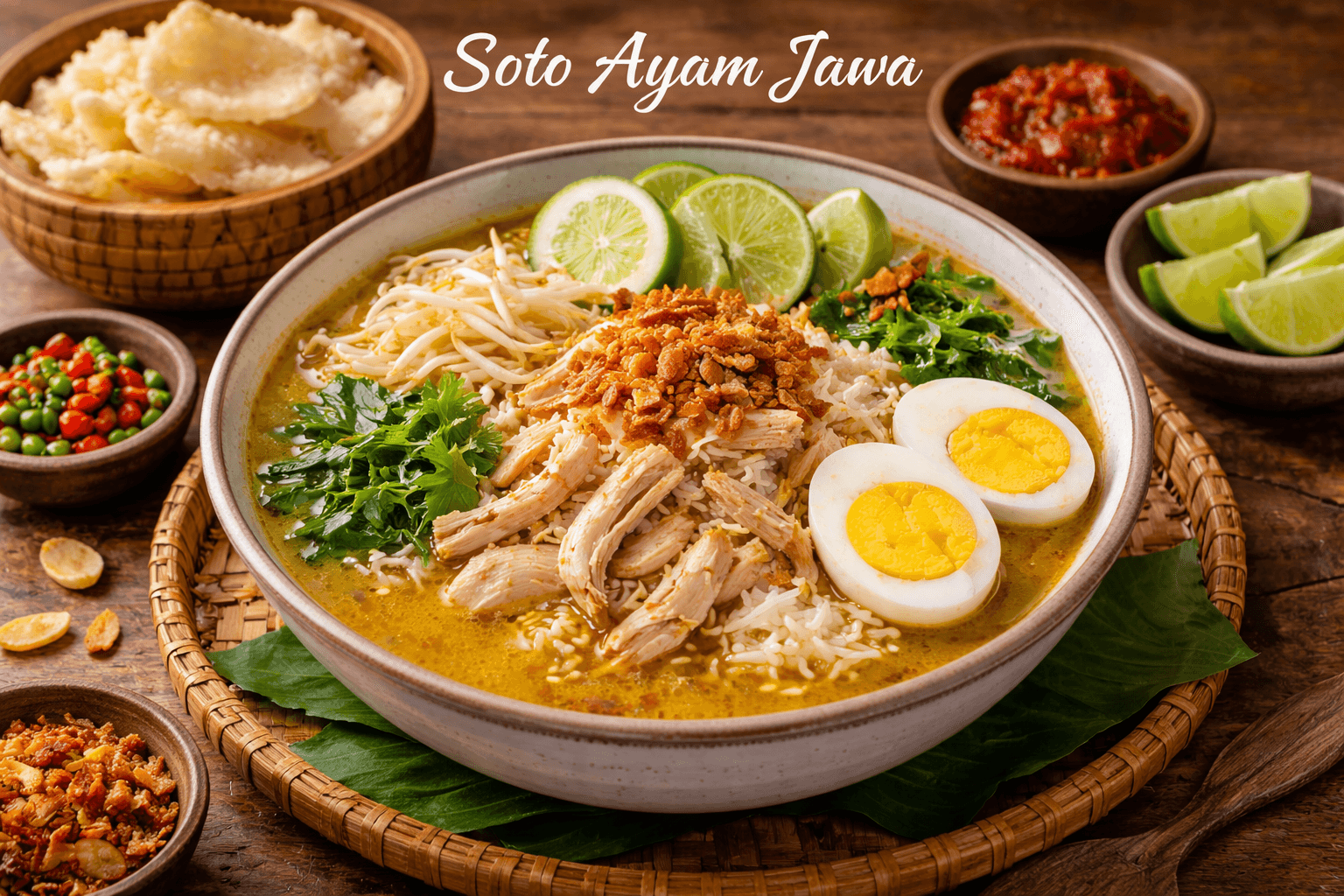 |
Soto Ayam is a beloved Javanese chicken soup, known less as festive fare and more as comfort for everyday mornings and moments of quiet need.
Across Java, every kitchen adds a personal touch to this classic dish. Yet Lamongan’s version—treasured in East Java—stands out with its clear, turmeric-tinged broth and whispers of lemongrass, galangal, and kaffir lime.
The chicken is poached gently and hand-shredded, while the broth’s rich aroma is built on patient simmering and briefly bloomed spices.
Soto Ayam is finished at the table: rice or lontong, bean sprouts, chicken, and steaming broth topped with herbs, fried shallots, and a squeeze of lime.
Each bowl offers a symphony of flavor, from tangy acidity to the crunch of kroepoek, creating a meal best savored slowly—and one people say always tastes even better the next day. Read More... |
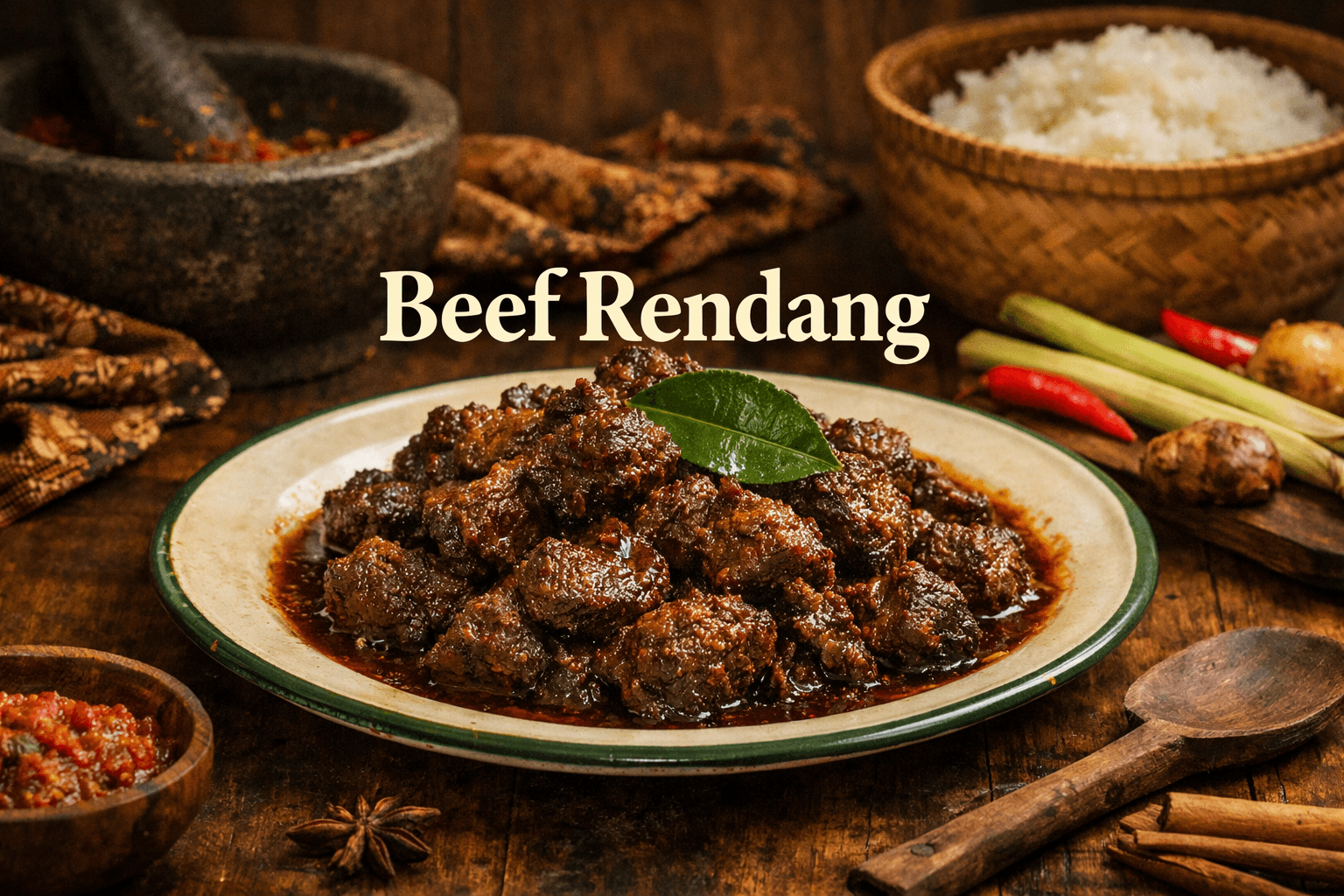 |
The memory of rendang begins not with taste, but with the gentle sounds of cooking—coconut milk poured slowly, a heavy pan warming on the stove, and a father’s quiet patience.
This celebrated Indonesian dish, woven deeply into family tradition, is more than food—it’s a lesson in restraint.
Cooking rendang filled the home with rich spices, the day unfolding slowly as generations practiced patience together.
Learning rendang came not from recipes, but from repetition, from watching hands that moved with confidence and care.
Unlike curry or stew, rendang transforms meat through hours of gentle heat, coconut milk reducing until only fragrant oil remains, wrapping each bite in memory.
In the end, there are no shortcuts—just deeply flavored meat and the quiet understanding that some meals are worth waiting for.
Selamat makan. Read More... |
 |
Selamat makan,
This is how The Indo Fork begins. Not with explanation, but with a table.
These dishes are not tied to one place or one moment. They belong to kitchens, to families, to evenings that stretch a little longer than planned.
Next time, we will sit down again. Another memory. Another pot on the stove.
And welcome to The Indo Fork.
You didn’t just subscribe to a food publication. You stepped into a kitchen shaped by memory, heat, patience, and stories that were never written down.
Ayo Makan-Makan! |
Follow us on Facebook: https://www.facebook.com/theindofork
|
|
💡 Answer to Trivia Question: Nasi Goreng |
THIS PUBLICATION SPONSORED BY