The Indo Fork
Archives
Sambal Bawang: The Onion-Infused Jewel of Indonesian Condiments
SIGN UP FOR OUR NEWSLETTER
Sambal Bawang: The Onion-Infused Jewel of Indonesian Condiments |
Discover the fragrant, spicy sambal that brings tears of joy to every Indonesian table |

The Indo Fork
Mar 11, 2026
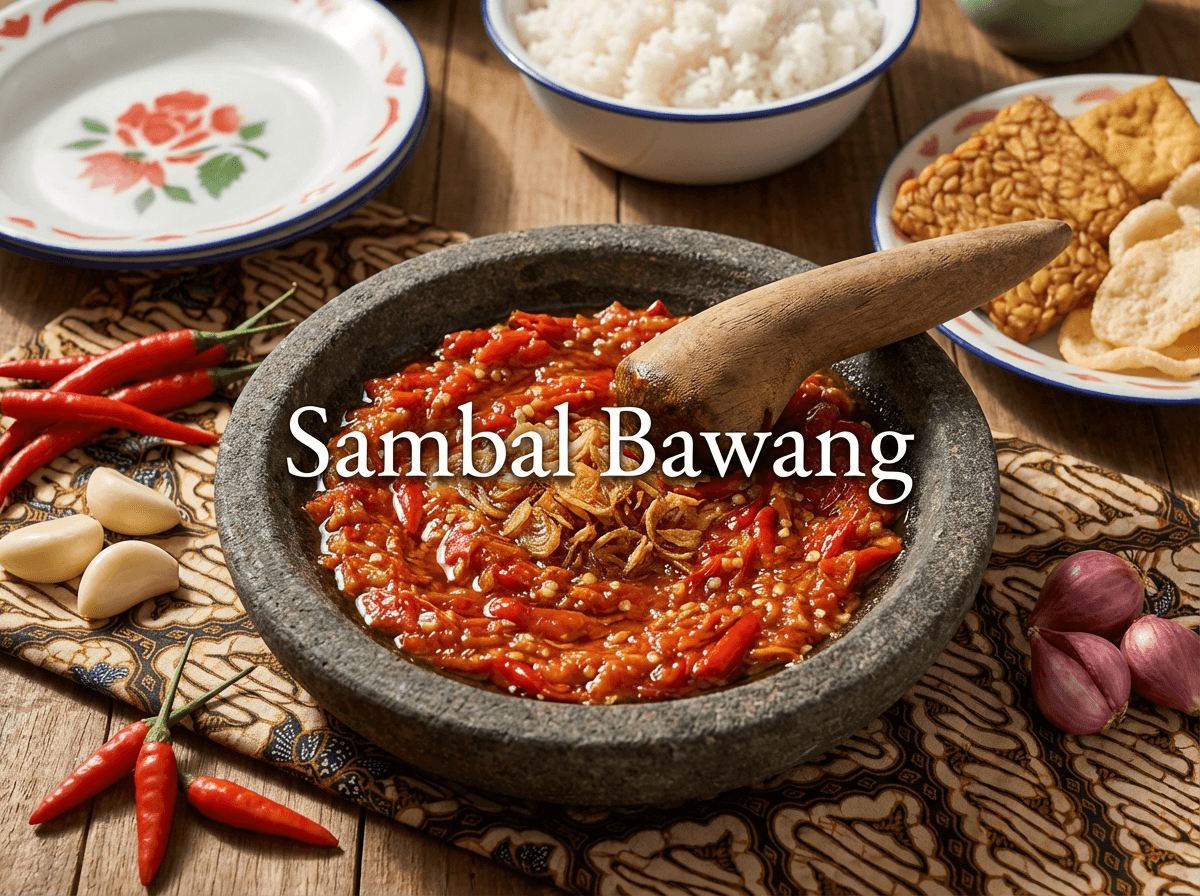 |
There is a sound that defines Indonesian home cooking. The rhythmic thud of a stone pestle against a wooden mortar. The crunch of shallots giving way to spice. The sizzle of oil meeting flame.
This is the sound of sambal bawang being born.
The Soul of Indonesian Cuisine
Sambal is not merely a condiment in Indonesia. It is the heartbeat of the cuisine, the non-negotiable element that transforms simple rice into a meal worth remembering.
While sambal oelek may be the most famous variety abroad, sambal bawang holds a special place in Indonesian hearts. The word bawang refers to onions and shallots, those fragrant alliums that form the aromatic foundation of countless Indonesian dishes.
Unlike raw sambals that deliver pure, unadulterated heat, sambal bawang is cooked. The shallots and garlic are fried until golden and sweet, their sharp edges rounded by heat and time. The chilies follow, their capsaicin mellowing into something complex and addictive.
A History Written in Spice
The story of sambal begins centuries ago in the Indonesian archipelago, long before chili peppers arrived from the Americas in the sixteenth and seventeenth centuries.
Before capsicum species crossed the oceans, Indonesians already cherished pungent condiments made from native and Old World ingredients. Black pepper, ginger, and local spices provided the heat that would later be amplified by chilies.
When Portuguese and Spanish traders brought chili peppers to Southeast Asia, the ingredient was embraced with characteristic Indonesian enthusiasm. The chili did not replace existing condiments. It transformed them, creating something entirely new.
Today, Indonesia boasts over three hundred varieties of sambal, each region and family claiming their own version as the definitive recipe. Sambal bawang emerged from Java, where shallots grow in abundance and feature prominently in the island's refined cuisine.
The Authentic Recipe
This is the real thing. The sambal bawang as it is made in Javanese kitchens, where patience and attention to detail elevate simple ingredients into something extraordinary.
Makes: About 250 ml / 1 cup
Ingredients:
100 grams / 3.5 ounces red cayenne peppers or red jalapeños, stems removed
The Method
Begin with the shallots. Slice them thinly, taking care to maintain even pieces that will cook uniformly. The shallots should be fresh and firm, their papery skins dry and intact.
Slice the garlic similarly. Though garlic plays a supporting role to the shallots in this sambal, its presence is essential for depth and complexity.
Remove the stems from the chilies. If you prefer a milder sambal, remove some or all of the seeds. Remember that much of a chili's heat resides in the white pith and seeds, not just the flesh. For authentic Indonesian heat, keep some seeds. For a gentler experience, remove them all.
Heat the oil in a wok or heavy skillet over medium heat. The oil should shimmer but not smoke. Add the shallots and fry slowly, stirring occasionally, until they turn golden brown and fragrant. This takes about eight to ten minutes. Do not rush this step. The sweetness that develops from properly fried shallots is irreplaceable.
When the shallots are nearly done, add the garlic. Garlic burns faster than shallots, so it needs less time. Fry for another two minutes until the garlic is golden and aromatic.
Remove the fried shallots and garlic with a slotted spoon, leaving the oil in the pan. Set them aside to drain on paper towels.
Now fry the chilies in the same oil. They will splutter and release their volatile oils, so stand back. Fry for three to four minutes until the skins blister and the chilies soften.
Transfer the fried chilies to a mortar or food processor. Add the fried shallots and garlic. Pound or process until you achieve a coarse paste. The texture should be rustic, not completely smooth. Some small chunks of shallot should remain visible.
Return the paste to the pan with the remaining oil. Add the salt and sugar. Fry over low heat for five minutes, stirring constantly. The sambal will darken slightly and the flavors will meld together.
Taste and adjust the seasoning. Add lime juice if using, for a bright, acidic note that lifts the richness of the fried shallots.
If the sambal seems too thick, add a tablespoon of hot water to achieve a spoonable consistency.
Serving and Storing
Sambal bawang is traditionally served at room temperature alongside steamed white rice. It accompanies virtually every Indonesian dish imaginable, from simple fried eggs to elaborate rijsttafel spreads.
Try it with nasi goreng, where the sweet shallots complement the savory fried rice. Serve it with grilled fish, where the heat cuts through the richness of the protein. Spoon it over vegetables, into soups, or simply eat it with plain rice and a fried egg for the most comforting of meals.
Store sambal bawang in a clean glass jar with a tight-fitting lid. It will keep in the refrigerator for up to two weeks, though the flavors are best in the first few days. The oil may solidify in cold temperatures. Simply let it come to room temperature before serving.
A Taste of Home
For Indonesians living abroad, sambal bawang is a taste of home that transcends geography. It is the flavor of mother's cooking, of Sunday lunches, of comfort in a unfamiliar place.
The Dutch, who colonized Indonesia for centuries, adopted sambal with such enthusiasm that it is now a standard condiment in Dutch supermarkets. Brands like Conimex and Koningsvogel sell jars of sambal to Dutch homes, a culinary legacy of colonialism that persists long after political independence.
Make this sambal when you want to understand Indonesian cuisine at its most fundamental level. It requires no special equipment, no obscure ingredients, no advanced techniques. Just fresh produce, patience, and respect for the transformative power of heat.
That is the essence of sambal bawang. |