The Indo Fork
Archives
This Indonesian dish turns your soup completely black (and it’s unforgettable)
Subscribe
This Indonesian dish turns your soup completely black (and it’s unforgettable)
The Indo Fork
Archives
This Indonesian dish turns your soup completely black (and it’s unforgettable)
The Indo Fork
Mar 16, 2026
Selamat datang at The Indo Fork |
The Indo Fork is a story-driven publication about Indo family cooking, memory, and tradition. |
Rooted in inherited recipes and kitchen rituals, it explores Indonesian and Indo food through personal stories, cultural context, and authentic dishes passed down through generations. |
Trivia Question❓Why is Opor Ayam often served during celebrations like Lebaran? Answer at the bottom of the newsletter |
Smoke Beneath the Surface
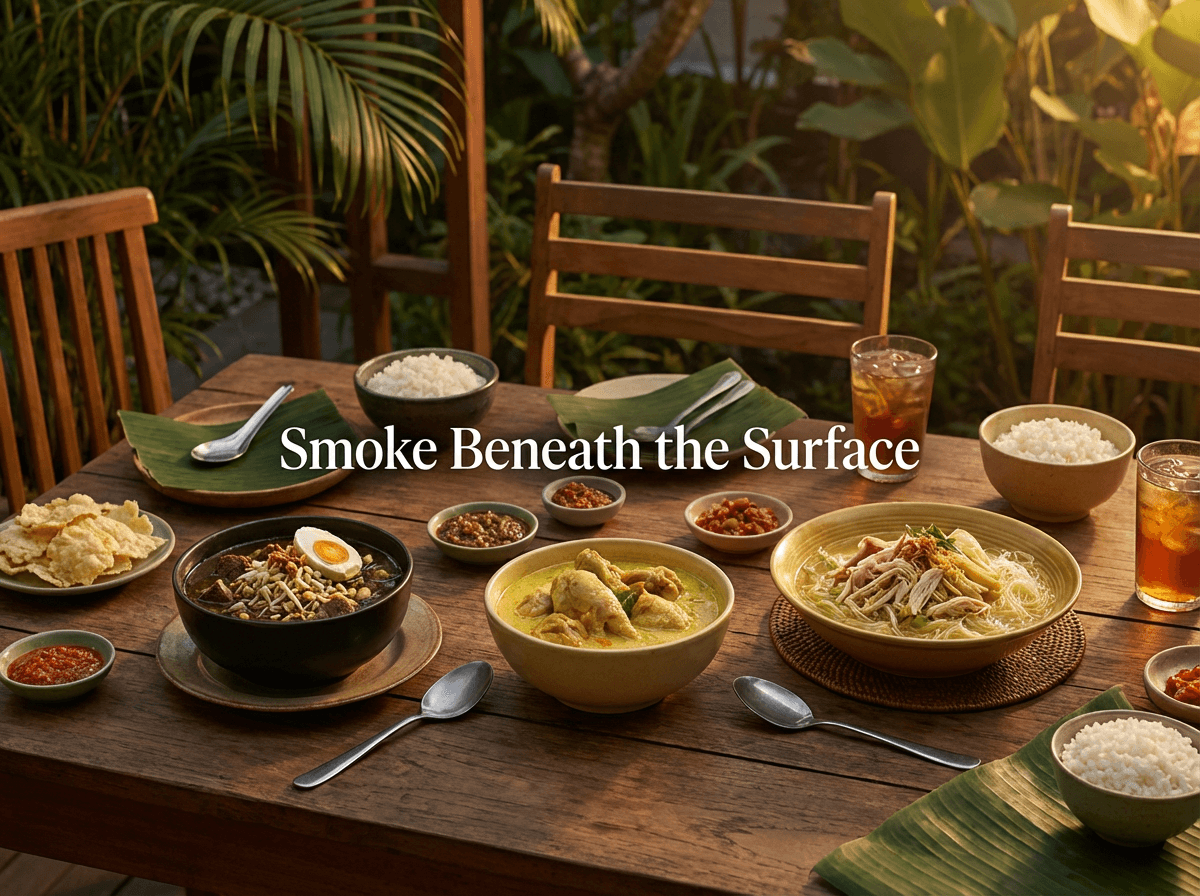
A table of Rawon, Opor Ajam and Soto Ayam Poerwakarta |
 |
There are meals that comfort you immediately.
And there are meals that take their time, revealing themselves slowly, like a conversation that deepens with every pause.
This is one of those tables.
It begins lightly, almost quietly.
Soto ayam Poerwakarta is not the kind of soup that demands attention. It does not carry the heaviness of coconut milk or the sharpness of overwhelming spice. Instead, it clears space. The broth is bright with turmeric and ginger, warm but not heavy, carrying pieces of chicken that have gently given their flavor to the water.
You don’t rush a bowl like this.
You sit with it.
The steam rises softly, and with each spoon, the palate opens a little more. Bean sprouts add a gentle crunch, fried onions a hint of sweetness, and somewhere on the side, always, sambal waits. Not as a requirement, but as an invitation.
And then, slowly, the depth arrives.
Rawon does not come quietly.
Its color alone changes the rhythm of the table. Dark, almost black, it holds something unfamiliar at first glance. But that darkness is not mystery for the sake of it. It comes from kluwek, a fermented nut that has been part of East Javanese cooking for generations.
The flavor is deep, earthy, almost smoky.
Beef simmers in it until it softens completely, absorbing that complexity in a way that cannot be rushed. Rawon is not a dish you understand in one bite. It lingers. It stays with you.
And just when the table could become too heavy, too anchored in that depth, something softer enters.
Opor ayam.
This is where everything exhales.
Chicken, gently cooked in coconut milk, carries lemongrass, galangal, and subtle spices that don’t push forward but surround you. It is not sharp. It is not loud. It is calm, almost comforting in the way it coats everything in a soft warmth.
Together, these dishes are not separate courses.
They are layers.
Rice sits at the center, as it always does. Not as an afterthought, but as the place where everything meets. A spoon of rawon, a little opor, a touch of sambal, maybe a bit of soto broth poured over.
No two bites are the same.
That is the point.
This is how we eat.
Not in order, not in structure, but in rhythm.
Selamat Makan |
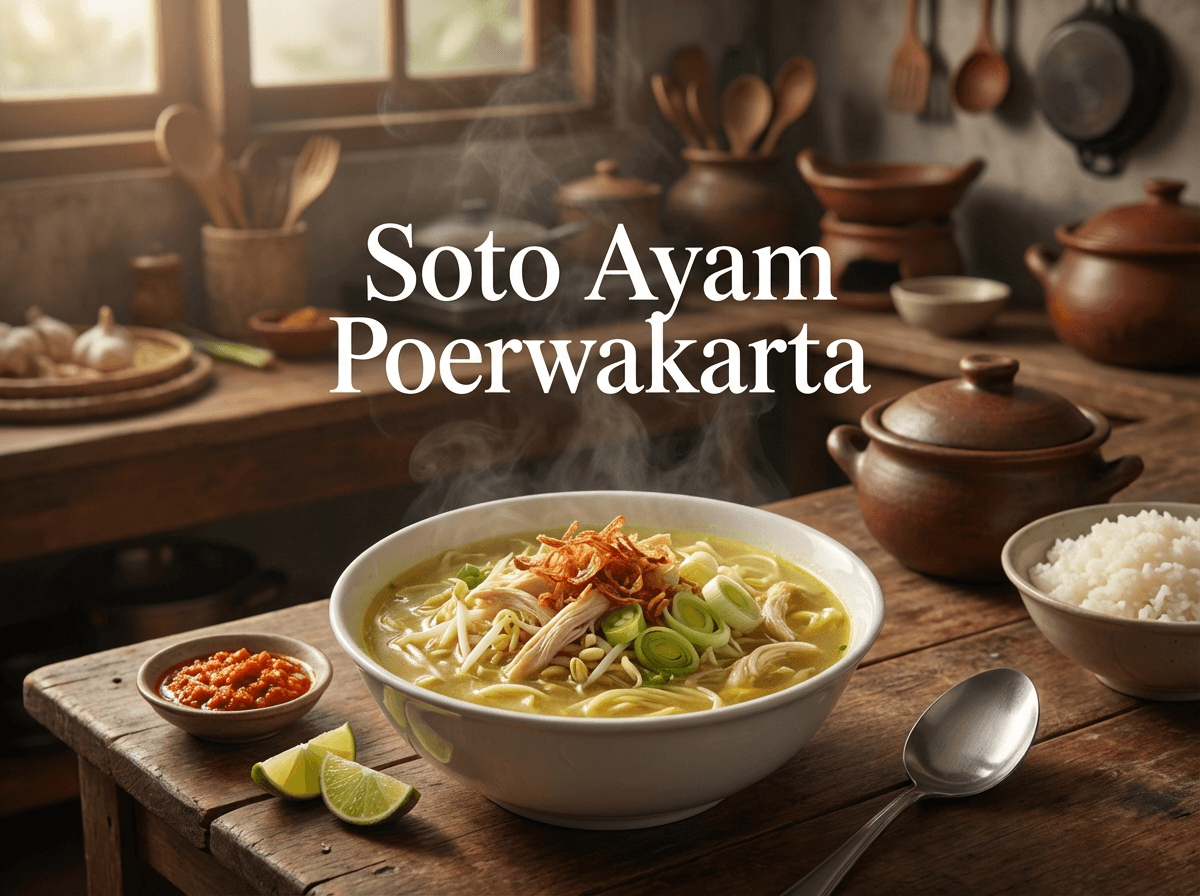 |
Recipe – Soto Ayam Poerwakarta
Ingredients (serves 4)
• 1 whole chicken (1.2 kg / 2.6 lb) • 2 liters (8 cups) water • 1 tsp turmeric (koenjit) • 1 tsp ginger (djahé), grated • 3 garlic cloves, minced • 1 onion, finely chopped • 100 g (3.5 oz) bean sprouts • 100 g (3.5 oz fried onions) • 1 leek, sliced • 100 g laksa noodles • Salt & pepper
Preparation
Boil the chicken in water with salt until fully cooked. Remove and shred the meat.
In a separate pan, sauté garlic and onion until fragrant. Add turmeric and ginger. Transfer this mixture into the broth.
Add shredded chicken back into the soup and simmer gently.
Prepare bowls with noodles, bean sprouts, and leek. Pour hot broth over.
Finish with fried onions and serve with sambal and ketjap. |
 |
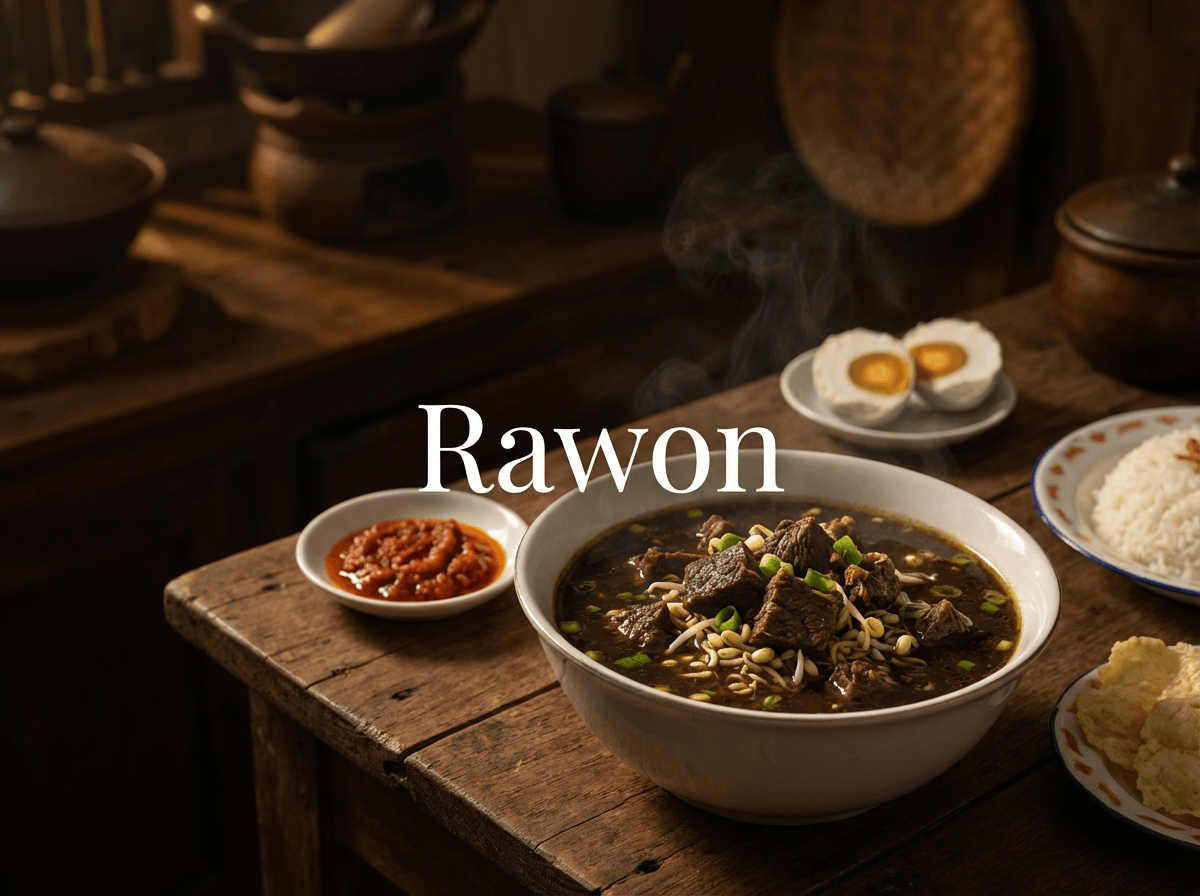 |
Recipe – Rawon (East Javanese Beef Stew)
Ingredients (serves 4)
• 600 g (1.3 lb) beef (stew cuts) • 2 liters (8 cups) water • 4 kluwek nuts (soaked and mashed) • 4 garlic cloves • 2 shallots • 1 tsp coriander • 1 tsp cumin • 2 salam leaves • 1 stalk lemongrass • Salt
Preparation
Boil beef until tender, reserving the broth.
Grind garlic, shallots, coriander, cumin and kluwek into a paste.
Fry the paste until aromatic. Add to the broth with lemongrass and salam leaves.
Return beef to the pot and simmer until flavors deepen and the broth turns dark.
Serve with rice, bean sprouts, sambal and salted egg. |
 |
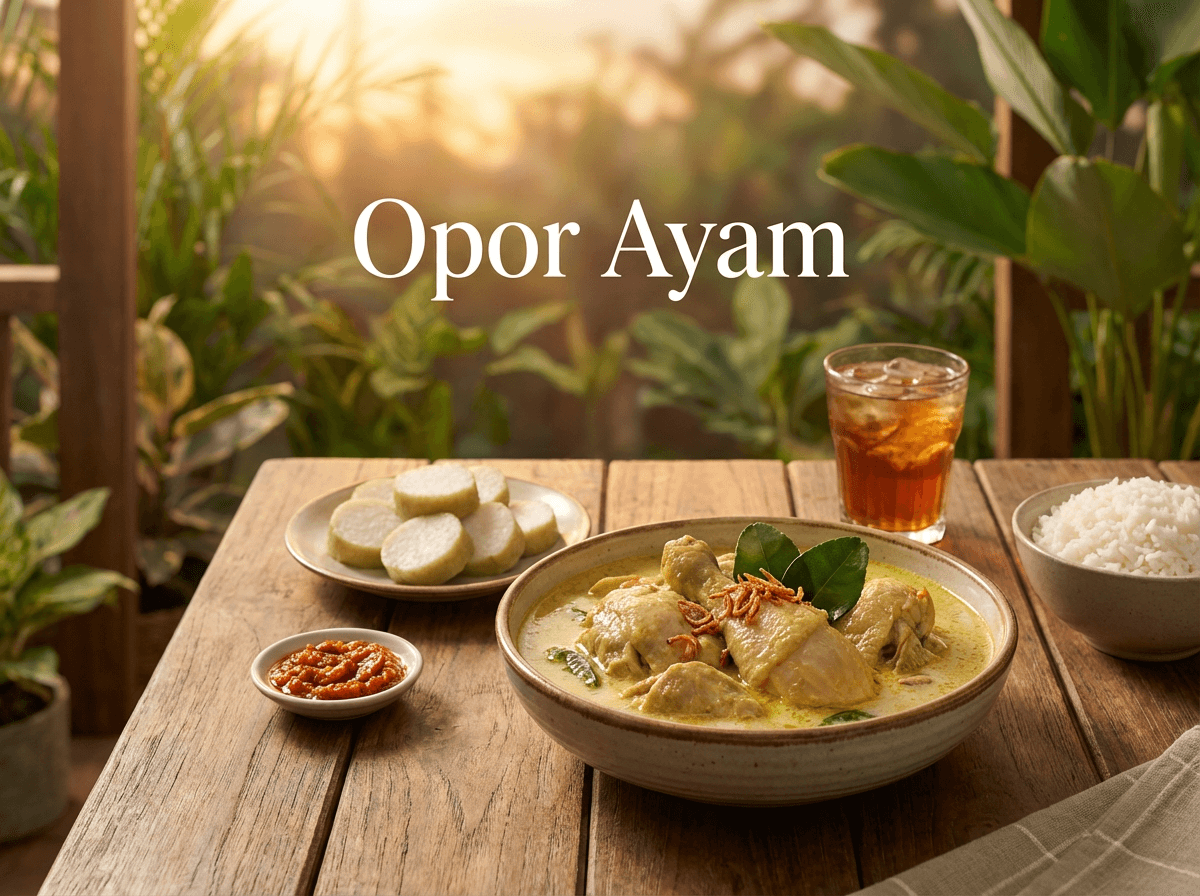 |
Recipe – Opor Ayam
Ingredients (serves 4)
• 1 chicken (1.2 kg / 2.6 lb), cut into pieces • 400 ml (1.7 cups) coconut milk • 3 garlic cloves • 2 shallots • 1 tsp coriander • 1 stalk lemongrass • 2 kaffir lime leaves • Salt
Preparation
Grind garlic, shallots and coriander into a paste.
Fry until fragrant, then add chicken pieces and coat well.
Pour in coconut milk, add lemongrass and lime leaves.
Simmer gently until chicken is tender and sauce thickens.
Serve with rice, emping and sambal. |
 |
This week's article recipes |
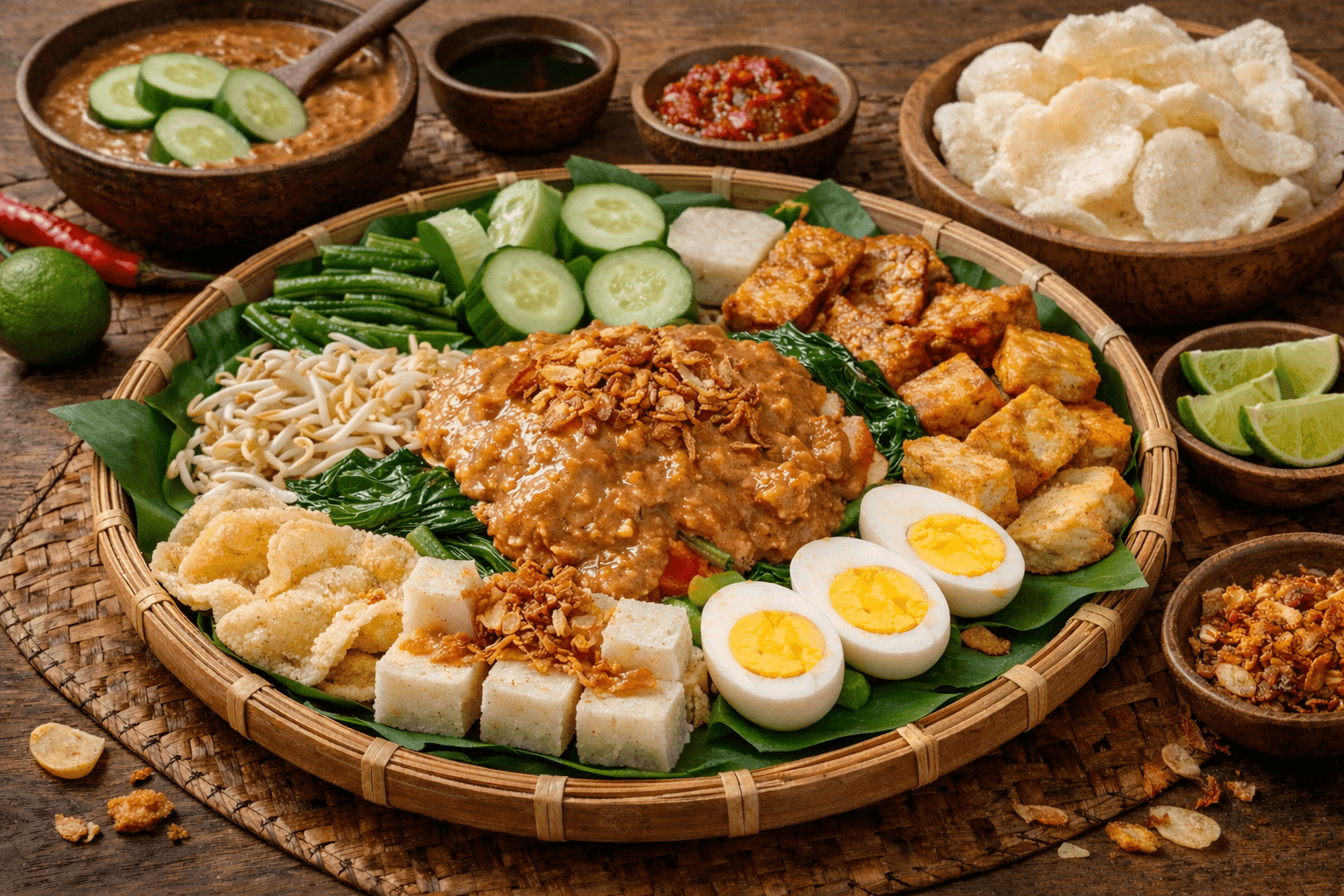 |
Gado-gado is a beloved staple in Javanese homes, prepared quietly and shared generously.
More than just a salad, gado-gado is a warm, grounding dish built on a medley of blanched seasonal vegetables like long beans, cabbage, bean sprouts, and spinach.
Tofu, tempeh, and eggs add comfort and substance, while the heart of the dish is its peanut sauce—slowly ground by hand, fragrant with palm sugar, garlic, chili, tamarind, and sweet kecap manis.
Each family tailors the sauce, balancing sweet and tangy to taste.
Gado-gado is traditionally assembled to order: vegetables heaped on plates, sauce spooned on top, finished with crispy emping or krupuk for crunch, and a squeeze of lime.
Lontong rice cakes absorb every drop of the rich sauce, turning a modest meal into true sustenance.
Here, gado-gado isn’t festive—it’s familiar food, crafted with care and meant to nourish both body and memory. Read More... |
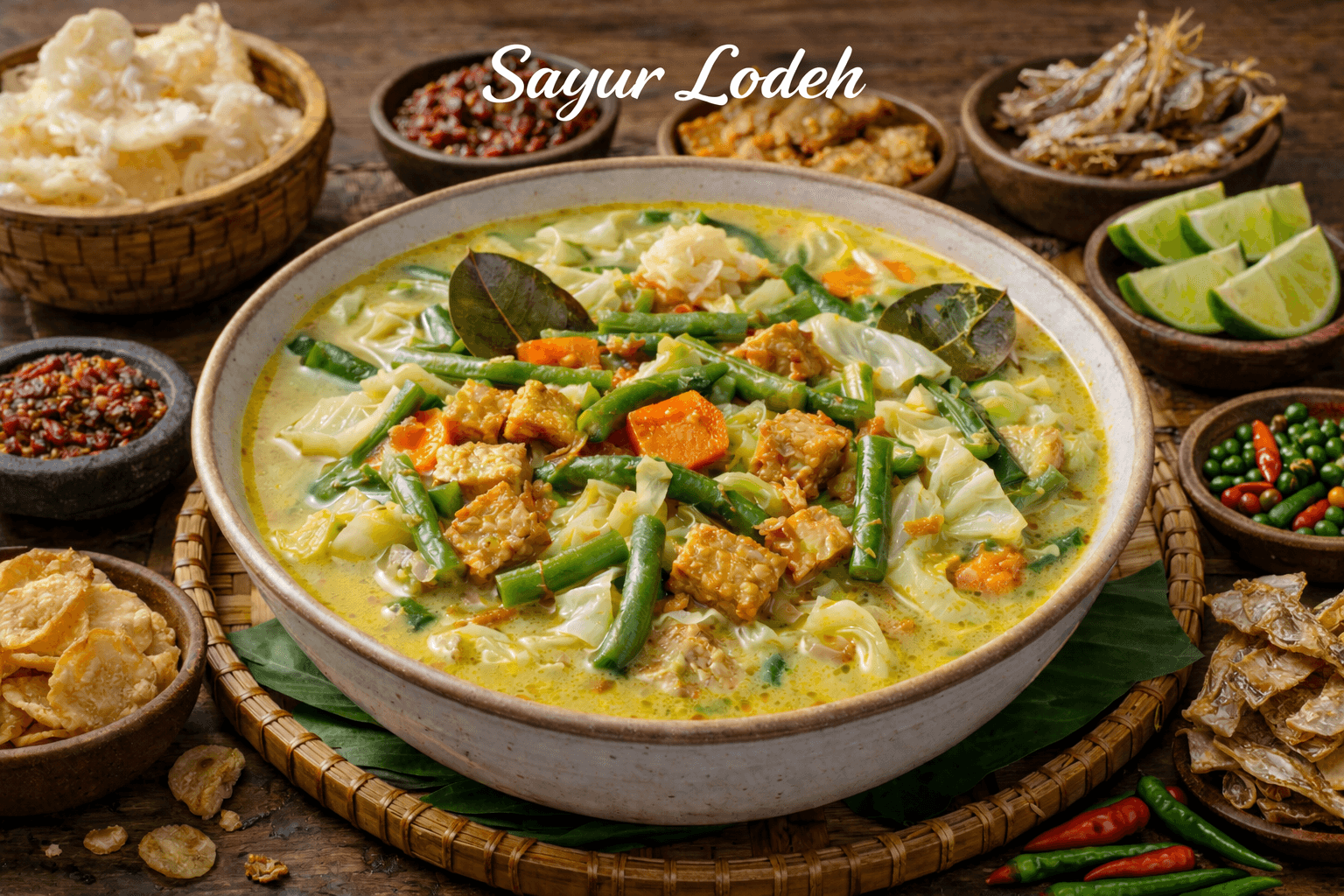 |
Sayur lodeh is a classic Javanese vegetable stew, beloved for its gentle flavors and comforting presence in daily meals.
Simmered in a light coconut milk broth, it blends subtle aromatics like lemongrass and galangal, with garlic, shallot, and mild chili for depth.
Long beans, cabbage, carrots, and tempeh often fill the pot, though the mix shifts with the season and what's on hand.
Patience is essential; sayur lodeh cooks softly, never rushed, to preserve the vegetables’ texture and keep the broth from separating.
This dish shines alongside rice, sambal, emping, or kroepoek, and sometimes fried tofu or ikan asin.
Sayur lodeh isn’t made for special occasions—it’s a practical comfort food, valued for how it turns simple, available ingredients into a nourishing, balanced meal still found in Javanese kitchens today. Read More... |
 |
Cultural Note
Kluwek is essential for rawon. It gives the dish its deep black color and earthy taste. Without it, the dish simply isn’t rawon. And when the plates begin to empty, it is never all at once.
Someone takes a last spoon of broth, not because they are hungry, but because the warmth is still there. Another mixes the final bit of rice with what remains of the rawon, darker now, deeper, almost concentrated.
The conversation slows.
Not because there is nothing left to say, but because something has already been shared that doesn’t need words.
This is what meals like this do.
They don’t impress. They don’t try to stand out. They stay close. They linger in small details, in the way flavors overlap, in the quiet understanding that comes from eating the same dish, from the same pot, at the same table.
Long after the plates are cleared, the smell of turmeric, coconut, and slow-cooked spices remains in the air. It settles into the room, into your clothes, into memory.
And later, when you think back on it, you won’t remember the exact ingredients.
You’ll remember the feeling of sitting there.
Of reaching across the table.
Of taking just one more spoon.
Ayo makan-makan |
Follow us on Facebook: https://www.facebook.com/theindofork
Entrepeneur? Do our business quiz: |
|
💡 Answer to Trivia Question: Because coconut milk symbolizes prosperity and togetherness. |
THIS PUBLICATION SPONSORED BY