The Indo Fork
Archives
This Indonesian soup is supposed to taste… sour (and it’s incredible)

Subscribe
This Indonesian soup is supposed to taste… sour (and it’s incredible)
The Indo Fork
Archives
This Indonesian soup is supposed to taste… sour (and it’s incredible)
The Indo Fork
Mar 28, 2026
Selamat datang at The Indo Fork |
The Indo Fork is a story-driven publication about Indo family cooking, memory, and tradition. |
Rooted in inherited recipes and kitchen rituals, it explores Indonesian and Indo food through personal stories, cultural context, and authentic dishes passed down through generations. |
Trivia Question❓Where does Dendeng Balado originate from? Answer at the bottom of the newsletter |
Earth, Fire and Tamarind
A deeper Indonesian table built on contrast and patience |
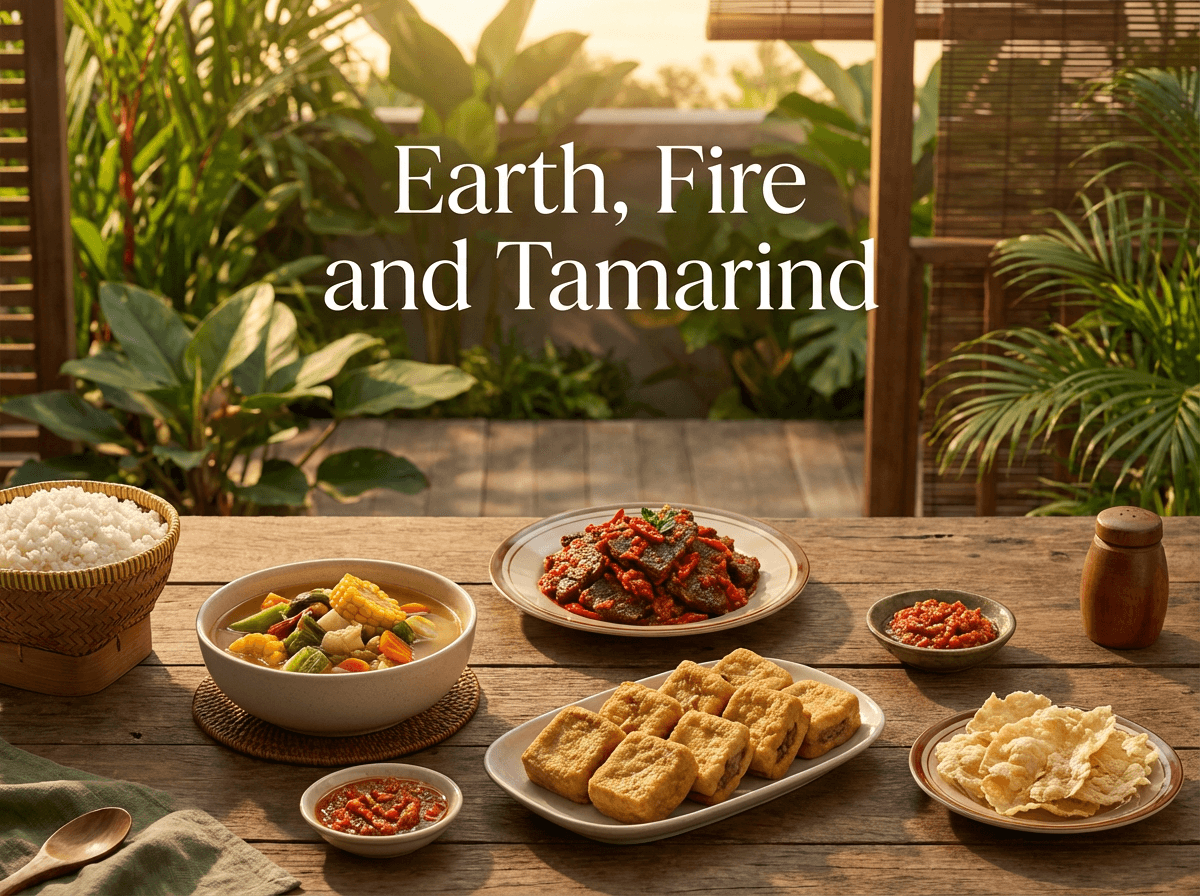 |
Some dishes don’t introduce themselves immediately.
They unfold.
A smell first. Something slightly sour, something warm, something that doesn’t fully reveal itself yet. Tamarind often does that. It sits somewhere between sharpness and depth, never choosing one side.
On this table, nothing is loud.
There is no single dish trying to take over. Instead, everything leans into each other. A sour broth that wakes up the palate. A dry, spiced dish that lingers longer than expected. Something crisp, almost playful, breaking the rhythm just enough.
This is not the kind of meal built for show.
It is built for balance.
You start somewhere without deciding. A spoon, a bite, a pause. And slowly, the table begins to make sense.
Not all at once.
But enough. |
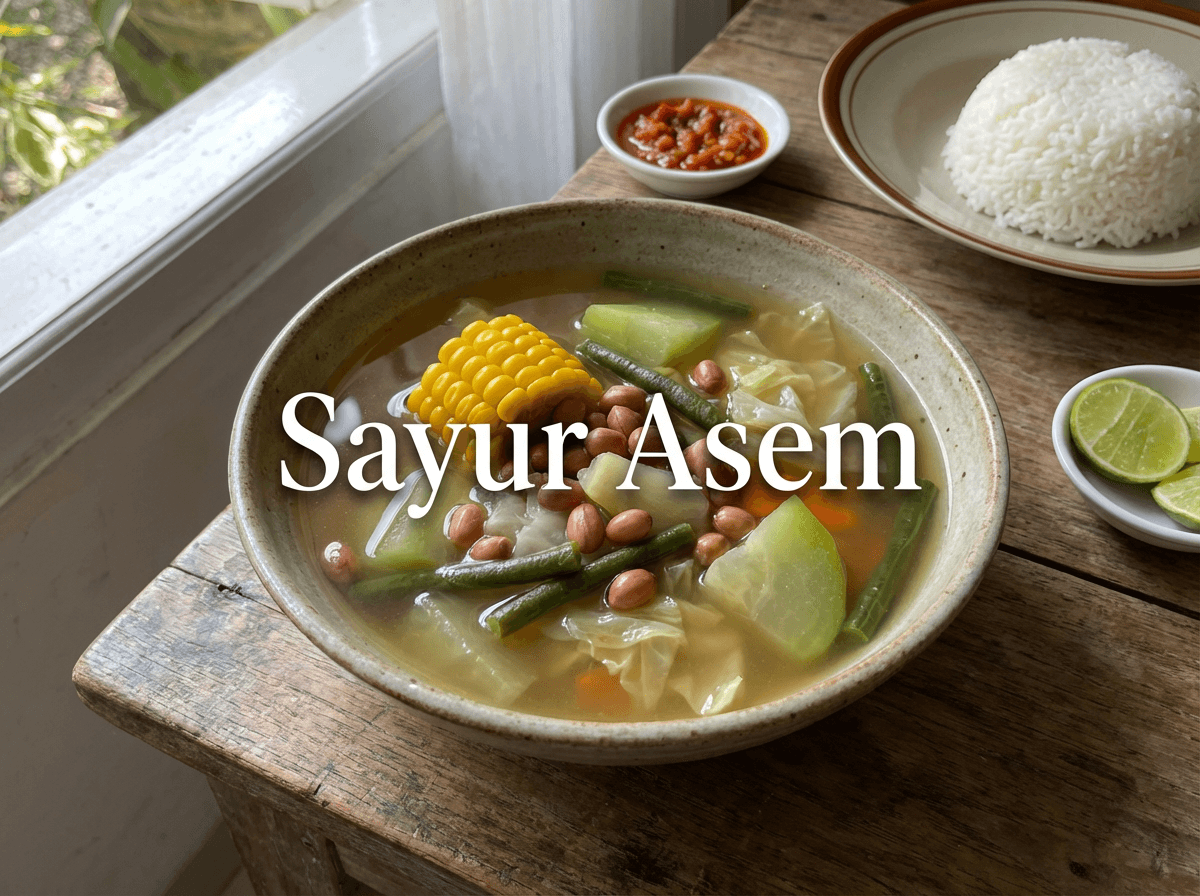 |
Sayur Asem Jakarta
This is a dish that doesn’t hide its intention.
Sourness comes first. Clean, refreshing, almost surprising if you are not expecting it. But underneath, there is sweetness, and something earthy from the vegetables that keeps it grounded.
It resets everything.
Every time.
Recipe – Sayur Asem Jakarta
Ingredients (serves 4) • 1 liter (4 cups) water • 1 corn cob, cut into pieces • 100 g (3.5 oz) long beans • 100 g (3.5 oz) cabbage • 1 carrot, sliced • 1 tomato • 2 tbsp tamarind water • 2 cloves garlic • 3 shallots • 1 tsp shrimp paste (trassi) • 1 bay leaf (daun salam) • salt & sugar
Preparation
Grind garlic, shallots and shrimp paste into a paste.
Bring water to a boil and add the spice paste with bay leaf.
Add corn and carrot first, simmer 10 minutes.
Add remaining vegetables and tamarind water.
Season with salt and a touch of sugar.
Serve warm, slightly sour. |
 |
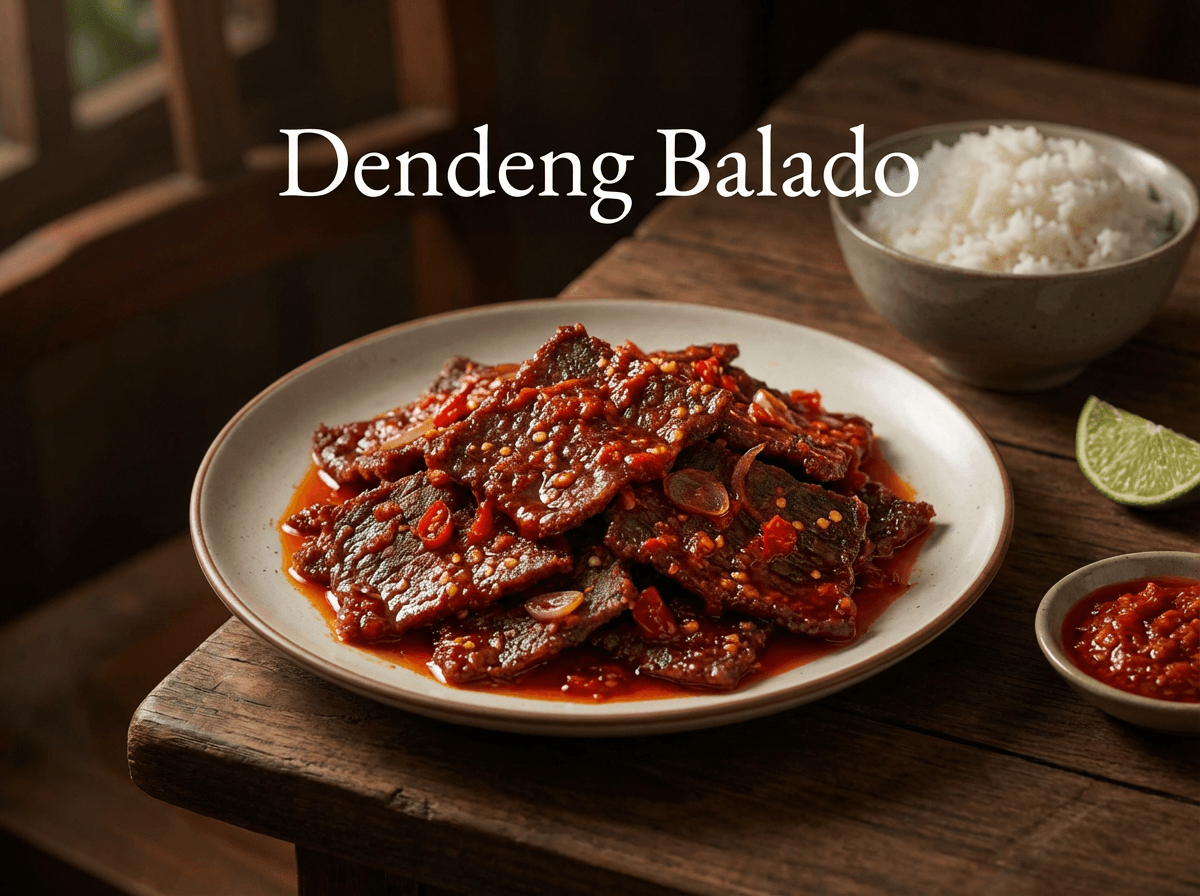 |
Dendeng Balado
This is where the table sharpens.
Thin slices of beef, dried or fried until firm, then coated in a chili mixture that doesn’t hold back. The texture matters here. Slightly chewy, slightly crisp, always carrying flavor.
It is not subtle.
But it is precise.
Recipe – Dendeng Balado
Ingredients (serves 4) • 300 g (10 oz) beef, thinly sliced • 4 red chilies • 2 cloves garlic • 2 shallots • 1 tbsp sugar • 1 tbsp vinegar • oil • salt
Preparation
Fry beef slices until dry and slightly crisp.
Blend chilies, garlic and shallots into a coarse paste.
Fry the chili paste until fragrant.
Add sugar and vinegar, then add beef and coat well.
Cook briefly until everything binds together. |
 |
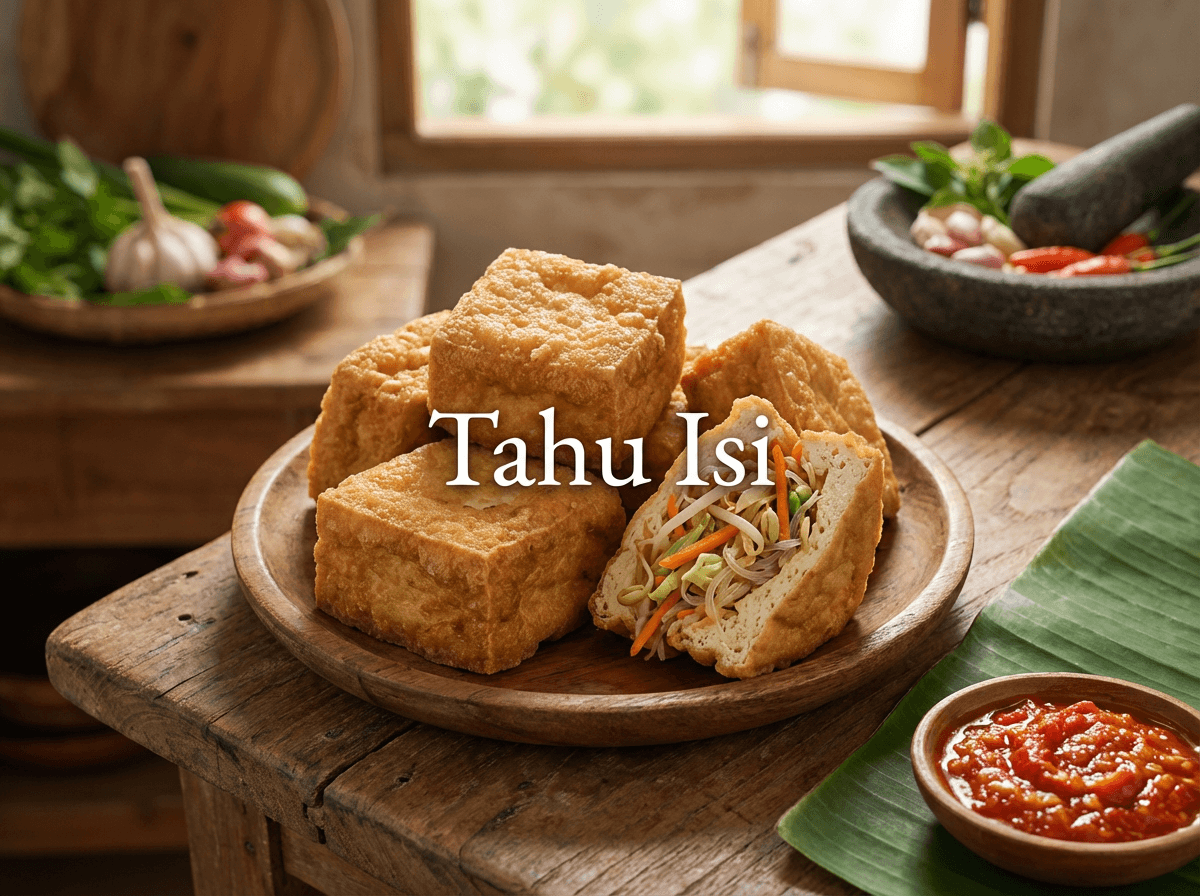 |
Tahu Isi
This is the moment of contrast.
After sourness and spice, something crisp, warm, and filled. Tahu isi is simple in idea, but always satisfying. The filling changes from kitchen to kitchen, but the feeling stays the same.
Crunch first.
Softness after.
Recipe – Tahu Isi
Ingredients (serves 4) • 8 tofu squares • 100 g bean sprouts • 1 carrot, grated • 2 cloves garlic • 2 tbsp flour • water • oil for frying • salt & pepper
Preparation
Hollow out tofu slightly.
Mix bean sprouts, carrot and minced garlic. Season.
Stuff tofu with filling.
Make a thin batter with flour and water.
Dip tofu and fry until golden and crisp.
Drain and serve warm. |
 |
This week's article recipes |
 |
Discover the authentic Sambal Bawang recipe from Java, Indonesia. This fragrant cooked chili paste with shallots and garlic is the heart of Indonesian cuisine. Read More... |
 |
Discover the authentic Sambal Brandal recipe from Java, Indonesia. This fiery cooked chili paste is for true spice enthusiasts. Read More... |
 |
This table doesn’t settle into one direction.
It moves.
From sour to spicy. From crisp to soft. From something that wakes you up to something that grounds you again.
And somewhere in between, you find your own rhythm.
A bite that surprises you. Another that feels familiar. A combination you didn’t plan, but somehow works better than expected.
This is how these meals stay alive.
Not because they are perfect.
But because they keep shifting, adapting, finding balance in every small moment at the table.
Selamat Makan |
Follow us on Facebook: https://www.facebook.com/theindofork
Entrepeneur? Do our business quiz: |
|
💡 Answer to Trivia Question: Sumatra |
THIS PUBLICATION SPONSORED BY