The Indo Fork
Archives
This Indonesian soup adds one ingredient… and changes everything

Subscribe
The Indo Fork
Archives
This Indonesian soup adds one ingredient… and changes everything
The Indo Fork
Mar 21, 2026
Selamat datang at The Indo Fork |
The Indo Fork is a story-driven publication about Indo family cooking, memory, and tradition. |
Rooted in inherited recipes and kitchen rituals, it explores Indonesian and Indo food through personal stories, cultural context, and authentic dishes passed down through generations. |
Trivia Question❓Why is tempeh often used in Indonesian cooking? Answer at the bottom of the newsletter |
Warm Broth, Sweet Depth, Crisp Edges
A quiet Indonesian table with shrimp, corn and tempeh |
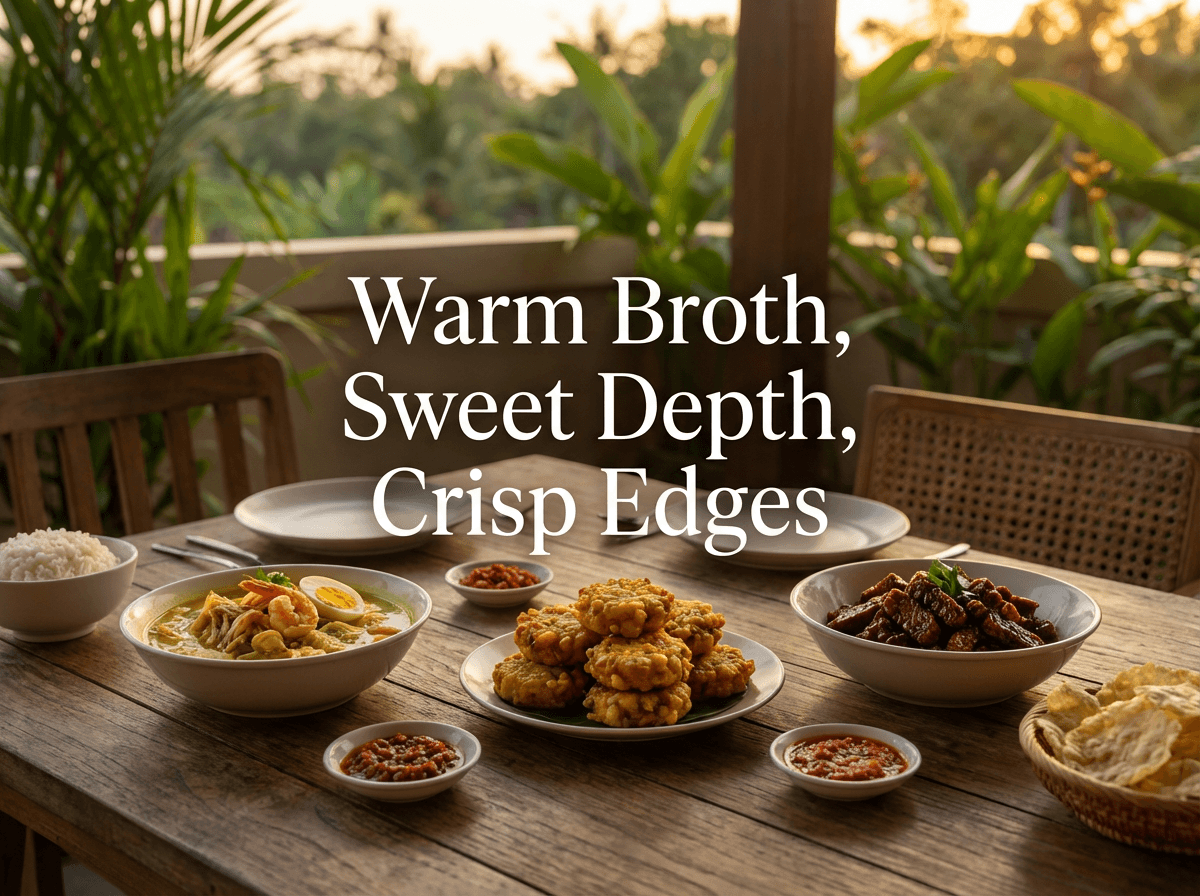 |
Some meals don’t try to impress you.
They simply stay.
This kind of table doesn’t come from celebration or ceremony. It comes from habit. From repetition. From dishes that have been made so often they no longer need explanation.
A pot of broth, already simmering before you enter the kitchen. Not heavy, not overwhelming. Just enough to carry warmth.
Something frying nearby. The sound gives it away first. A soft crackle, steady, patient. Not rushed. Not loud. Just present.
And somewhere, something darker, slower. A pan where sweetness and salt meet, where time is allowed to do its work without interruption.
This is how balance appears.
Not planned, not designed, but understood.
A spoon of broth first. Then something crisp. Then something that lingers longer on the tongue.
Rice is there, as always, but it doesn’t lead. It supports. It connects.
Nothing on this table stands alone.
And that is exactly why it works. |
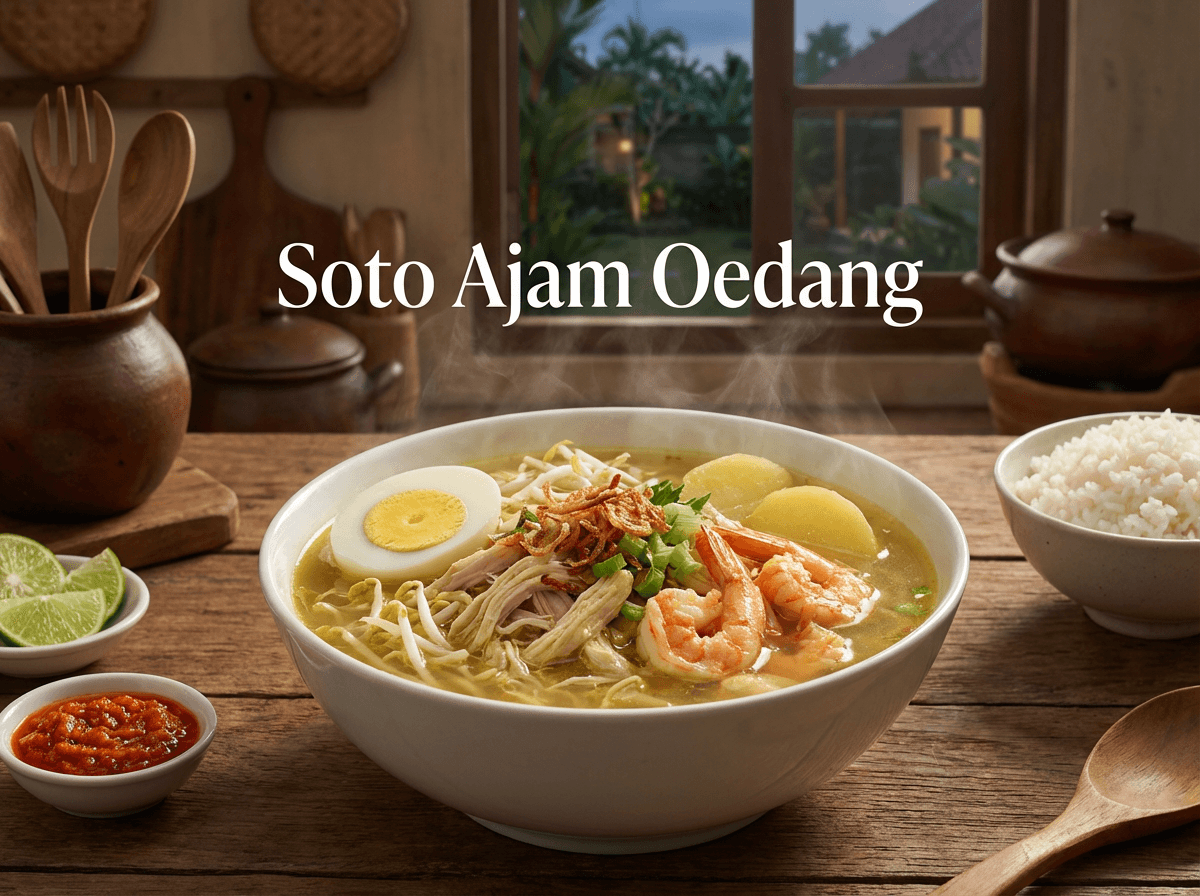 |
Soto Ajam Oedang
This is not the usual chicken soup.
The addition of shrimp changes everything. The broth becomes deeper, slightly sweeter, more layered without becoming heavy. It still carries the brightness of turmeric and ginger, but now there is something underneath it.
Something closer to the sea.
It is a dish that feels familiar at first, but reveals more with every spoon.
Recipe – Soto Ajam Oedang
Ingredients (serves 4)
• 1 whole chicken (1.2 kg / 2.6 lb) • 100 g (3.5 oz) shrimp • 2 liters (8 cups) water • 1 tsp turmeric • ½ tsp ginger • 3 cloves garlic • 1 onion, sliced • 100 g bean sprouts • 3 boiled eggs • 1 potato, cooked and sliced • 2 tbsp ketjap asin • celery leaves, chopped • fried onions • salt & pepper
Preparation
Boil the chicken in water with salt until cooked. Remove and shred.
Sauté garlic and onion until fragrant, then add shrimp and ketjap.
Return chicken to broth with turmeric and ginger. Add potato and simmer.
Serve over bean sprouts and egg. Pour broth over and garnish with celery and fried onions. |
 |
 |
Perkedel Djagung
There is something comforting about fried food that is not heavy.
Perkedel jagung is light, almost airy, with just enough crispness on the outside. The sweetness of corn comes through naturally, balanced by garlic and a touch of spice.
It is the kind of dish you reach for without thinking.
And then again.
Recipe – Perkedel Djagung
Ingredients (serves 4)
• 2 corn cobs (or 250 g / 9 oz corn kernels) • 2 cloves garlic • 2 shallots • 1 egg • 2 tbsp flour • 1 tbsp chopped celery • oil for frying • salt & pepper
Preparation
Crush corn lightly (not fully smooth).
Mix with minced garlic, shallots, egg, flour and celery.
Season well.
Fry small portions in hot oil until golden and crisp.
Drain on paper. |
 |
 |
Smoor Tempeh
Tempeh does not try to compete with meat.
It does something else.
It absorbs.
In this dish, it takes in the sweetness of ketjap, the depth of slow cooking, and turns into something rich without being heavy. Each piece carries flavor all the way through.
It is quiet food.
But it stays with you.
Recipe – Smoor Tempeh
Ingredients (serves 4)
• 300 g (10 oz) tempeh, cubed • 3 tbsp ketjap manis • 2 cloves garlic • 2 shallots • 1 bay leaf • 1 cup (240 ml) water • oil • salt & pepper
Preparation
Fry tempeh until lightly golden.
Sauté garlic and shallots until fragrant.
Add ketjap, water and bay leaf.
Add tempeh and simmer until sauce thickens and coats the pieces. |
 |
This week's article recipes |
 |
Kue lapis legit, also known as spekkoek, is Indonesia's famous thousand-layer cake made with egg yolks, butter, and aromatic spices. Each thin layer is baked individually, creating distinctive golden stripes. Read More... |
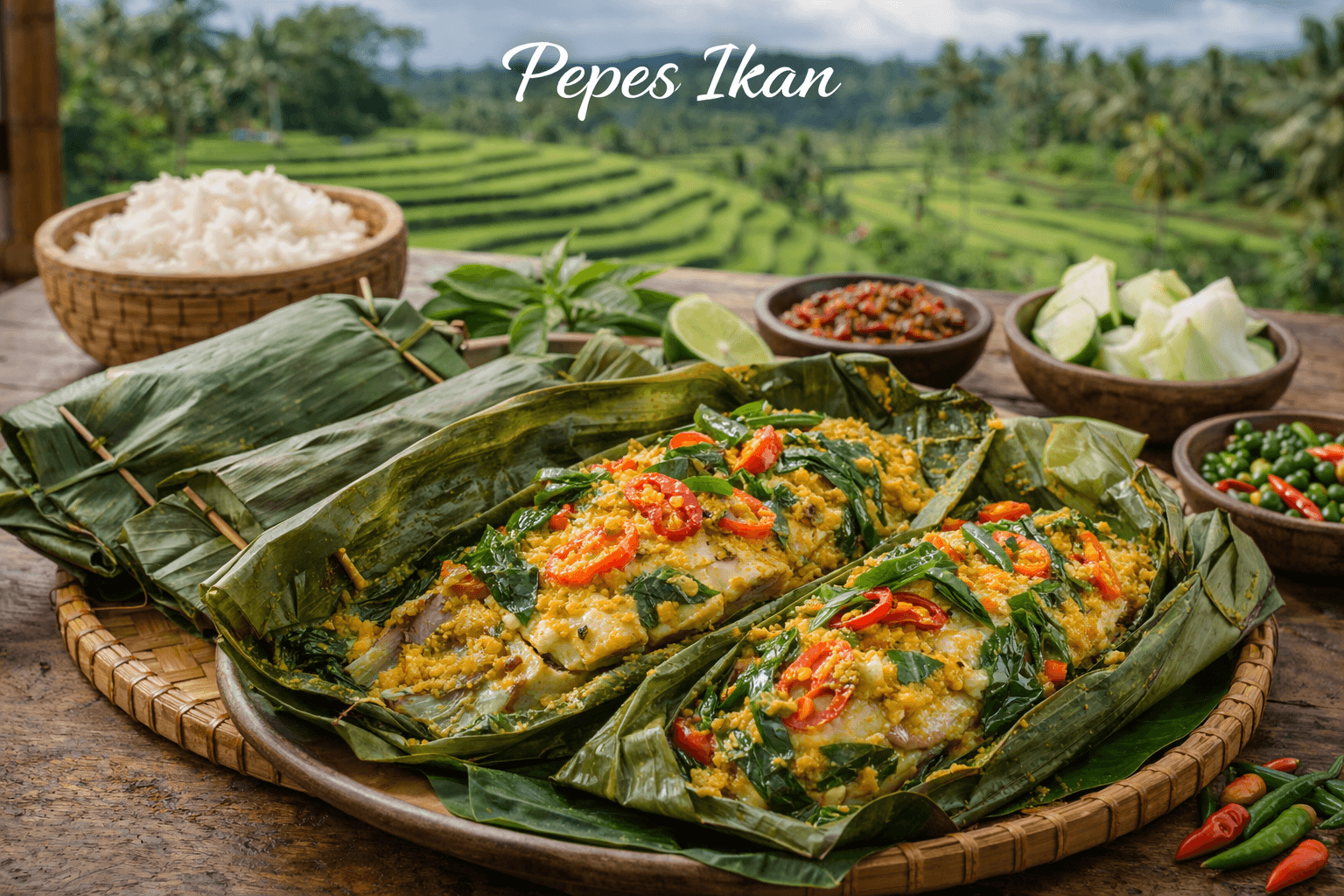 |
Pepes ikan is a cherished Indonesian dish known for its gentle preparation and aromatic flavors.
Instead of frying, fresh fish is wrapped in banana leaves with a fragrant spice paste made from turmeric, shallot, ginger, chilies, and candlenut, then steamed until just cooked.
The banana leaf isn’t just wrapping; it imparts a delicate grassy aroma, while the turmeric and lemongrass infuse the fish from within.
With no crispy edges or dryness, the fish stays moist, clean tasting, and beautifully seasoned.
At the table, the unveiling of each parcel releases a cloud of steam, inviting everyone to lean in and share.
Pepes ikan is classically served with steamed rice, sambal, and fresh lalapan like cucumber or basil, celebrating the spirit of restraint, balance, and patience at the heart of Indonesian cooking. Read More... |
 |
This is not a table that asks for attention.
It holds it quietly.
In the contrast
…through it without thinking.
A spoon of broth, still warm, then something crisp between your fingers. A piece of tempeh, darker now, carrying sweetness that settles slowly.
No one follows a sequence.
No one needs to.
This is how these meals live. Not in order, not in structure, but in movement. Small choices, repeated. A little more of this, a little less of that. Rice quietly bringing everything together without asking for attention.
And before you notice it, the table is different.
Not empty, but softened. Slower. The kind of silence that comes when something has been shared properly.
Not everything needs to be finished.
Only understood.
Ayo makan-makan |
Follow us on Facebook: https://www.facebook.com/theindofork
Entrepeneur? Do our business quiz: |
|
💡 Answer to Trivia Question: Because it absorbs flavors deeply during cooking |
THIS PUBLICATION SPONSORED BY